
Last updated November 16, 2026
 Whole-home duct cleaning
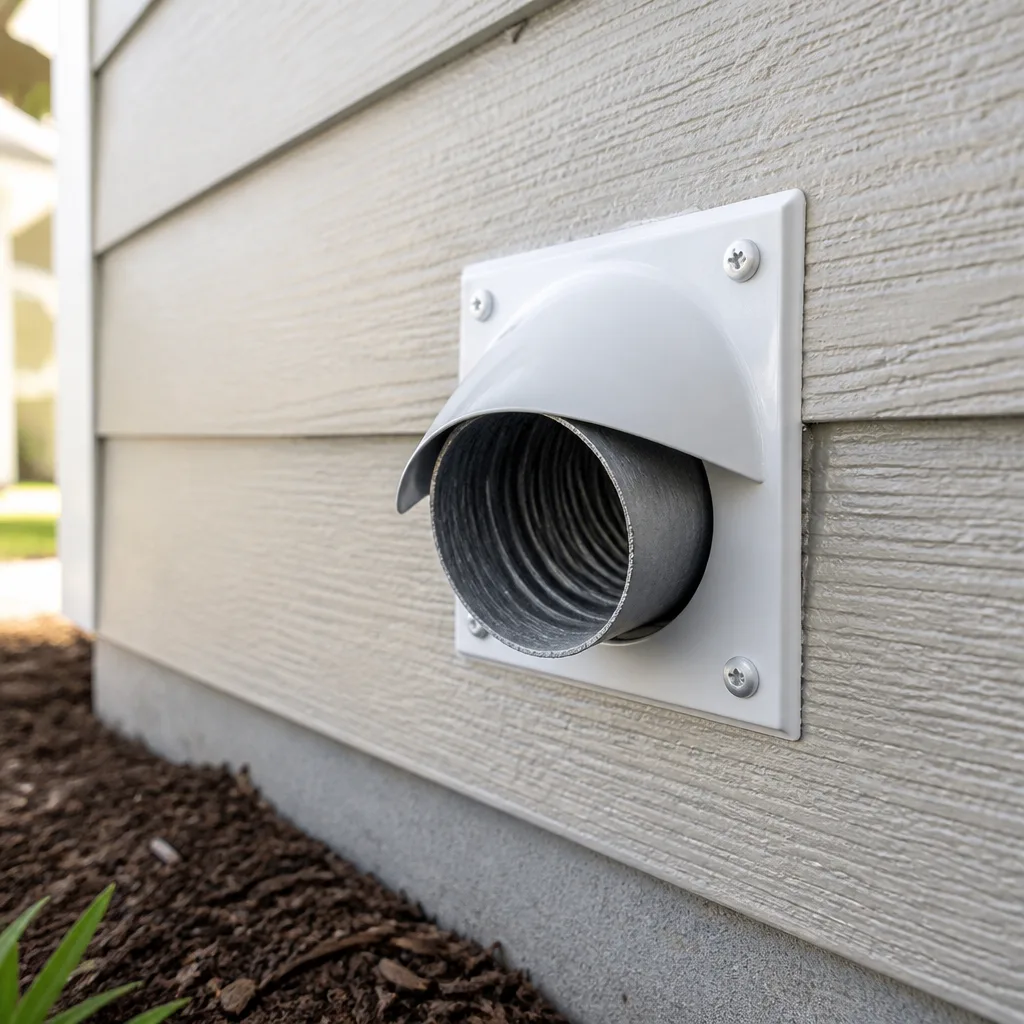 Dryer vent cleaning
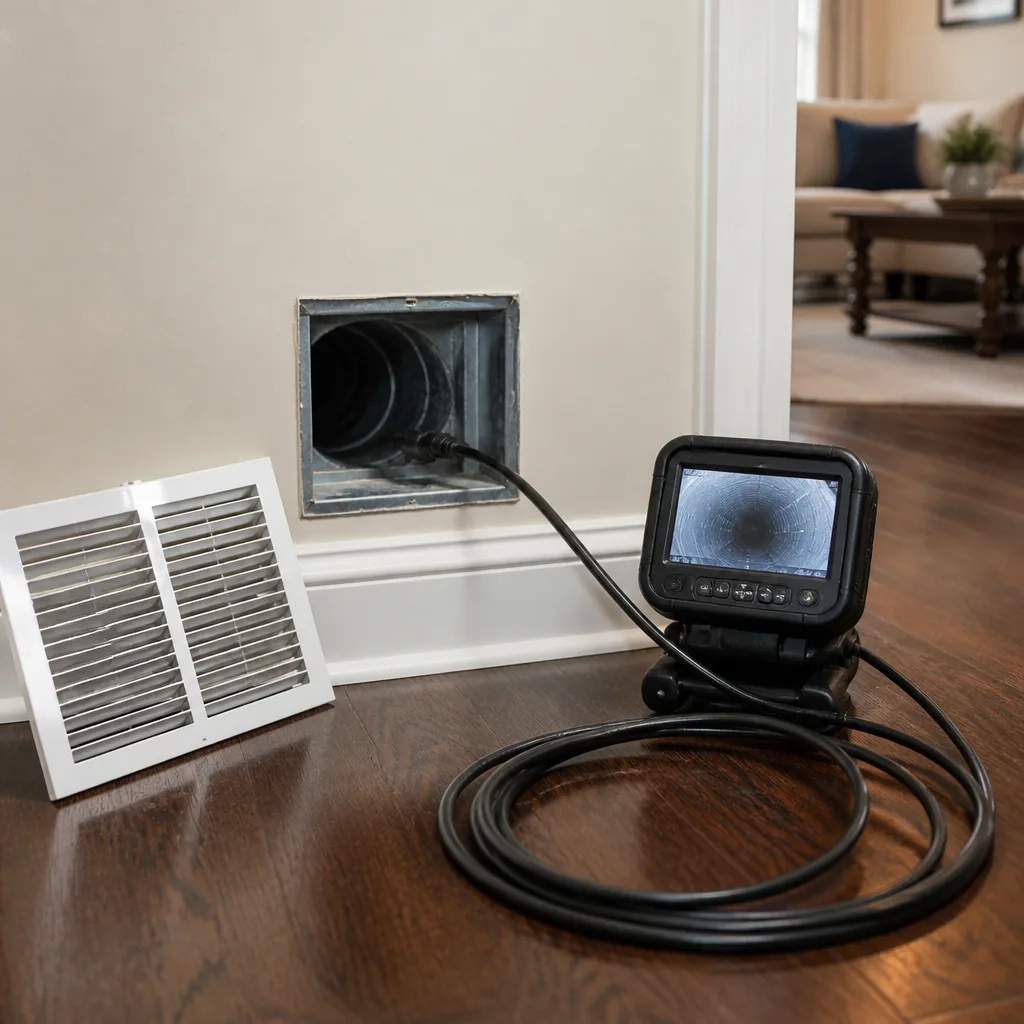 Camera inspection
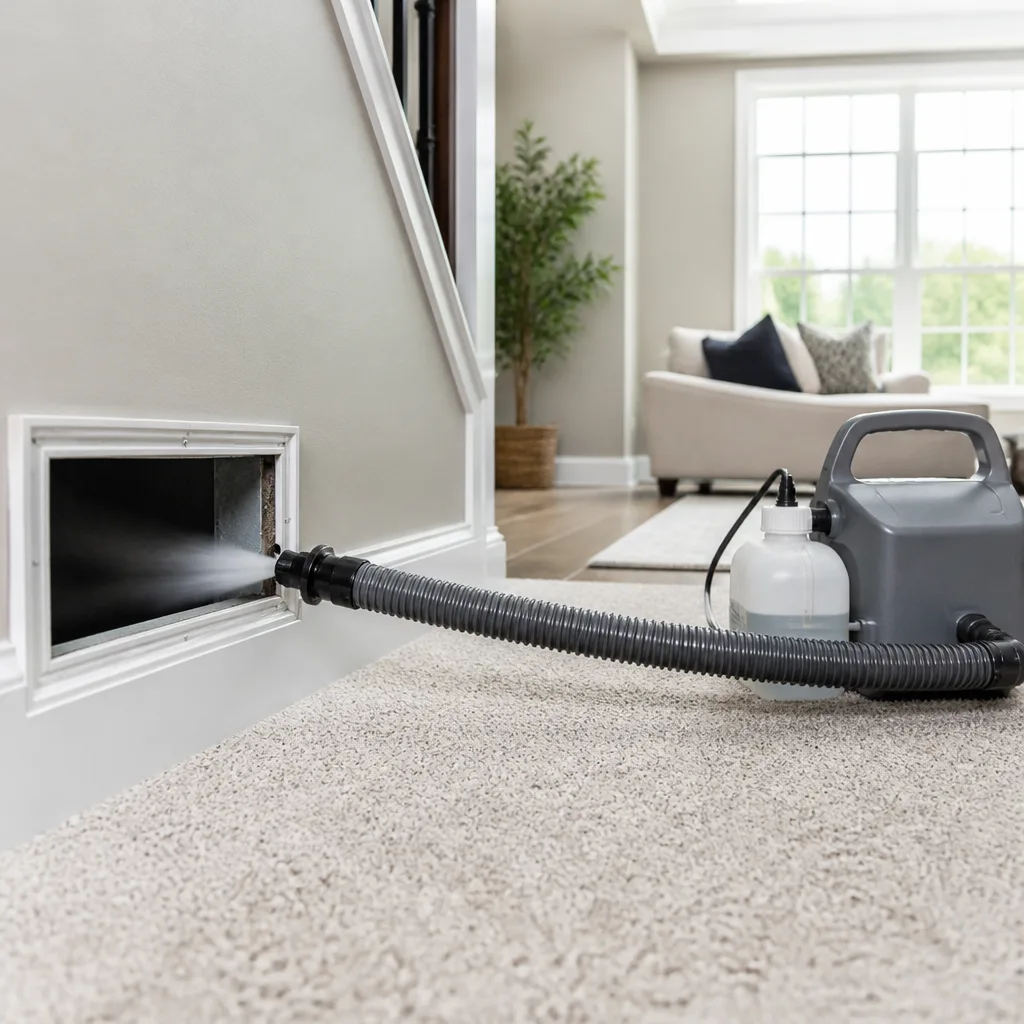 Sanitizing & deodorizing
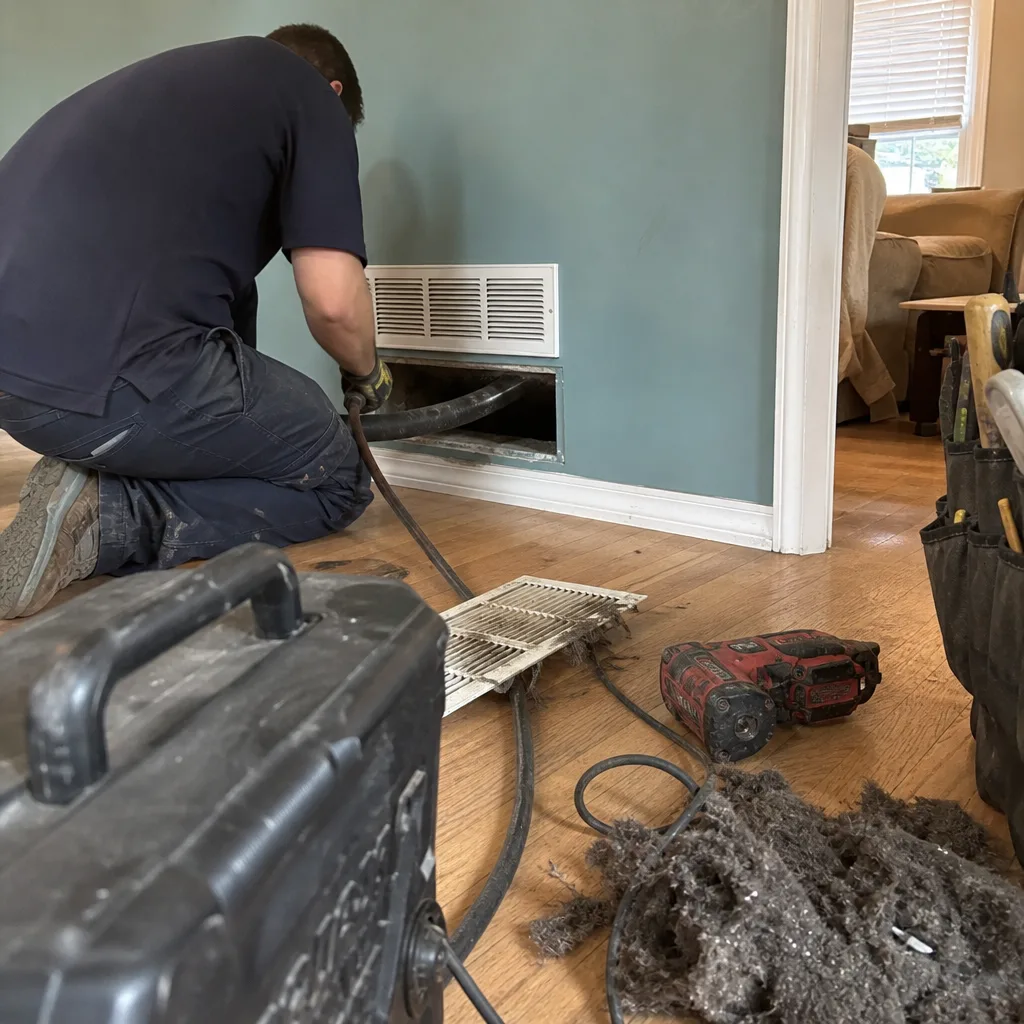
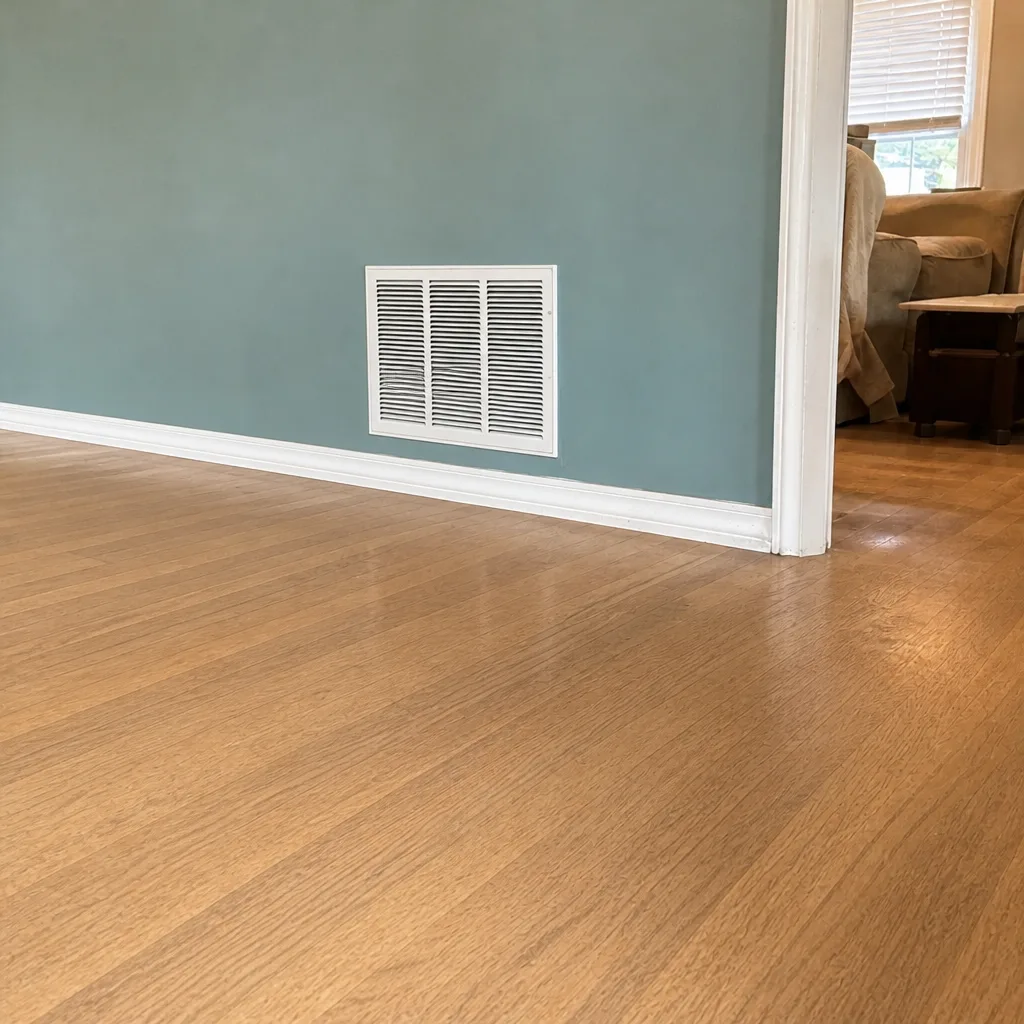
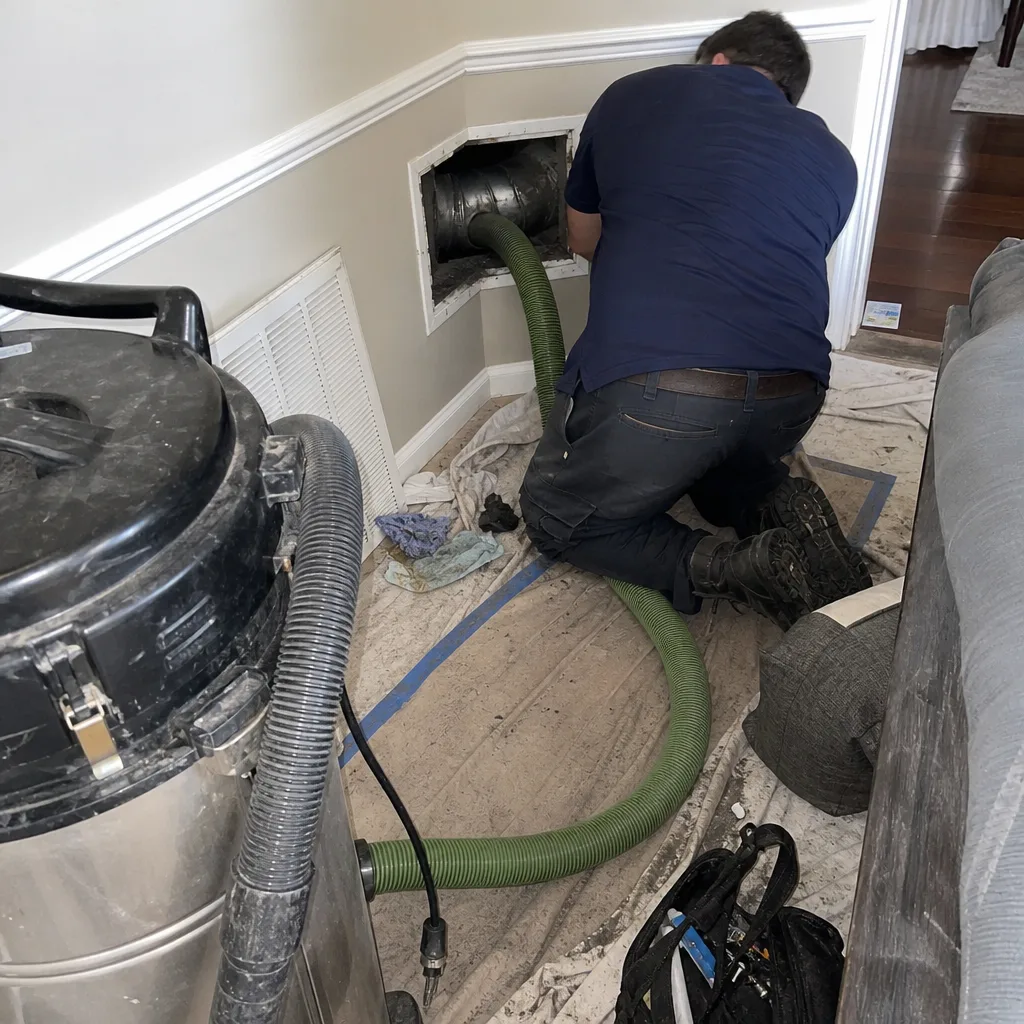
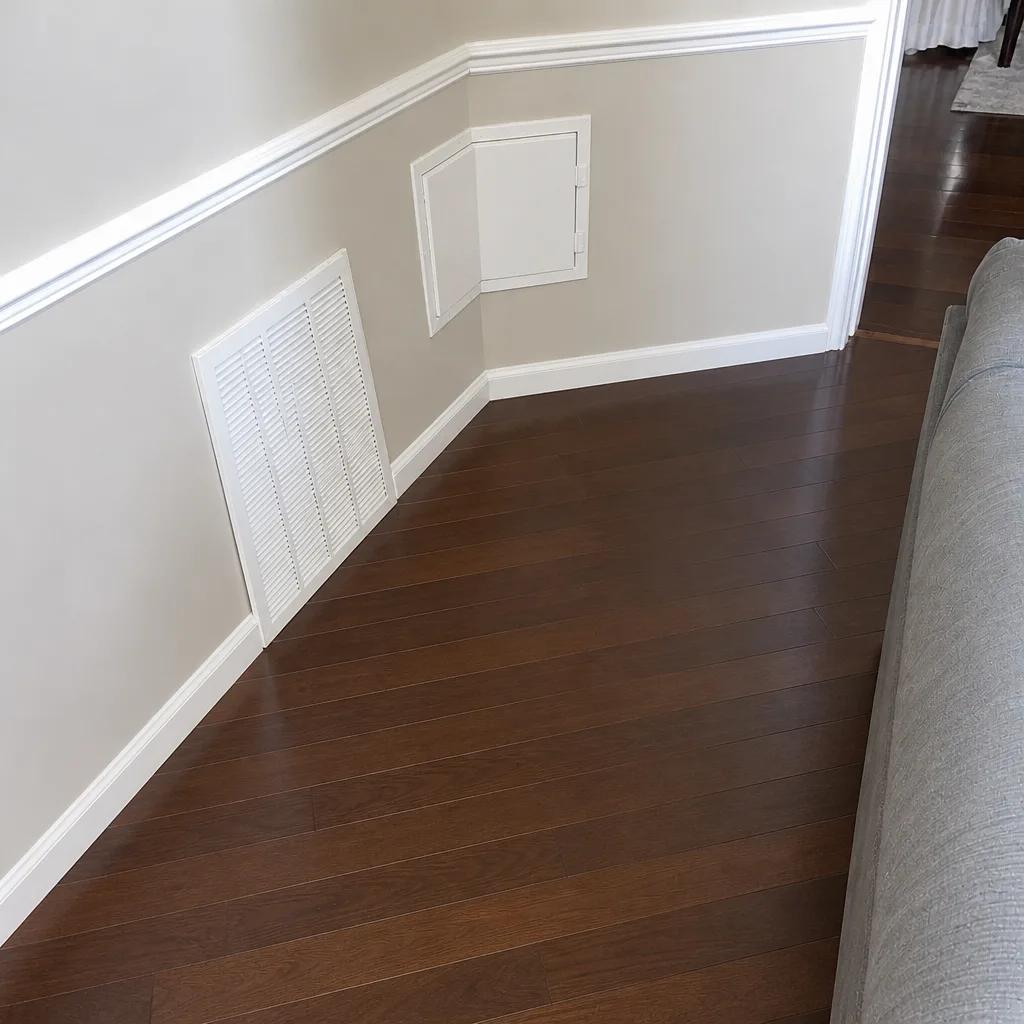
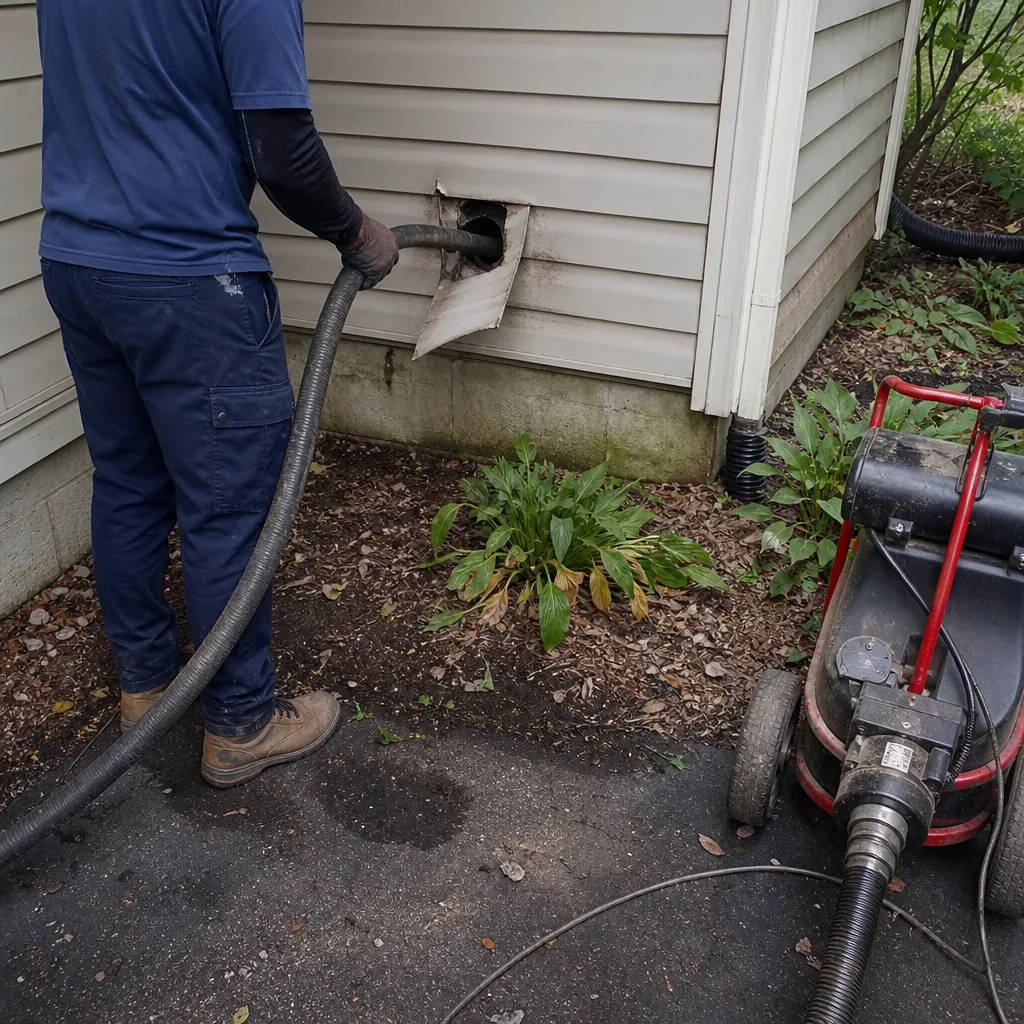
Whole-system duct and dryer vent check with before-and-after photos - you see exactly what came out of your vents
That "$99 whole-house special" is a bait ad - the real number appears once they are in your hallway, or the "clean" is a shop-vac at the register. We photograph the inside of your ducts before and after instead.
Air Duct Cleaning Maintenance Schedule: What to Do and When
The EPA’s oft-cited 3-5 year cleaning guideline was never meant to be a universal schedule. It was a floor, not a prescription, and it predates the MERV-rated filtration most modern systems now run. If you’ve been treating “clean the ducts every three to five years” as gospel, the number probably doesn’t match your house. A home in Fishers with two dogs, a finished basement, and a recent kitchen remodel accumulates debris on a completely different curve than a child-free, no-pet house running MERV 13 filters. This guide replaces the industry average with a variable-interval framework built around your specific household: occupancy, pets, renovation history, filter grade, and the seasonal humidity profile that shapes how Fishers homes breathe through the year. You’ll get a DIY maintenance calendar that stretches professional intervals, a post-renovation rule that resets the clock, and a logging system so future decisions rest on documented conditions rather than guesswork.
Styles & brands we work with
- Whole-home duct cleaning
- Dryer vent cleaning
- Camera inspection
- Sanitizing & deodorizing
Quick Answer
There is no single correct interval. For most Fishers homes, professional air duct cleaning makes sense every 3 to 5 years, but that range shortens to every 2 to 3 years for homes with pets, allergy sufferers, or a recent renovation, and it can stretch to 5 to 7 years in low-occupancy homes with high-grade filtration and no pets. The right cadence for your house depends on four variables: how old the ductwork is, who and what lives in the home, how recently you remodeled, and what MERV rating your HVAC filter carries.
Table of Contents
- Why the Generic 3-5 Year Rule Falls Short
- The Four Variables That Set Your Interval
- A Variable-Interval Framework for Fishers Homes
- Your Month-by-Month Maintenance Calendar
- How Fishers’ Seasonal Humidity Affects the Schedule
- The Post-Renovation Rule: Why Remodels Reset the Clock
- What to Log After Each Professional Cleaning
- Common Mistakes to Avoid
- When to Call a Professional
- Frequently Asked Questions
- The Bottom Line
Why the Generic 3-5 Year Rule Falls Short
The 3-5 year figure gets quoted on nearly every HVAC website, often without context. What’s usually missing is that the EPA guidance was framed as a range of conditions under which cleaning may be warranted, not a calendar prescription. It lists signs (visible mold, vermin, debris discharge) as much as timelines. Treating it as a hard rule produces two failure modes: homes that go years too long between cleanings because “the timer hasn’t run out,” and homes that get cleaned on schedule when their filtration, occupancy, and construction history never demanded it.
What makes this worse in practice is that the guidance predates the widespread adoption of higher-grade filtration. Fifteen years ago, most homes ran a basic fiberglass filter that caught roughly large debris and little else. Today, Honeywell and Aprilaire whole-home filtration systems are common in Fishers new construction and retrofits, and many run MERV 11 to MERV 16 media that captures a far larger share of the particles that would otherwise deposit inside your ducts. A house running Aprilaire MERV 16 media is not accumulating dust at the same rate as a house running a $2 pleated filter changed twice a year.
There’s also a filter-grade side effect most homeowners never hear about. The higher the MERV rating, the more static pressure the filter adds to the system. In older duct systems with undersized returns, a MERV 13+ filter can actually reduce airflow, and reduced airflow means slower duct velocities, which means debris that’s already inside settles more readily. Filter grade isn’t just about what gets caught at the furnace; it changes how the ducts themselves behave.
So the honest answer to “how often should air ducts be cleaned in Fishers Indiana” is that the interval depends on your house. The rest of this guide shows you how to calculate it.
The Four Variables That Set Your Interval
Four factors drive debris accumulation in a residential duct system. Weigh each one for your home, and the right cadence becomes obvious.
1. Home Age and Duct Condition
Ductwork that’s never been professionally cleaned accumulates debris in layers. In homes built before roughly the mid-1990s, ducts were often installed with less attention to sealing, and flex duct runs may sag or develop pinhole leaks where the inner liner separates from the outer jacket. Those leaks pull unconditioned attic or crawlspace air into the supply stream, which carries dust, insulation fiber, and moisture. Older systems therefore tend to need attention sooner, and they need an inspection that checks for compromised runs, not just a vacuuming pass.
2. Occupancy and Pets
People shed. So do pets. A household of five with two dogs will generate noticeably more dust load than a two-person household with no pets. Pet dander and hair are heavy enough to settle in return ductwork, and once that layer forms it becomes a substrate that fine dust clings to. Fishers homes with indoor pets should lean toward the shorter end of any interval.
3. Renovation History
Any project that cuts, sands, or drills inside the envelope produces airborne debris. Drywall dust is one of the most invasive contaminants a duct system encounters because it’s fine enough to travel the full length of the supply and return and sticky enough to coat the inside surfaces. See the renovation section below for the reset rule.
4. HVAC Filter Grade
Higher-MERV filtration captures more of what would otherwise deposit in the ducts. A whole-home media cabinet running Aprilaire or Honeywell media, changed on schedule, meaningfully extends the interval between professional cleanings. A cheap fiberglass filter changed irregularly does the opposite.
A Variable-Interval Framework for Fishers Homes
Here’s a practical way to translate those variables into a starting cadence for your Fishers home. This isn’t a replacement for an on-site inspection, but it gives you a defensible baseline.
- Every 2-3 years: Homes with indoor pets, household members with diagnosed asthma or allergies, older ductwork with visible seal failures, or a recent major renovation. Also any home where registers show dust accumulation between normal filter changes.
- Every 3-5 years: The default for most Fishers homes in average condition, with modest occupancy, no indoor pets, and standard MERV 8-11 filtration changed on schedule.
- Every 5-7 years: Low-occupancy homes (one or two residents), no pets, high-grade whole-home filtration (Aprilaire or Honeywell media in the MERV 13-16 range) changed on schedule, no recent renovation, and ductwork in good physical condition.
Two caveats. First, intervals reset after any renovation that generates meaningful dust. Second, intervals compress if you notice a change in the house: new pet, new baby, new allergy diagnosis, new musty smell. The framework is a starting point, not a contract. If you’re unsure where your home falls, calling us at Duct Cleaning Fishers for a free estimate is the fastest way to get a specific recommendation for your address.
What changes a recommendation most often, in our experience, is the condition of the ductwork itself rather than its cleanliness. A duct system with disconnected joints and torn flex runs will re-contaminate within months of a cleaning. That’s why we treat cleaning and repair as related services rather than alternatives. Our air duct cleaning work is done with Rotobrush brush systems and Nikro HEPA vacuum equipment, and when we find compromised ductwork, we can address it under Air Duct Repair rather than leaving a clean but leaky system behind.
Your Month-by-Month Maintenance Calendar
Between professional cleanings, what you do at home determines whether the interval holds or collapses. This calendar is designed for Fishers homeowners who want the longest defensible interval their house allows. Adjust the timing to match your own HVAC schedule; the sequence matters more than the exact month.
Monthly
- Check and replace HVAC filters on schedule. Note the size printed on the filter frame and keep two spares on hand so a clogged filter doesn’t linger. If your filter is noticeably gray after a month, your interval is likely shorter than you think.
- Wipe visible dust from supply registers. A dry microfiber cloth on the register face keeps the visible surfaces clean and gives you a read on how much the system is depositing.
- Check the condensate drain. Look for standing water in the pan or at the drain line outlet. A slow drain doesn’t touch the ducts directly, but elevated indoor humidity raises the risk of microbial growth inside them.
Quarterly
- Remove and wash return grilles. The return side collects the heaviest debris. Pop the grille, wash it in a utility sink, dry it fully, and reinstall.
- Vacuum supply register interiors. A crevice tool on a household vacuum can lift loose dust off the register boot, which is the short transition between the duct and the room.
- Inspect visible ductwork in basement, attic, or crawlspace. Look for disconnected flex runs, torn outer jackets, or runs that sag and collect low spots. Photograph anything that looks compromised.
- Check the dryer vent exterior termination. With the dryer running, confirm strong airflow at the outside flap. Weak flow or visible lint buildup at the hood means it’s time for a professional dryer vent cleaning.
Annually
- Confirm filter grade matches your system. If you’ve upgraded to a higher-MERV filter, check that your HVAC equipment is rated for it. Oversized filtration on an undersized return can choke airflow.
- Walk the duct runs and re-inspect seals. Specifically look at joints, transitions, and any place ductwork passes through a wall or floor penetration.
- Review your last professional cleaning report and compare it to current conditions. If the report noted specific issues, this is the year to address them.
Doing those tasks consistently is the single best way to stretch your professional interval. Skipping the quarterly register cleaning alone accounts for a meaningful share of the dust complaints we hear about from homeowners in Fishers who assume their ducts must be dirty again when the visible deposits are just register-face dust.
How Fishers’ Seasonal Humidity Affects the Schedule
Central Indiana’s humidity swings matter more to duct condition than most homeowners realize. Fishers summers run humid enough that a house with an underperforming air conditioner, a slow condensate drain, or a bath fan vented into the attic can push indoor relative humidity into a range where microbial growth inside a duct system becomes plausible. The duct interior is a dark, moderately-warm space with a slow airstream, which is exactly the environment mold spores prefer when moisture is available.
What this means practically: the humidity profile doesn’t change the cleaning interval directly, but it changes what you should check during the humid months. If you notice a musty odor at any register during the summer, that’s a signal the system needs professional inspection, not a rescheduled cleaning. Moisture issues compress intervals because they create conditions cleaning alone cannot fix; the underlying humidity source has to be addressed or the problem returns.
Winter in Fishers brings the opposite pattern. Forced-air heating runs dry, indoor humidity drops, and static electricity picks up. Dry air doesn’t create microbial problems, but it does make fine dust more mobile, and a neglected filter will deposit a visible layer on register faces more quickly in heating season than in cooling season. That’s why filter discipline matters most during the winter months.
The transition seasons, roughly April and October, are the best windows to schedule a professional inspection because it puts your cleaning on record as either pre-summer (checking for humidity-related issues) or post-summer (clearing out whatever grew or deposited during the cooling season). If you’re planning a cleaning for either window, we can walk you through what the inspection will cover.
The Post-Renovation Rule: Why Remodels Reset the Clock
This is the rule most homeowners miss, and it’s the one that most often produces the “my ducts are dirty again already” complaint.
Any renovation that generates meaningful airborne debris resets the cleaning clock regardless of when the last professional service occurred. That includes:
- Drywall installation, repair, or sanding
- Insulation removal or replacement
- Floor refinishing or demolition
- Kitchen and bathroom remodels
- Any project where walls are opened
Drywall dust is the biggest offender because it’s fine enough to travel through the entire duct system and abrasive enough to wear on blower components. Insulation fiber is the second. Both get drawn into the return side of the system while the HVAC is running, or while negative pressure from construction fans pulls air through the house.
Two practical rules follow. First, during any renovation, seal supply and return registers in the work zone with plastic and painter’s tape, and change the HVAC filter more frequently than usual until the project is complete. Second, schedule a professional duct cleaning within a few weeks of final cleanup, once the dust has settled but before the heating or cooling season really kicks in. A cleaning done during the renovation or before final sanding will simply re-contaminate.
Pre-containment matters here too. Professional cleaning after a renovation should include negative-air filtration on-site, not just a vacuum pulled through the registers. We use Abatement Technologies air filtration and HEPA vacuum equipment on-site specifically so that dislodged debris is captured rather than pushed back into the room. Post-renovation systems are heavily loaded, and a cleaning that doesn’t contain the debris simply redistributes it onto the surfaces you just finished.
What to Log After Each Professional Cleaning
The single most useful thing you can do after a professional duct cleaning is document the baseline. Without a record, every future decision becomes guesswork, and you end up defaulting to the generic 3-5 year rule you already know is wrong for your house.
Here’s what to capture in a simple spread of notes you keep with your filter sizes and HVAC records:
- Date of service and equipment used. Note the brush system and vacuum (for example, Rotobrush and Nikro) so future cleanings can be compared like to like.
- Filter grade at time of cleaning. MERV rating and filter brand (Aprilaire, Honeywell, or other). This is the baseline against which future filter changes should be measured.
- Pre-cleaning condition notes. What the technician observed: heavy dust in return plenum, light dust in supply trunk, visible debris at specific registers.
- Duct repair findings. Any disconnected joints, torn flex runs, sagging sections, or sealed penetrations. These predict how fast the system will re-contaminate.
- Before-and-after photos. Ask for these. A written report plus photos of your own ducts lets you judge whether the interval was correct rather than trusting a marketing claim.
- Moisture observations. Any evidence of condensation, musty odor, or biological growth noted during inspection. These change the interval more than dust accumulation does.
- Recommended next interval. A specific number, not a range. “Next cleaning recommended in 36 months based on pet load and filter grade” is a baseline. “Clean every 3-5 years” is not.
Keep this log with your maintenance records. When you eventually sell or refinance a Fishers home, documented duct service with dated notes and photos is a small but real value signal to a buyer or inspector.
Common Mistakes to Avoid
- Treating 3-5 years as universal. The number is a rough average from a pre-MERV-filter era. Use your own variables to set your interval, not a generic rule.
- Skipping the post-renovation cleaning. Drywall dust resets the clock. Waiting until “the next scheduled cleaning” leaves abrasive contamination in the system for months.
- Upgrading filter MERV without checking system capacity. A high-MERV filter on an undersized return chokes airflow. Match the filter grade to what the equipment and ductwork can handle.
- Ignoring musty odors between cleanings. A musty smell at any register in a Fishers summer home is a signal for inspection, not a wait-for-the-schedule issue. Moisture problems compound while you wait.
- Accepting a cleaning without a duct inspection. Cleaning without checking for disconnected joints and torn flex runs leaves the underlying problem in place. Pair cleaning with repair where the system needs it.
- Choosing the lowest bid without asking about equipment and containment. A shop vac pulled through a register is not a duct cleaning. Ask about professional equipment and on-site containment before booking.
- Skipping the dryer vent on the same schedule. The dryer vent is a fire risk, not just a maintenance checkbox. Federal fire statistics place lint-blocked dryer vents among the leading causes of residential fire deaths. Have it professionally cleaned on a regular cadence.
When to Call a Professional
Book an inspection and estimate when any of these are true: you’ve never had the ducts professionally cleaned and the home is more than five to seven years old; you’ve completed a renovation in the last twelve months; you’ve noticed a persistent musty odor at any register; household members have new or worsening allergy or asthma symptoms that don’t fit the season; visible dust blooms on register faces within days of cleaning them; or you can see disconnected, torn, or sagging ductwork in the basement, attic, or crawlspace. Dryer vent noise, reduced dryer performance, or a hot dryer door also warrant professional attention. Duct Cleaning Fishers offers free estimates in Fishers; call (844) 320-6508 to book an inspection. Estimates are free, and pricing is per job by written estimate, so you know the number before the work begins.
Frequently Asked Questions
The right interval for most Fishers homes is every 3 to 5 years, but it shortens to 2 to 3 years for homes with pets, allergy sufferers, older ductwork, or a recent renovation, and it can stretch to 5 to 7 years in low-occupancy homes with high-grade filtration and no pets. Use your own household variables to set the interval, not a generic rule. Call (844) 320-6508 for an exact quote; estimates are free.
A typical whole-home duct cleaning in the Fishers market generally falls in the range of a few hundred dollars, with the actual number depending on the number of registers, the condition of the ductwork, and whether repair is needed alongside cleaning. We give one flat price per system, agreed before work starts, so there’s no surprise on the invoice. Call (844) 320-6508 for an exact quote; estimates are free.
Cheap quotes usually reflect smaller equipment, no on-site containment, and no inspection of the ductwork itself. A shop vac pulled through a register will pick up loose dust in the first few feet of the boot and leave the trunk line, plenum, and returns untouched, and without negative-air filtration the dislodged debris goes into the room rather than out of it. Before booking, ask what equipment the technician uses, whether the process includes containment, and whether they’ll inspect the duct runs. Call (844) 320-6508 for an exact quote; estimates are free.
Ask for before-and-after photos of your own ducts, and ask for a written report of what was found and what was cleaned. Contained cleaning means the equipment is visible and the process is documented; a legitimate service will happily show you both. Call (844) 320-6508 and ask specifically for photos and a written report; estimates are free.
Yes. Any project that produces drywall dust, insulation fiber, or sanding dust resets the cleaning clock regardless of when the last professional service occurred, because that debris travels through the full system and is abrasive enough to wear on the blower. Schedule the cleaning after final cleanup, not before. Call (844) 320-6508 for an exact quote on a post-renovation cleaning; estimates are free.
Central Indiana’s humid summers do raise the risk of microbial growth inside a duct system if a moisture source is present, whether from a slow condensate drain, an underperforming AC, or a bath fan vented into the attic. If you notice a musty odor at any register, that’s a signal for professional inspection, not a scheduled cleaning. Call (844) 320-6508 for an exact quote; estimates are free.
The Bottom Line
The 3-5 year rule is a floor, not a schedule. Build your own interval around four variables: home age and duct condition, occupancy and pets, renovation history, and filter grade. Keep up the register cleaning, filter discipline, and condensate checks in this calendar, and you’ll get the longest defensible interval your house allows. Reset the clock after any renovation. Log the baseline after every professional cleaning so future decisions rest on documented conditions. And when the schedule or a musty odor or a compromised duct run points to professional attention, book an inspection rather than waiting for a timer to run out. Duct Cleaning Fishers uses Rotobrush brush systems, Nikro HEPA vacuums, and Abatement Technologies on-site filtration because a cleaning without containment and without a duct repair capability only gets half the job done. Our technicians have up to 15 years of experience, and we handle air duct cleaning, dryer vent cleaning, and air duct repair as focused services. Call (844) 320-6508 for a free estimate. We answer 24/7. Fast dispatch from 7am to 7pm, Sunday through Friday.
Written by the team at Duct Cleaning Fishers.
See the difference
 Before
 After
 Before
 After
 Before
 After