
Last updated November 16, 2026
 Whole-home duct cleaning
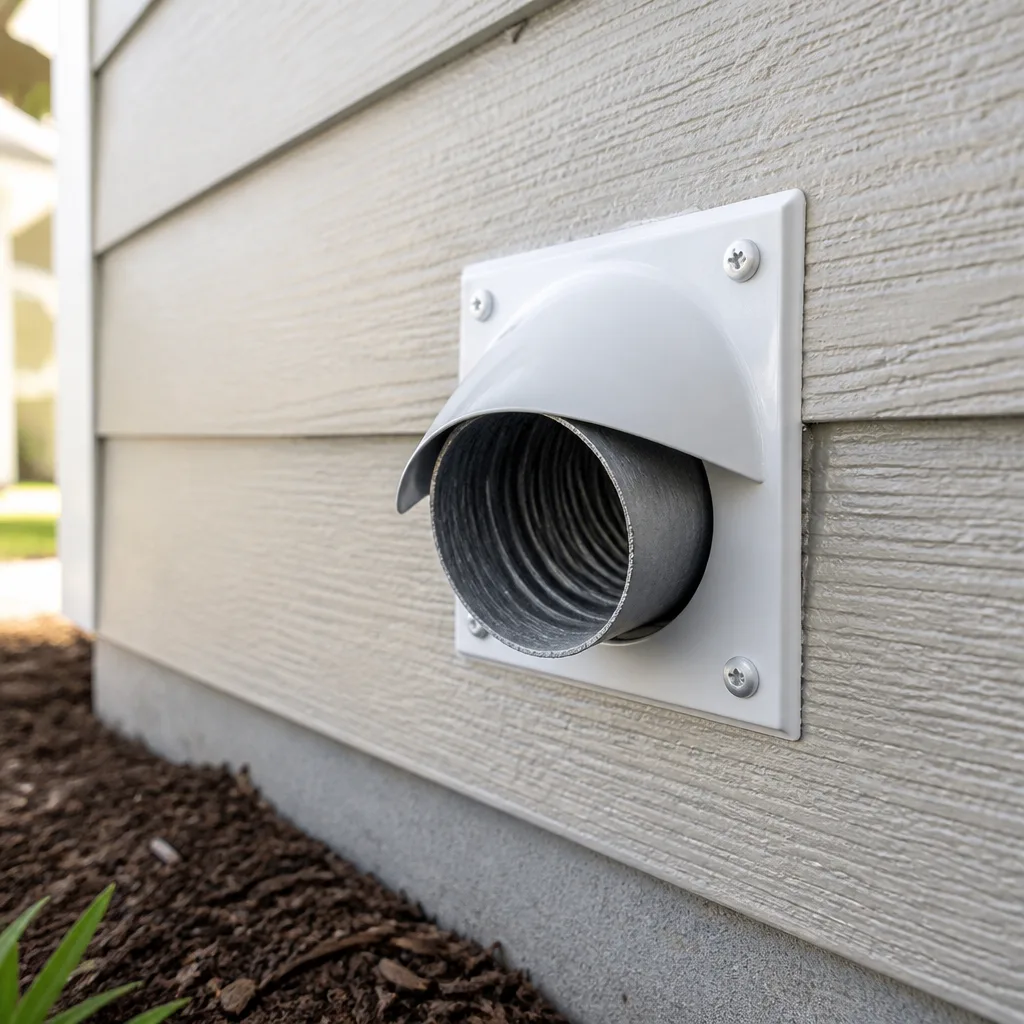 Dryer vent cleaning
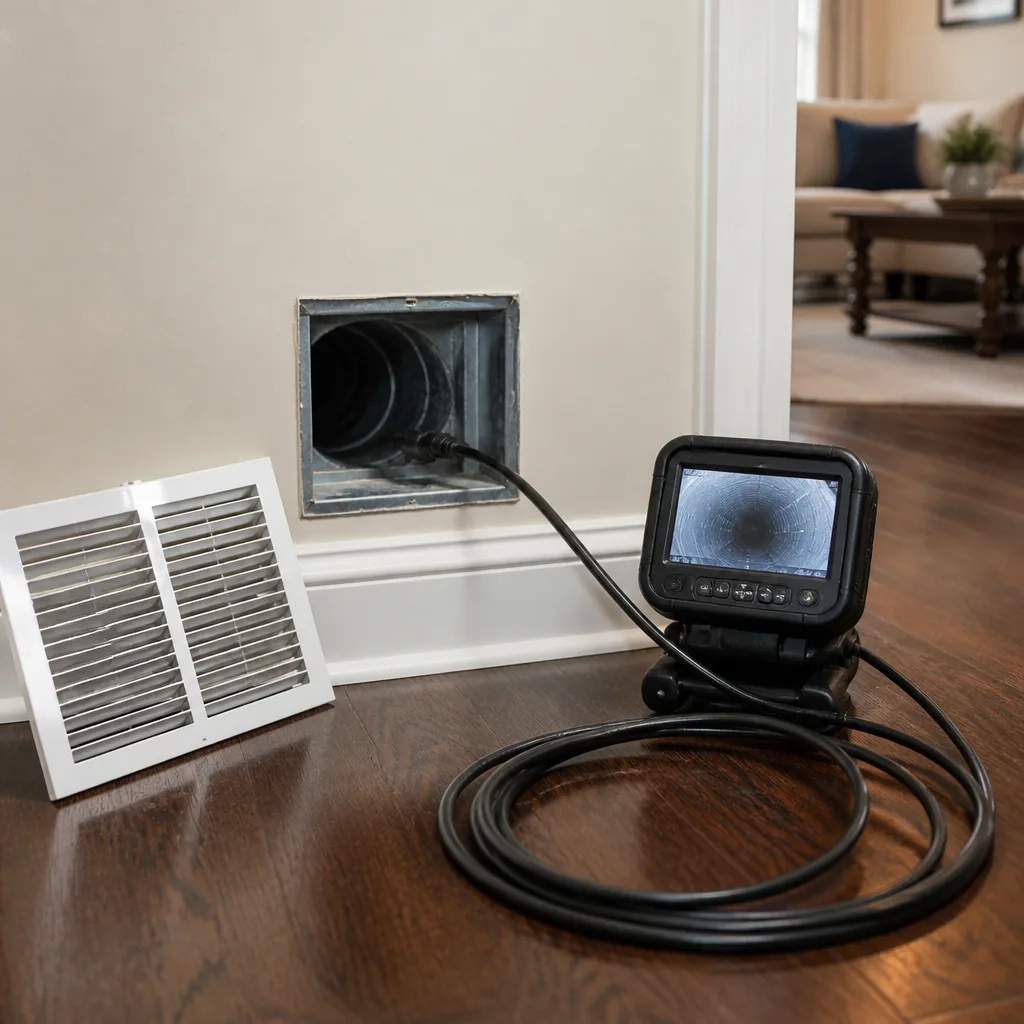 Camera inspection
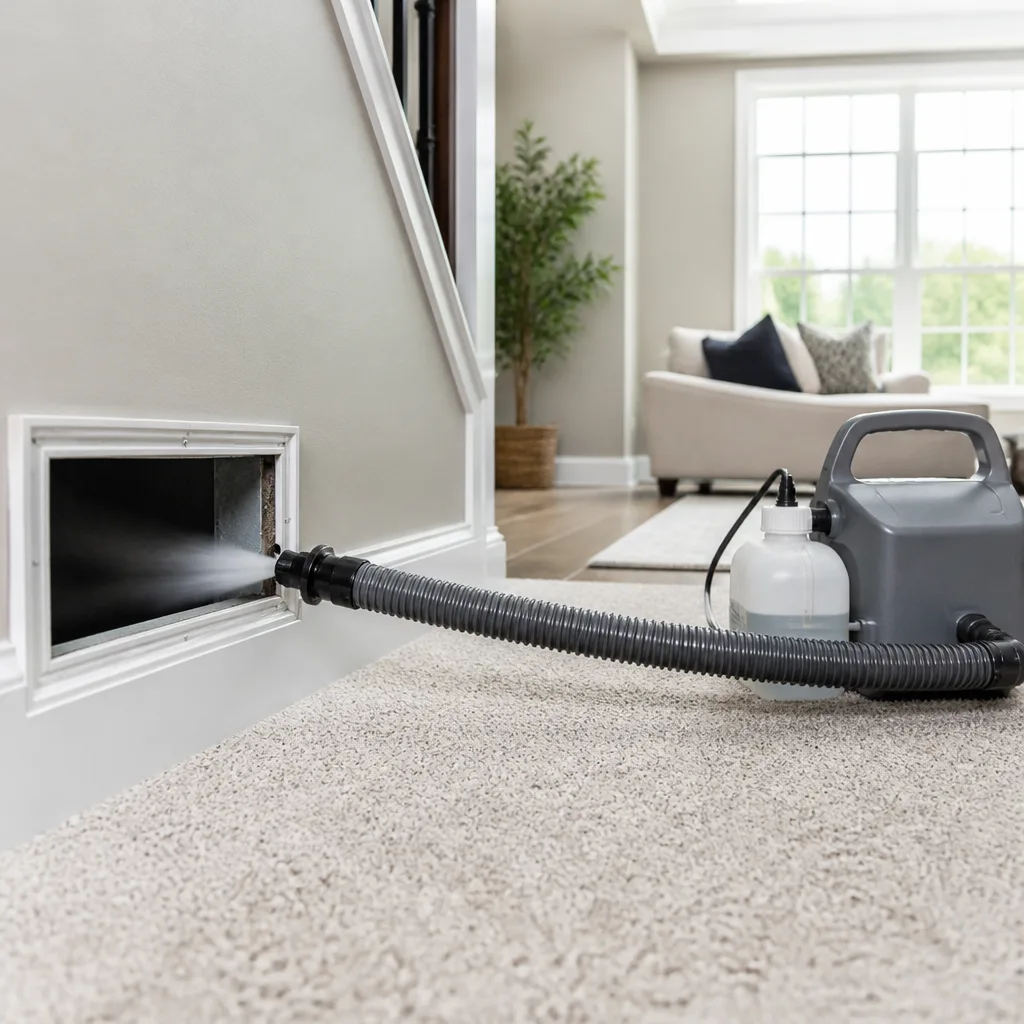 Sanitizing & deodorizing
Whole-system duct and dryer vent check with before-and-after photos - you see exactly what came out of your vents
That "$99 whole-house special" is a bait ad - the real number appears once they are in your hallway, or the "clean" is a shop-vac at the register. We photograph the inside of your ducts before and after instead.
Air Duct Cleaning Permits, Codes & Inspections in Fishers, IN: What You Need to Know
Here’s the misconception we run into most often: homeowners assume that because duct cleaning is “just cleaning,” nothing about the job touches a building code. That’s true right up until a technician finds a disconnected flex run in the attic, cuts a new access panel in a trunk line, or has to replace a crushed register boot. At that moment the work stops being cleaning and becomes mechanical work under Indiana’s State Building Code. This guide explains exactly where that line sits in Fishers, what the city and Hamilton County expect, how to check a contractor’s credentials, and what paperwork you should keep when the job is done. If you’ve ever wondered whether your duct work needs a permit, this is the page to read before anyone touches your system.
Quick Answer
Cleaning the inside of your existing ductwork in Fishers does not require a permit. Sealing, cutting into, re-routing, or replacing any part of the duct system is mechanical work under Indiana’s State Building Code, and it generally does require a permit pulled by a licensed mechanical contractor. A duct cleaning technician can clean and document; a licensed HVAC contractor performs the structural repair. Keep the paperwork from either job for future disclosure when you sell.
Styles & brands we work with
- Whole-home duct cleaning
- Dryer vent cleaning
- Camera inspection
- Sanitizing & deodorizing
Table of Contents
- Cleaning vs. mechanical work: where Fishers draws the line
- What Indiana’s State Building Code says about ductwork
- When repairs discovered during cleaning need a licensed contractor
- How to verify a contractor’s Indiana HVAC license
- Inspections on new construction in Fishers
- Documentation to request after any duct work
- What an inspection actually looks like
- Common mistakes to avoid
Cleaning vs. Mechanical Work: Where Fishers Draws the Line
Fishers operates under Indiana’s State Building Code, and the distinction that matters most for homeowners is between maintenance and modification. Cleaning is maintenance. Modification is construction.
Cleaning means removing debris from ducts that are already there, using negative air pressure and agitation tools, without cutting, altering, or adding to the system. That’s what a duct cleaning specialist does. No permit is involved because nothing about the building’s mechanical system is changed.
Mechanical work is anything that changes the system itself. In practice, under Indiana code, that includes:
- Cutting a new access panel into a trunk line or plenum to reach a section of duct.
- Resealing or reconnecting a disconnected flex run, a separated joint, or a failed mastic seal.
- Replacing a register boot, a length of duct, or a damaged elbow.
- Re-routing ductwork to improve airflow or accommodate a remodel.
- Adding or removing a supply or return run.
- Modifying the plenum connection at the air handler.
That’s the line. A cleaning job that stays inside the existing duct system is a maintenance service. A cleaning job that discovers damage and needs to fix it crosses into mechanical work. The distinction matters because it determines who is legally allowed to do the repair and whether the city needs to see plans first. In Fishers, where a lot of housing stock went up during the last two decades of rapid growth, we’ve found that builder-grade flex duct is often the culprit: it sags, it tears at the collar, and it separates at joints that were never properly sealed in the first place.
What Indiana’s State Building Code Says About Ductwork
Indiana adopts the International Residential Code and International Mechanical Code as the basis for its statewide building code, with local amendments. For ductwork, the code covers material standards, sealing requirements, support spacing, clearances to combustibles, and the requirement that mechanical work be performed by a licensed contractor.
What the code means for a Fishers homeowner, in plain terms:
- Duct sealing is required, not optional. Joints, seams, and connections must be sealed with approved materials. Tape alone, especially the wrong tape, doesn’t meet the standard.
- Ducts must be supported at proper intervals. Sagging flex duct that’s been hanging unsupported since the house was built is a code issue, not just an airflow issue.
- Clearances to combustibles matter. Ducts running too close to a furnace flue or water heater vent are a fire and carbon monoxide concern, not a cosmetic one.
- Work must be permitted where the code requires it. Structural changes to the duct system are permitted work in most Indiana jurisdictions.
- Licensed contractors perform mechanical work. Cleaning is a maintenance task; alterations to the mechanical system fall under licensing.
The climate angle here is specific to central Indiana. Fishers sees cold winters and humid summers, and duct systems cycle through wide temperature swings every year. That expansion and contraction is hard on mastic seals and flex duct connections in ways that a mild-climate home never experiences. Add in the fact that many Fishers homes have ducts running through unconditioned attic space, and you get condensation, degraded insulation jackets, and joints that fail years before the homeowner notices anything besides “the upstairs never gets cool.”
If code questions come up during an estimate, ask your contractor to point to the specific Indiana code section. A legitimate mechanical contractor can do that. A duct cleaning-only operation should simply say “this repair requires a licensed contractor” and stop there.
When Repairs Discovered During Cleaning Need a Licensed Contractor
The most common scenario in Fishers: a technician runs a camera down a return trunk during a routine cleaning and finds a length of flex duct that’s come completely off its collar inside a wall cavity or attic. Now what?
Here’s how we handle it, and how any honest duct cleaning company should:
- Stop, document, and show you. Before-and-after photos of the exact problem, not a vague description. You should see the disconnected run, the crushed section, or the torn insulation jacket yourself.
- Explain the difference between cleaning and repair. Cleaning the system around a broken duct is fine. Reconnecting that duct is mechanical work.
- Refer the repair to a licensed mechanical contractor. The duct system can’t legally be altered by a cleaning-only technician in Indiana. A licensed HVAC contractor performs the repair, pulls the permit if one is needed, and stands behind the work.
- Come back to clean once the repair is done. Cleaning a duct system with a known leak means debris gets redistributed instead of removed. Clean after the repair, not before.
This is where “we repair what others only clean” becomes an operational commitment rather than a slogan. As a company focused specifically on air duct cleaning, we identify compromised ductwork, document it precisely, and coordinate with a licensed contractor for the structural fix. Our scope is duct cleaning, dryer vent cleaning, and air duct repair coordinated through licensed professionals. We don’t do HVAC installation, and we don’t pretend a cleaning job can solve a structural duct problem.
One more point: if a cleaning company offers to “fix” a disconnected duct on the spot without a license, that’s a red flag. It means either they’re not clear on Indiana code or they’re cutting corners. Either way, you’re the one who owns the liability when the repair fails or the house sells.
How to Verify a Contractor’s Indiana HVAC License
Indiana requires mechanical contractors performing HVAC work to hold a valid state license. Verification is not complicated, and any reputable contractor will expect you to do it.
What to check before any duct work begins:
- State mechanical contractor license. Ask for the license number and verify it through the state’s licensing database. The number should match the contractor name on the estimate.
- Scope of the license. A mechanical contractor license covers installation, alteration, and repair of HVAC and duct systems. A duct cleaning technician is not, by definition, a licensed mechanical contractor.
- Liability insurance and workers’ comp. Request a certificate of insurance and confirm the policy is current. A one-person operation without insurance becomes your problem if something goes wrong.
- Permit history. A licensed contractor can tell you whether the job at your address has required permits previously and whether any permit pulls would be needed for the repair they’re proposing.
- Written scope. The estimate should state exactly what’s being done. “Duct cleaning” and “duct repair” are two separate line items and shouldn’t be blurred together.
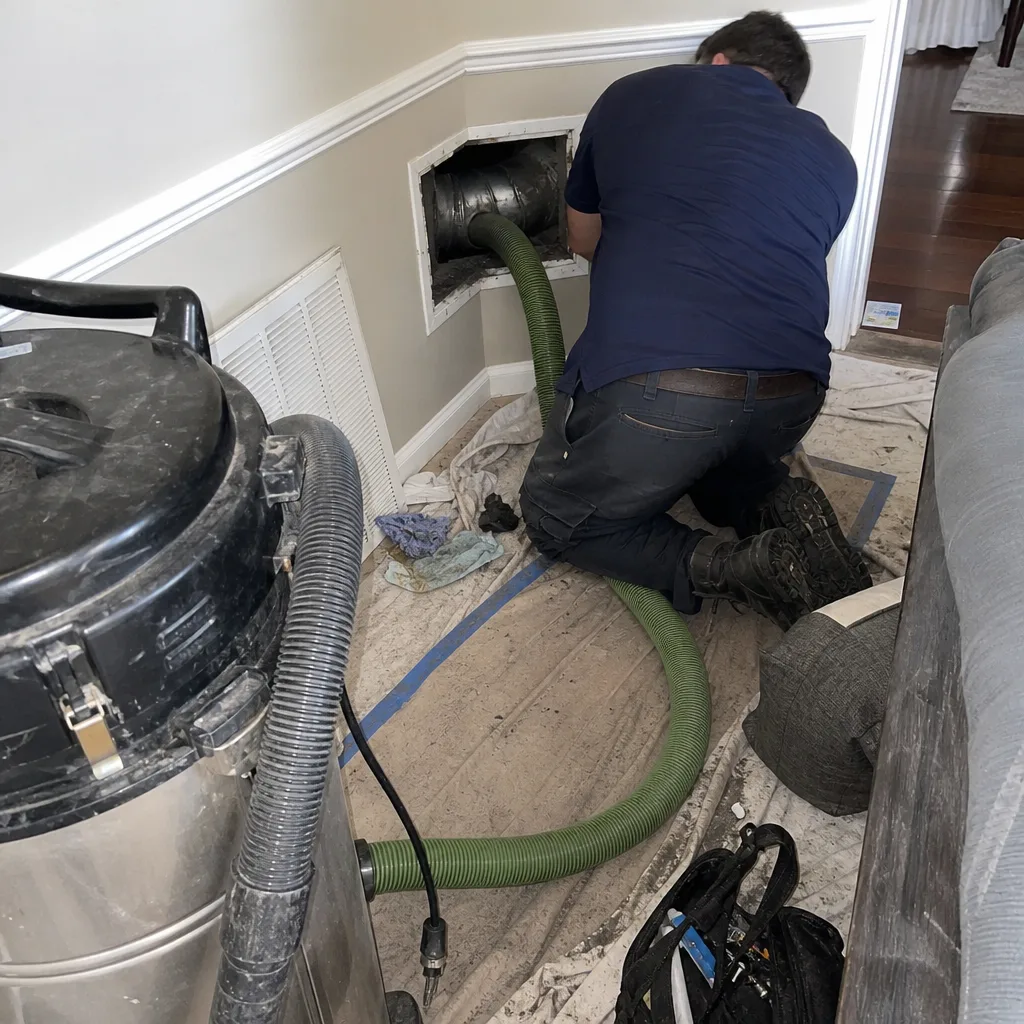
For cleaning itself, licensing isn’t the primary credential. What matters is equipment, containment, and process. Professional-grade machinery makes the difference between removing debris and stirring it up. We use Rotobrush brush systems and Nikro HEPA vacuums, and we deploy Abatement Technologies negative-air filtration on-site so dislodged debris is contained during the job rather than redistributed into living space. That containment step is the one a cheap bid frequently skips because the equipment costs money and adds time.
When a company is also trained on Honeywell and Aprilaire IAQ equipment, that’s a useful signal that they understand how duct condition interacts with whole-home air quality. It’s not a license. It’s a marker of technical depth. Between a verified license, current insurance, and the right equipment list, you have enough information to make a decision that isn’t based on price alone.
Inspections on New Construction in Fishers
Fishers has grown fast, and a large share of the housing stock is newer construction. That matters because duct systems in newly built homes go through a different inspection path, and it changes the cleaning timeline.
What happens with a new build’s duct system:
- Rough-in inspection. Before drywall closes the walls, the duct system is inspected for material compliance, sealing, support, and clearances to combustibles.
- Final mechanical inspection. After the HVAC equipment is installed and the system is operational, the inspector confirms the system is complete and code-compliant.
- Certificate of occupancy. In most new construction, the CO depends on the mechanical inspection passing. That’s the homeowner’s assurance the system met code at completion, not forever after.
Here’s the practical consequence for Fishers homeowners in newer neighborhoods. Construction dust, drywall particulate, and general site debris often end up in duct systems during the build. A home that passed inspection in 2019 is still carrying years of that debris through every room in the house. Cleaning new construction ducts is a legitimate need, and it’s separate from any code question because the code concern was satisfied at the time of the build.
For homes built before the last big construction wave, the timeline shifts. Ducts that were properly sealed at construction degrade over the years, and a mid-2000s home has likely been through enough seasonal cycles in central Indiana’s climate for seal failures to show up. In both cases, the answer is the same: cleaning is the right first step, and a proper inspection during cleaning tells you whether any repair needs to happen. The best way to find the truth about your specific ducts is professional-grade equipment in the hands of technicians trained to read what they find. Our technicians have up to 15 years of experience and have seen the range of what passes inspection and what quietly fails the homeowner later.
Documentation to Request After Any Duct Work
Homeowners in Fishers who plan to sell in the next decade should keep a clean paper trail from every duct cleaning and repair. The reason is disclosure. When you sell a home, the Indiana Residential Property Disclosure form asks about known defects and prior work. Having documentation means you can answer those questions with certainty rather than a guess.
Request these items from any duct cleaning company:
- Before-and-after photos of the ducts. Specifically, photos of the interior duct conditions before cleaning and the same sections afterward. These protect you if a future buyer questions the work.
- A written scope of work. What was cleaned, what equipment was used, what wasn’t accessible, and what the technician observed.
- Findings report. Any defects found (disconnected runs, crushed flex, degraded seals) documented with photos and location.
- Repair documentation from the licensed contractor. If a repair was required, the mechanical contractor’s paperwork including any permit and inspection sign-offs.
- Invoice with the company name and license status where applicable. Not a hand-written receipt. A real invoice.
We send every customer a written record of the job, including before-and-after photos of their own ducts. That’s not a marketing flourish. It’s the documentation that protects you at sale. Compare contractors on whether they provide this, not just on the number on the estimate. A cheap job with no paperwork leaves you exposed when a buyer’s inspector asks a question.
If you want a fuller picture of what duct work looks like in your neighborhood, the Fishers guide covers the local situation in more detail.
What an Inspection Actually Looks Like
An inspection during a duct cleaning visit is different from a city inspection. Nobody from the building department arrives. The technician inspects with a camera, checks airflow, opens access points, and documents findings. It’s diagnostic, not regulatory.
What a thorough duct inspection covers:
- Access panel review. Where are the existing access panels, and are there sections of duct that can’t be reached without a new panel?
- Camera inspection of trunk and branch runs. Interior condition, debris volume, signs of pest activity, moisture, mold, or disconnected sections.
- Seal integrity check. Mastic, tape, and mechanical connections at every accessible joint.
- Support and clearance review. Sagging flex, unsupported runs, ducts that are too close to heat sources.
- Airflow measurement. Register-by-register check to identify weak runs and uneven distribution.
- Filtration system review. Filter condition, filter cabinet condition, and whether the installed filter is correct for the system.
- Condensate and drainage check. Relevant to central Indiana’s humid summers, where standing water in or near ductwork creates a mold and odor problem.
Findings are then classified: cleanable now, needs repair by a licensed contractor, or not accessible without cutting into the system. That classification is what drives the next step, and a legitimate inspector explains it clearly rather than using findings as an upsell lever.
One note on scope: our inspection process covers ducts and dryer vents. It doesn’t extend to testing the air handler, refrigerant charge, or combustion safety. If the inspection turns up a furnace concern, we tell you and let a licensed HVAC contractor handle it. That separation is exactly what Indiana code requires, and it protects you.
Dryer Vents: A Separate Fire-Safety Code Concern
Air ducts move conditioned air. Dryer vents move hot, lint-laden exhaust. Different systems, different codes, and a different level of risk. Dryer vent cleaning is part of our core service scope because blocked vents are a documented fire risk, and federal fire statistics back that up as a genuine hazard rather than a maintenance checkbox.
What the code expects for dryer vents:
- Smooth rigid or semi-rigid duct rather than flexible foil or plastic, which trap lint and can crush.
- Short, direct runs with minimal elbows, within the length limits set by the code adopted in your jurisdiction.
- Exterior termination with a backdraft damper, not a screen and not terminating into an attic or crawl space.
- Regular cleaning, especially in homes with high laundry volume. Fishers households with pets and multiple family members hit lint buildup faster than a single-occupant home.
A blocked dryer vent is a code concern the moment you sell the house, and a fire concern every time you run the dryer. If you’re already scheduling duct cleaning, ask about the dryer vent at the same time. Our dryer vent cleaning work is treated as a fire-safety service, not an add-on.
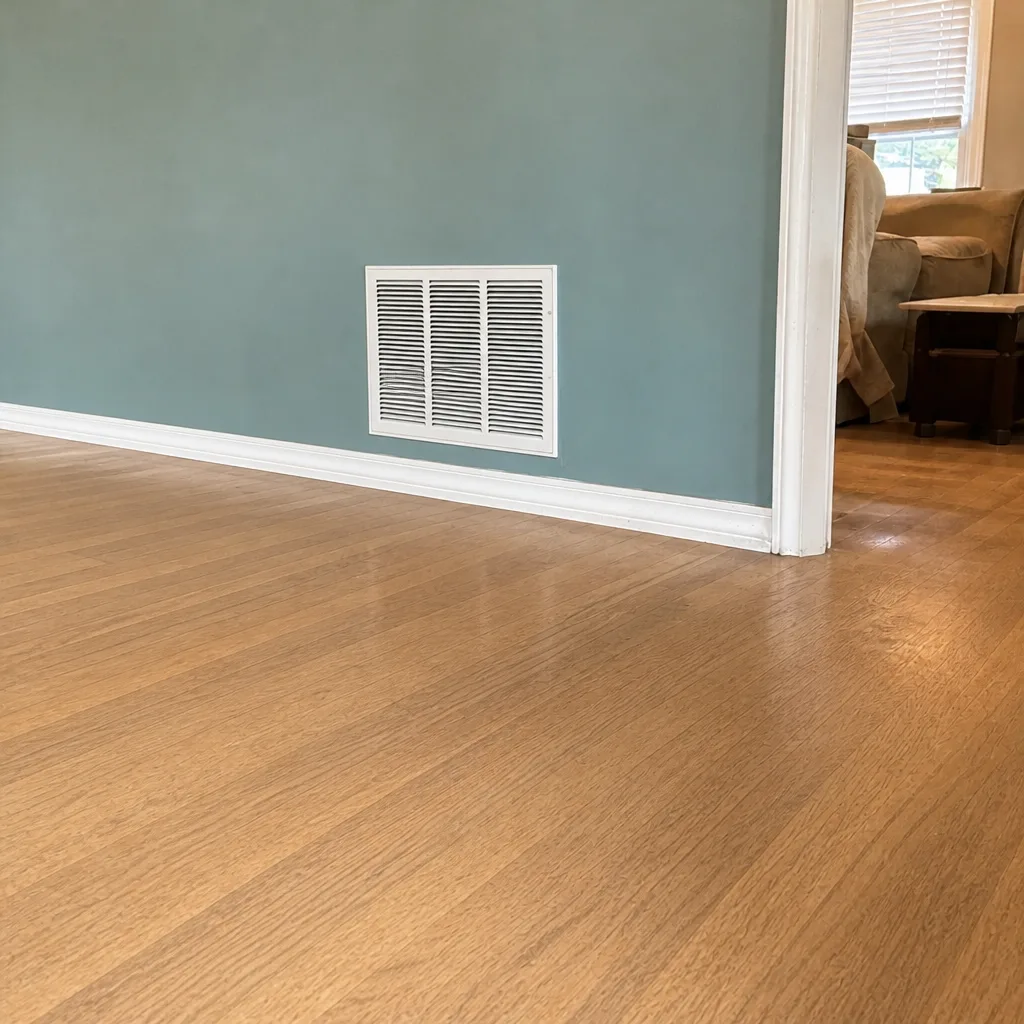
See the difference
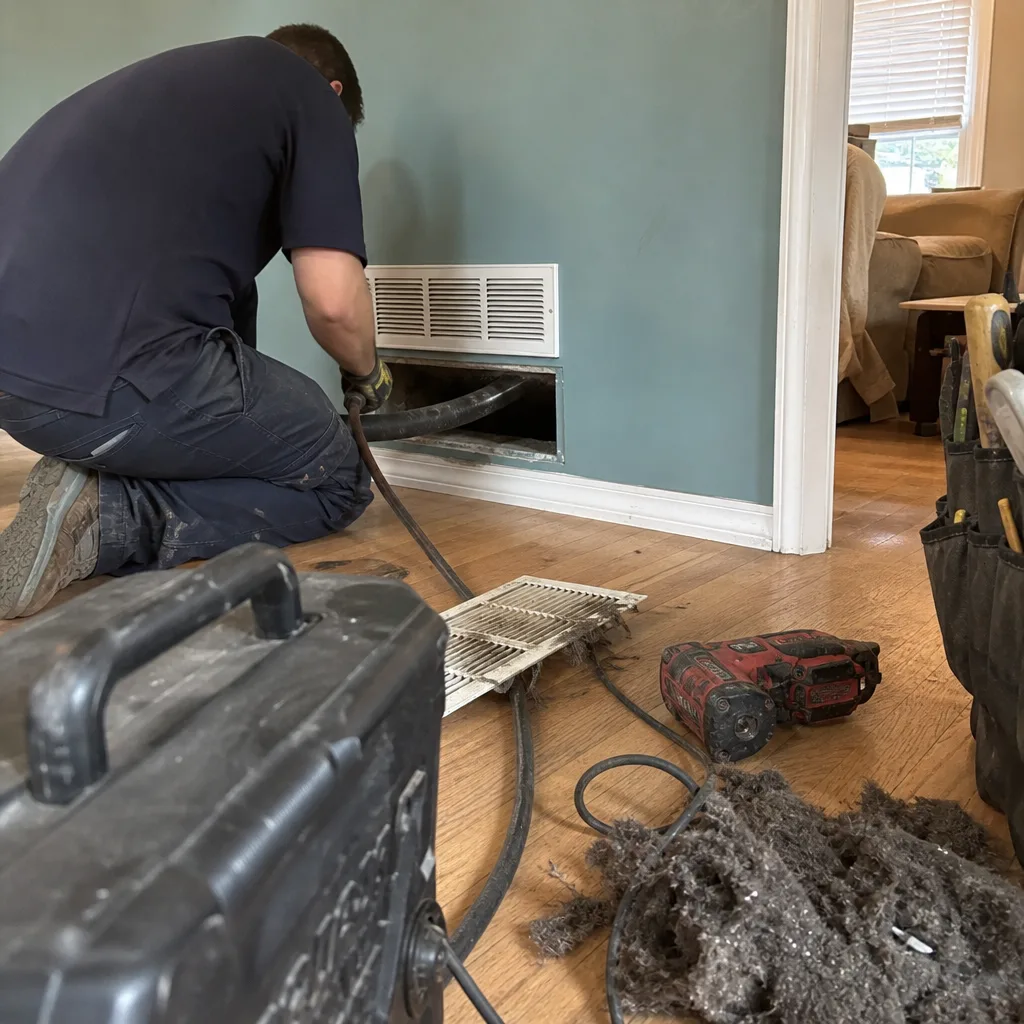 Before
 After
 Before
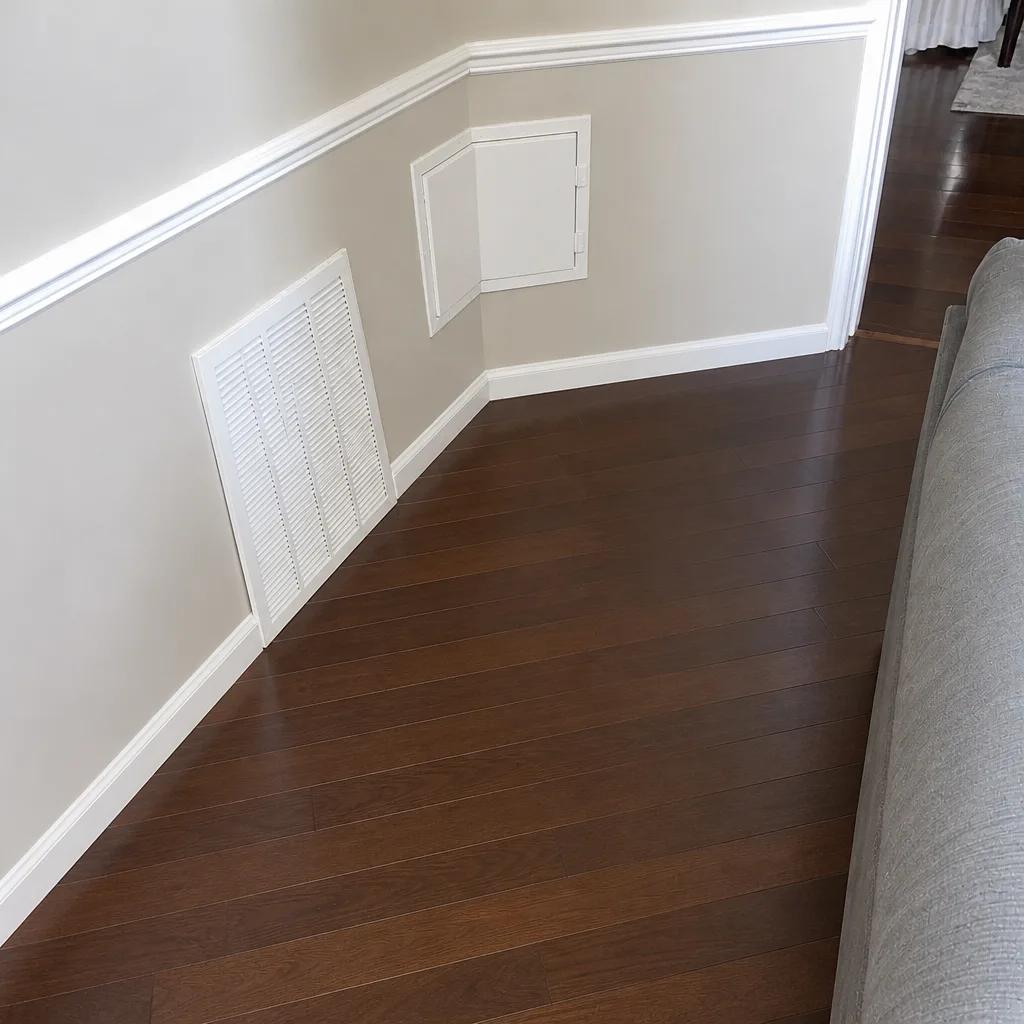 After
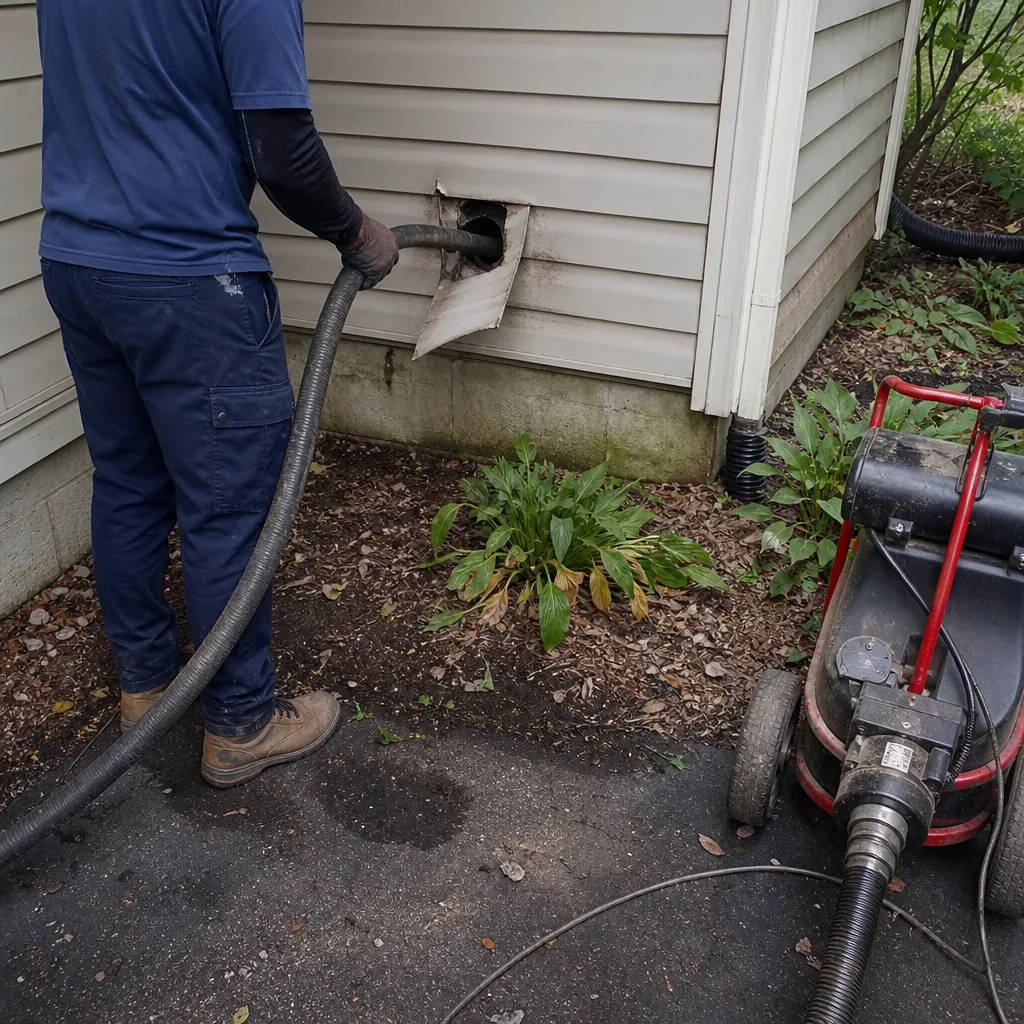 Before
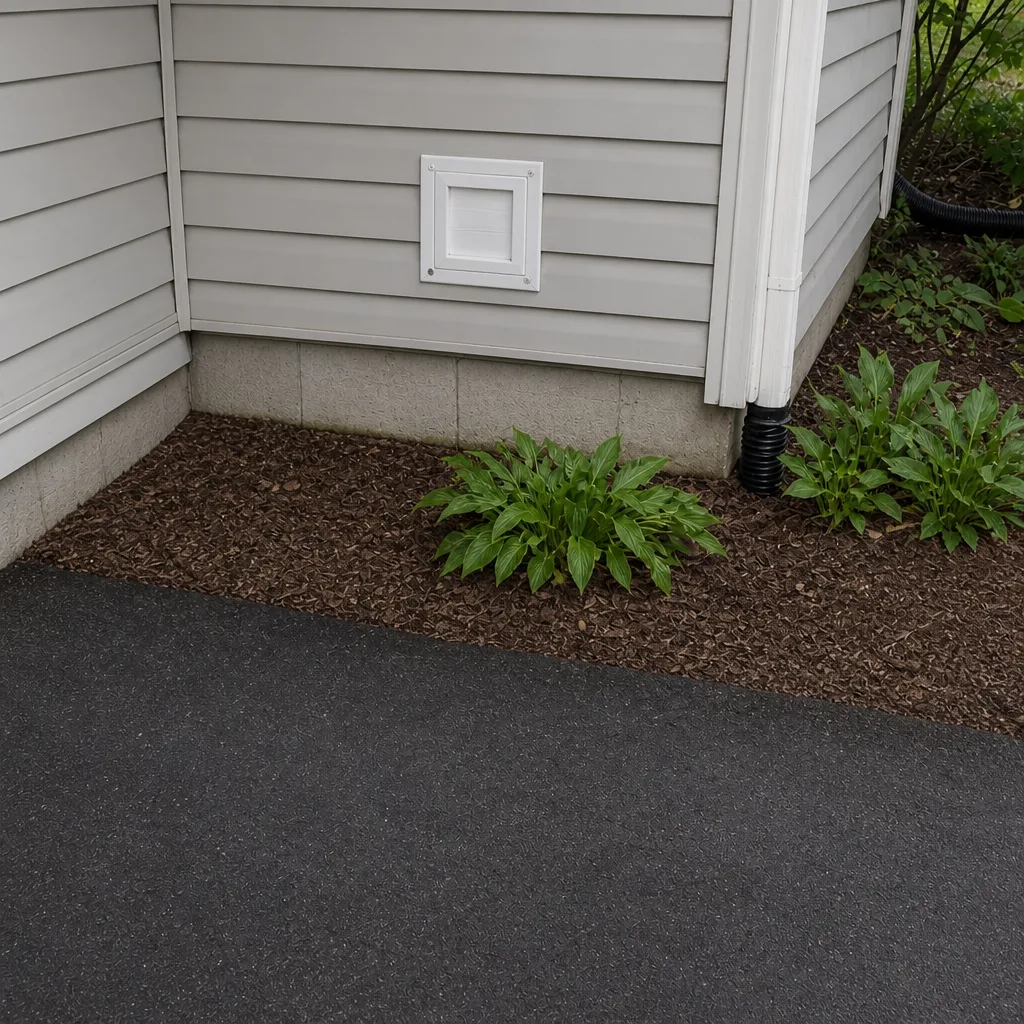 After
Common Mistakes to Avoid
- Assuming all “duct cleaning” includes repairs. It doesn’t. Cleaning is maintenance; repairs are mechanical work. Ask the contractor explicitly what they’re licensed to do and what they’ll refer out.
- Letting a cleaning-only company reseal a disconnected run on the spot. Convenient, but in Indiana that work generally belongs to a licensed mechanical contractor. Skip the shortcut and ask for the referral.
- Skipping the before-and-after photos. In Fishers, where home values are significant, future disclosure questions will come up. Photos and a written findings report are your protection.
- Scheduling a cleaning before a known repair is done. Cleaning a system with a broken run redistributes debris. Fix the duct, then clean.
- Not asking about containment equipment. A shop vac and a helper is not containment. Ask specifically what negative-air filtration is used on-site during the job.
- Ignoring the dryer vent because it’s “just a lint trap issue.” The dryer vent is the duct most likely to cause an emergency. It belongs on the same maintenance schedule as the air ducts.
- Choosing a bid on price alone. In this category, the lowest number is often the one with the least containment, the fewest photos, and the murkiest scope. Compare process, not prices.
When to Call a Professional
Call a professional if you’re seeing dust buildup on registers within days of cleaning them yourself, if you notice musty odors coming from specific rooms when the system runs, if airflow is uneven between floors, or if the home has never had its ducts cleaned and it’s more than a decade old. The same goes for dryer vents: if the dryer takes two cycles to dry a load, that’s a vent issue worth inspecting. Pet owners, families managing allergies or asthma, and anyone living in a home with aging ductwork has a stronger case for a professional cleaning and inspection. Duct Cleaning Fishers offers free estimates in Fishers. Call (844) 320-6508.
Frequently Asked Questions
No. Cleaning the inside of existing ductwork does not require a permit in Fishers. Sealing, cutting into, re-routing, or replacing any part of the duct system is mechanical work under Indiana’s State Building Code and generally does require a permit pulled by a licensed mechanical contractor. If your cleaning turns up a repair need, ask for a referral to a licensed contractor. Call (844) 320-6508 for a free estimate and we’ll walk through the difference on-site.
Ask for the state mechanical contractor license number and verify it through Indiana’s licensing database. A duct cleaning technician is not automatically a licensed mechanical contractor in Indiana. Cleaning and repairing are separate scopes. If the company can’t produce a license number that matches the estimate, they shouldn’t be touching your duct system beyond cleaning. Call (844) 320-6508 for an estimate that clearly states what’s included.
Whoever caused the damage, which is why you want the repair performed by a licensed mechanical contractor from the start. Documentation with before-and-after photos protects you if a dispute arises. Get the scope of the repair in writing, including the license number of the contractor performing it. Call (844) 320-6508 for a free estimate and we’ll document what we find before anything is opened up.
It’s often worth scheduling. During construction, drywall dust, sawdust, and site debris end up in the duct system. The system passed mechanical inspection at completion, but that inspection doesn’t remove debris that settled inside. A professional cleaning after move-in removes the construction residue rather than blowing it through the home for years. Call (844) 320-6508 to schedule a free estimate.
Keep the invoice, before-and-after photos, a written findings report, and any repair documentation from a licensed contractor, including permits and inspection sign-offs. Indiana’s residential property disclosure form asks about prior work and known defects, and this documentation lets you answer those questions accurately when you sell. Call (844) 320-6508 for a free estimate with documentation included.
No. They’re separate systems with separate code concerns. Dryer vents carry hot, lint-laden exhaust and are a fire-safety issue; air ducts carry conditioned air and are an air-quality and efficiency issue. A good duct cleaning visit should include a dryer vent check as a separate line item. Call (844) 320-6508 for a free estimate on both.
The Bottom Line
Duct cleaning in Fishers doesn’t need a permit. Duct repair does. Indiana’s State Building Code draws the line at the point where cleaning becomes modification, and the practical implication is simple: use a duct cleaning specialist with professional-grade equipment and containment for the cleaning, and a licensed mechanical contractor for anything that requires cutting, sealing, or replacing part of the system. Ask for the license number. Ask about containment equipment. Keep the photos and the written findings. And when a cheap bid quotes half of the next one, ask what’s been left out of the scope. Call (844) 320-6508 for a free estimate. We answer 24/7. Fast dispatch from 7am to 7pm, Sunday through Friday.
If you want to understand how this all fits into the broader picture of duct cleaning in Fishers, or how cleaning and inspection are scheduled side by side, that’s the place to start.
Written by the team at Duct Cleaning Fishers.
Contact
Call (844) 320-6508 for a free estimate. We answer 24/7. Fast dispatch from 7am to 7pm, Sunday through Friday.