
Last updated November 16, 2026
 Whole-home duct cleaning
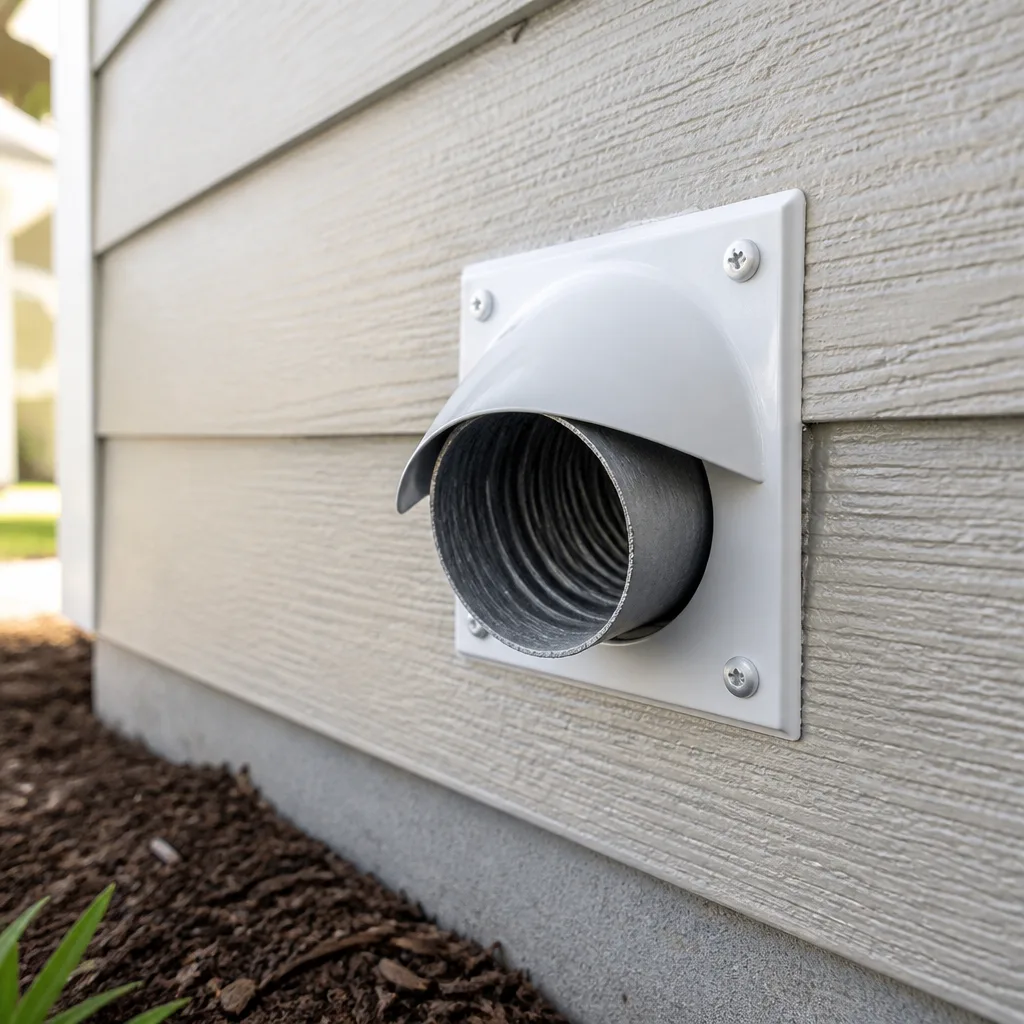 Dryer vent cleaning
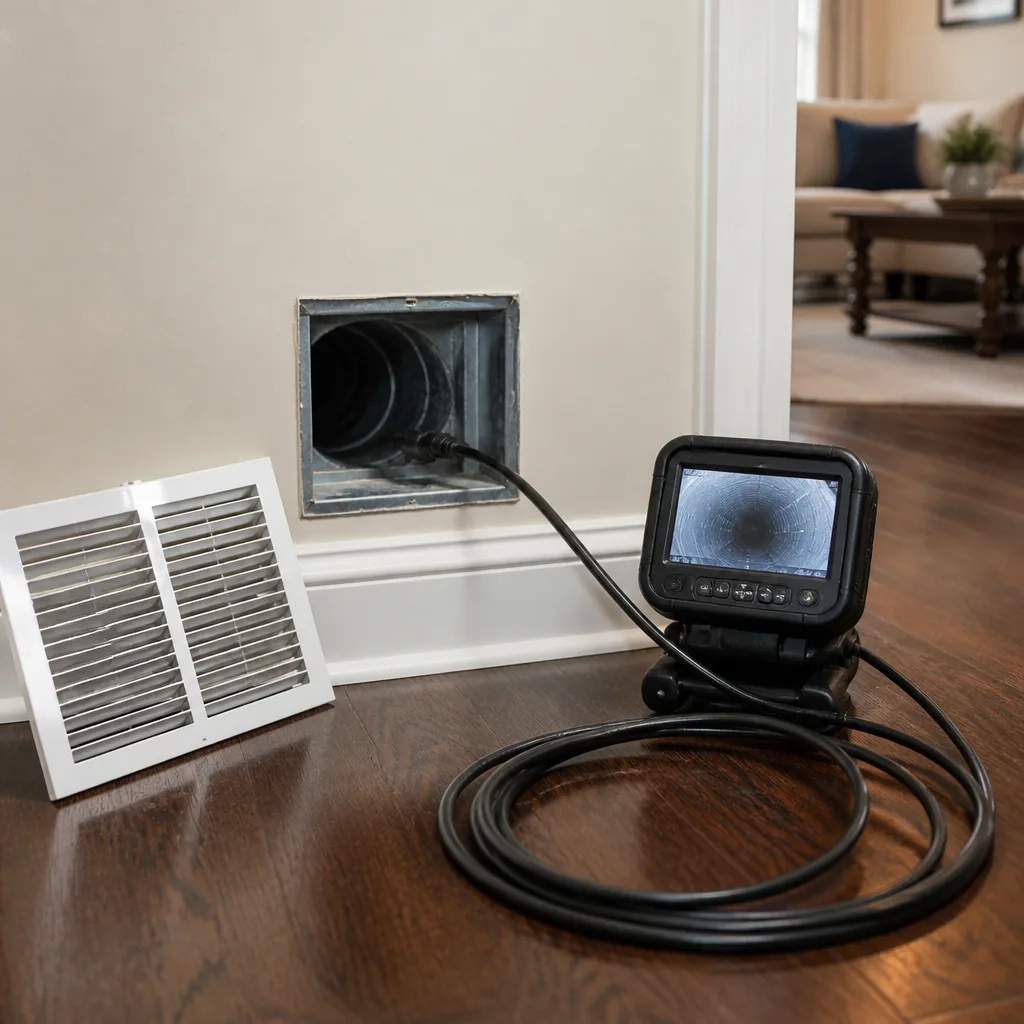 Camera inspection
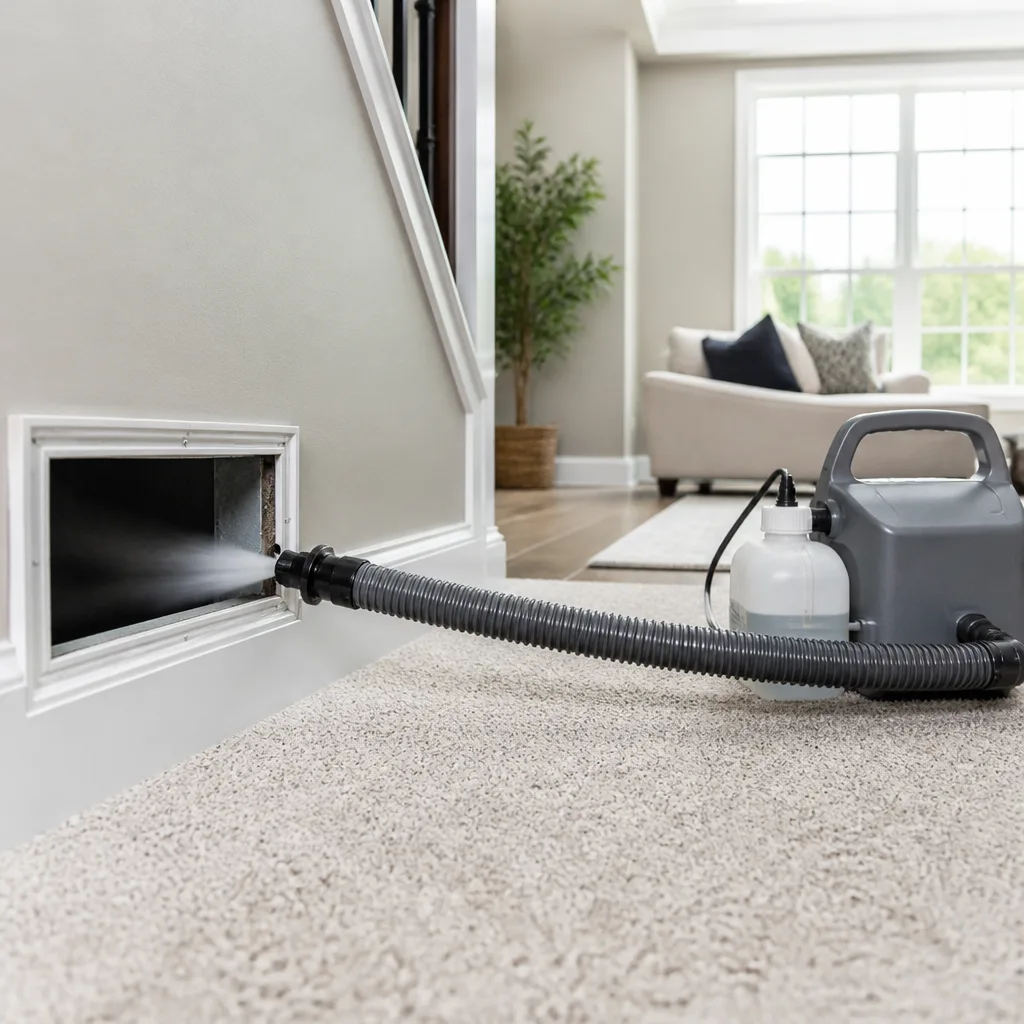 Sanitizing & deodorizing
Whole-system duct and dryer vent check with before-and-after photos - you see exactly what came out of your vents
That "$99 whole-house special" is a bait ad - the real number appears once they are in your hallway, or the "clean" is a shop-vac at the register. We photograph the inside of your ducts before and after instead.
Air Duct Cleaning Maintenance Checklist for Fishers Homeowners
Here’s a test most homeowners never think to run. Look at your supply registers and your return grilles. If they’re still the same color after two years, your filter is doing its job. If they’re not, your duct system is telling you something very specific about where the breach is and how long it’s been there. Dust doesn’t settle evenly. It collects where air moves slowest and where gaps pull in unfiltered air, so the pattern in your vents is a map of what’s going wrong. This guide gives you a room-by-room inspection sequence you can run without tools, explains how Fishers’ seasonal allergen calendar should shape your filter choice, and shows what to record so your next professional visit starts with real data instead of guesswork.
Quick Answer
A working duct maintenance routine in Fishers has three parts: check filters monthly and change them on a schedule matched to the season, walk the registers room by room every few months to spot airflow asymmetry and deposit patterns, and book professional cleaning every three to five years, or sooner if you’ve had renovation dust, pets, or a system that’s never been serviced. The homeowner tasks catch degradation early. The professional visit fixes what inspection alone can’t reach.
Styles & brands we work with
- Whole-home duct cleaning
- Dryer vent cleaning
- Camera inspection
- Sanitizing & deodorizing
Table of Contents
- The Room-by-Room Inspection Sequence
- Filter Ratings and Fishers’ Seasonal Allergen Calendar
- Checking Flex Duct Connections at the Plenum
- Your Yearly Maintenance Timeline
- Tasks That Reset the Cleaning Interval vs. Tasks That Extend It
- What to Record and Keep on File
- Common Mistakes to Avoid
- When to Call a Professional
The Room-by-Room Inspection Sequence
Start at the room farthest from your air handler and work backward toward it. That order matters because the far end of the system is where pressure drops first, so a problem shows up there before it shows up anywhere else. You don’t need tools for this. You need a flashlight, a step stool, and something to write on.
- Far bedroom supply register. Hold your hand a few inches from the grille while the system runs. Compare that feel to a register near the middle of the house. A noticeably weaker stream at the far end points to a leak, a crushed run, or a damper that’s partly closed.
- Return grille. Look at the face of the grille and the frame around it. A dark ring or a gray halo at the edges means air has been pulling through a gap rather than through the filter. That’s a filter-seal problem, not a cleaning problem, and it will keep depositing dust until it’s fixed.
- Register louvers. Wipe one louver with a white paper towel. Light, even gray is normal between cleanings. Dark streaks, or grit you can feel, means debris is moving through the system rather than settling in it.
- Ceiling and wall around each register. A faint shadow of dust radiating out from the grille frame is the classic sign of a loose boot connection behind the drywall.
- Every room in order. Note the room name and what you saw. You’re building a pattern, not diagnosing a single vent. Two weak rooms on the same side of the house usually share one cause.
- Basement or crawl space trunk line, if accessible. Look for disconnected joints, sagging flex, and tape that has dried out and let go. Don’t reach into the duct. Just look.
Repeat this walk every four to six months. It takes about fifteen minutes and it’s the single most useful habit in this entire checklist. In our experience, homeowners who do this consistently catch failing connections and crushed flex runs long before they turn into a comfort complaint or an equipment problem.
Filter Ratings and Fishers’ Seasonal Allergen Calendar
Filter choice in Fishers is a seasonal decision, not a one-time purchase. Central Indiana has a pollen calendar with two clear peaks, and a filter that’s adequate in January is not the same filter you want in April.
The spring peak runs through tree pollen season, roughly when maples and oaks start releasing and continuing through the late-spring grass transition. The fall peak is ragweed, which typically runs from late summer into the first hard frost. Between those peaks, summer and winter have lower outdoor allergen loads but different problems: summer brings more open-window dust and pollen tracked in on people and pets, winter brings drier air and more recirculation with the house closed up.
- MERV 8 to MERV 11 is the working range for most Fishers homes during peak pollen weeks. It captures the fine particles that matter for allergy and asthma households without overloading a residential blower.
- MERV 13 and above filters more, but it also restricts airflow more. If your system wasn’t designed for the higher pressure drop, a dense filter can starve the blower and reduce comfort in the rooms that were already marginal. Ask before you upgrade.
- Peak weeks mean checking the filter every thirty days, not every ninety. A loaded filter stops doing its job and starts acting like a blockage.
- Off-peak months usually allow the standard change interval, but a house with pets or anyone with asthma should stay on the shorter cycle year-round.
One more thing worth knowing: the filter only protects the duct system if it’s actually seated. A filter that’s the wrong size, or that’s sitting slightly crooked in the slot, lets unfiltered air bypass it entirely. That bypass air is what coats the inside of your ducts. Professional equipment like a Rotobrush brush system is built to remove that coating, but no cleaning will hold if the bypass stays open. If your household also runs a whole-home IAQ unit, the technicians who work on Honeywell and Aprilaire systems can tell you how your filter and that equipment interact, because a whole-home air cleaner changes the maintenance math. See what our air duct cleaning visits cover if you want the full picture of what gets cleaned and why.
Checking Flex Duct Connections at the Plenum
The plenum is the box where your air handler pushes air into the duct system, and the connections right at that box are the most common failure point in newer Indiana construction. Most of the housing built in and around Fishers over the past couple of decades used flex duct, and flex is fastened to the plenum with tape, ties, or both. Tape dries out. Ties loosen. Flex that was stretched too tight at install can pull away at the collar.
Here’s what you can safely check. With the system off, look at the plenum where each flex run connects. You’re looking for tape that’s peeled or cracked, a collar that’s visibly separated from the flex, or flex that’s sagging so much it’s kinked. A kinked run is a crushed airway, and a crushed airway is why one bedroom never feels right. If you can see the connection plainly and it looks sound, leave it alone. If you see separation, don’t crawl through a tight attic or crawl space to fix it yourself. Note it and have it repaired.
This is the point where cleaning and repair part ways. A standard cleaning crew vacuums the ducts and leaves. A company that also does will seal the failing connection so the system stops pulling attic or crawl space air into your living space. We repair what others only clean, and the plenum is where that distinction shows up most often. If you suspect a breach and want it looked at, call (844) 320-6508 for a free estimate.
Your Yearly Maintenance Timeline
The general guidance for duct cleaning is every three to five years. What most checklists leave out is that the rest of the year has its own rhythm, and keeping it makes that three-to-five-year interval realistic rather than optimistic.
- Every month: look at the filter, not just when you remember to. Hold it up to light. If you can’t see through it, it’s done.
- Every four to six months: do the room-by-room inspection walk from the first section. Note anything that changed since last time.
- Early spring, before tree pollen peaks: install your higher-MERV filter for the season. This is also the right window to schedule a professional cleaning if one is due, because you want clean ducts before the pollen load arrives, not after.
- Late spring: check the outdoor condenser area and confirm nothing is blocking airflow near the intake. A blocked outdoor unit strains the whole system and can push dust distribution around.
- Late summer to early fall: swap in the filter for ragweed season and do the inspection walk again. Fall is also a natural time for dryer vent cleaning, since lint buildup in the vent line is a fire risk that has nothing to do with the heating season and shouldn’t wait for a reminder.
- Late fall: before the house closes up for winter, check that every return grille is unobstructed by furniture, rugs, or storage. Blocked returns change the pressure balance in the whole system.
- Winter: a good time for a professional visit. Airflow is fully recirculated and indoor dust loads are highest, so the difference after cleaning is easiest to notice.
Write the dates down. A timeline you keep is worth more than a timeline you read once.
Tasks That Reset the Cleaning Interval vs. Tasks That Extend It
Not every maintenance task does the same thing. Some tasks knock the clock back to zero. Others just slow the clock down. Knowing which is which stops you from paying for a cleaning you didn’t need yet, and stops you from waiting too long because you changed a filter.
Tasks that reset the interval:
- Professional duct cleaning itself. After a full system cleaning, the three-to-five-year count starts over, adjusted for your household.
- A major renovation or a drywall project. Construction dust travels through the entire system, not just the rooms being worked on. A remodel effectively resets the clock regardless of when the last cleaning was.
- Moving into a home whose duct history is unknown. You can’t extend an interval you never had. Treat it as day one and inspect first.
- Water intrusion or a pest issue inside the duct system. Either one requires a cleaning and inspection, not just a filter change.
- Duct repair after a disconnected or crushed run. Once the breach is sealed, the system starts fresh, and the interval should be measured from the repair.
Tasks that extend the interval:
- Consistent filter changes on the right seasonal schedule. This is the biggest lever you have, and it’s free.
- Sealing the filter slot so unfiltered air can’t bypass the filter.
- Keeping returns unobstructed so the system isn’t working against itself.
- Dust control at the source: entry mats, regular vacuuming with a sealed system, and brushing pets outdoors when the pollen load is high.
None of those extending tasks removes the need for cleaning eventually. They just push the date out honestly instead of pretending the ducts stay clean forever. If you want to know where your system actually stands, our team in Fishers will inspect and give you a written estimate before any work is agreed.
What to Record and Keep on File
Homeowners who keep a simple duct log get more out of every service visit. A technician who knows when the system was last cleaned, what filter you’ve been running, and which rooms have felt weak has a real baseline. A technician with no history is starting from zero.
Your log doesn’t need to be elaborate. One page or a note on your phone works:
- Date and type of each filter change. Include the MERV rating. This tells a technician whether you’ve been running a filter the system can handle.
- Room names for any weak register and the date you first noticed the weakness. A room that faded gradually is a different diagnosis from a room that never worked.
- Any renovation dates. Drywall, flooring, and painting all matter.
- Dates of professional cleanings and repairs, plus a short description of what was done. Before-and-after photos of your own ducts belong here too; keep them with the log so you have a record of the condition at each visit.
- Anything you noticed visually at registers or the plenum, with the date. Even a one-line note like “dark ring around return grille edge” is useful six months later.
Bring that log to your next service visit. Handled consistently, it turns a technician’s guesswork into targeted work, and it keeps you from paying to re-solve a problem that was already documented. The same record habit is worth applying to your dryer vent cleaning schedule, since lint accumulation is invisible from the outside and easy to lose track of between visits.
Common Mistakes to Avoid
- Running a MERV 13 filter because it sounds better. Higher filtration means more airflow resistance, and a residential blower that wasn’t sized for it will show it in weak rooms and higher energy use. Match the filter to the system, not to the marketing.
- Ignoring a dark ring around a return grille. That ring is air bypassing the filter and dumping dust straight into your ducts. Buying a better filter won’t fix it. Sealing the slot will.
- Treating one weak room as a duct cleaning problem. A single weak register is usually a connection, a kink, or a closed damper. Cleaning the whole system won’t restore airflow to a room whose flex is crushed behind the drywall.
- Assuming a remodel doesn’t matter. Drywall dust is fine and it travels. If you’ve renovated since your last cleaning in Fishers, the interval has reset whether or not the ducts look dirty.
- Letting the duct system sit while the dryer vent goes unchecked. Dryer vents are a fire risk, not just a maintenance checkbox, and lint buildup happens quietly. They belong on the same calendar.
- Hiring on price alone and getting a vacuum-only visit. A cleaning that displaces debris into the living space without containment creates a second problem. Look for a process that captures debris during the work, and ask what equipment is used.
- Not keeping any record. Without a log, every visit starts from scratch and you can’t tell whether the problem is new or three years old.
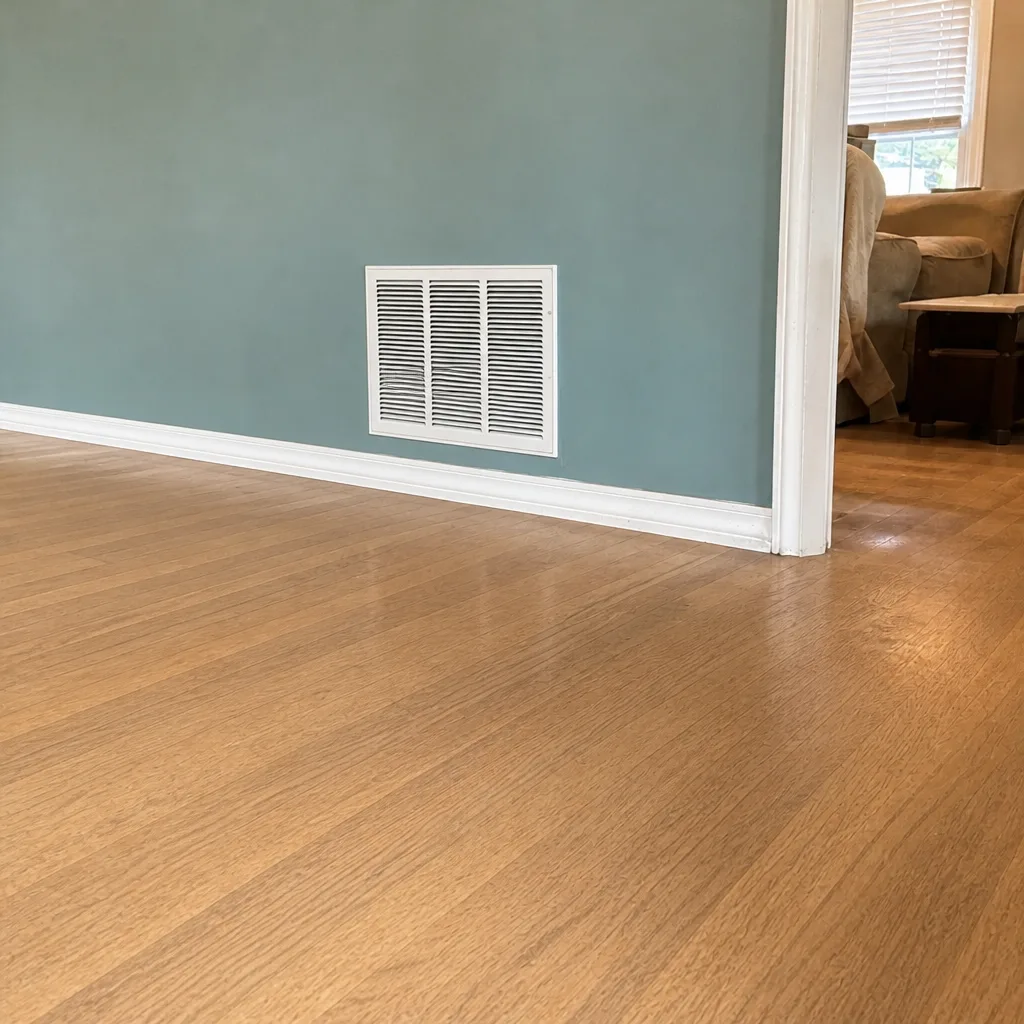
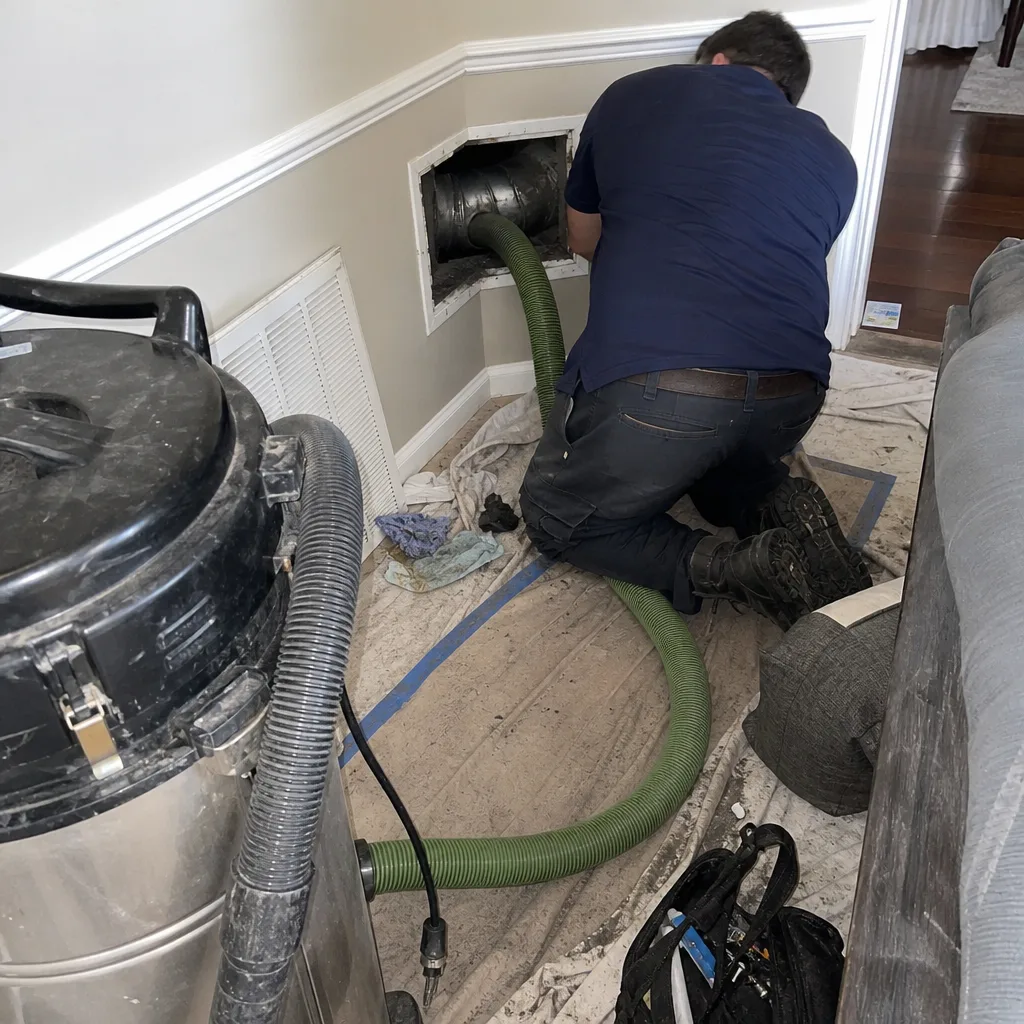
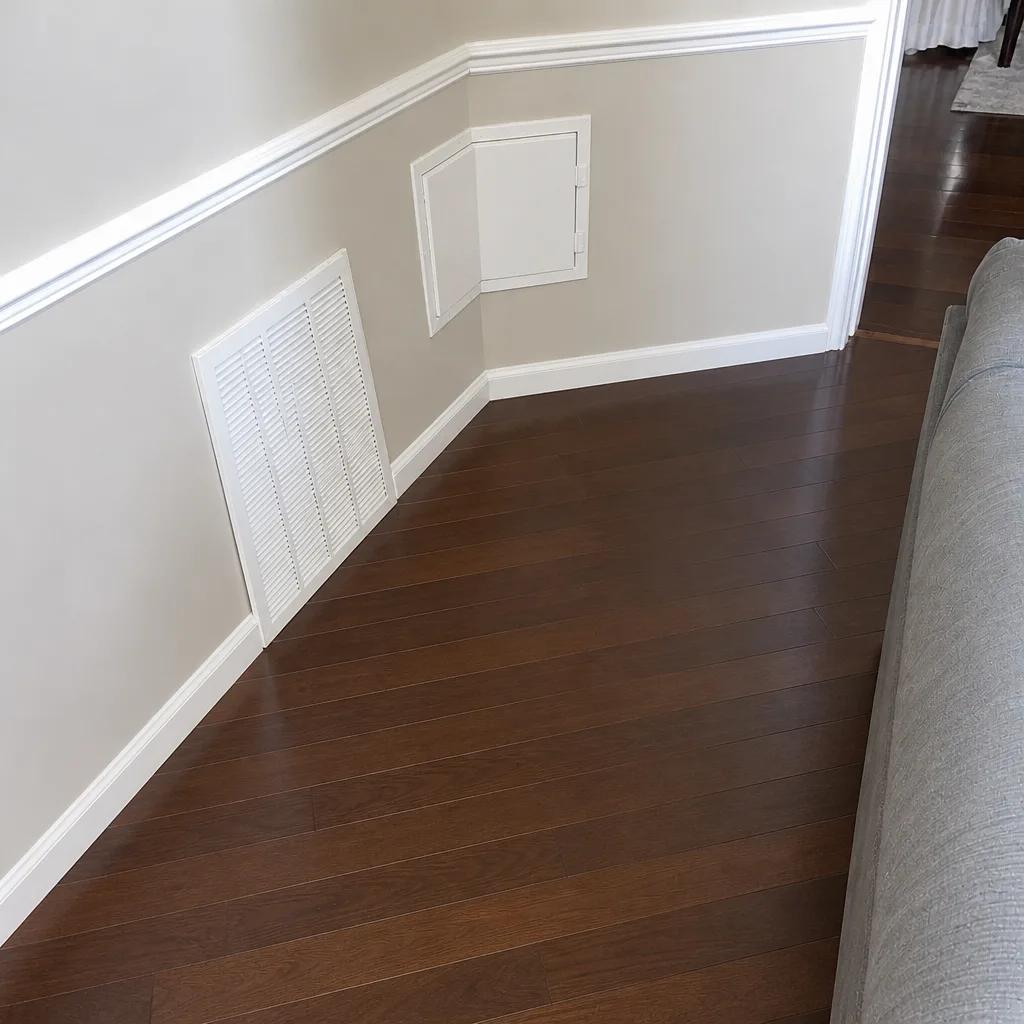
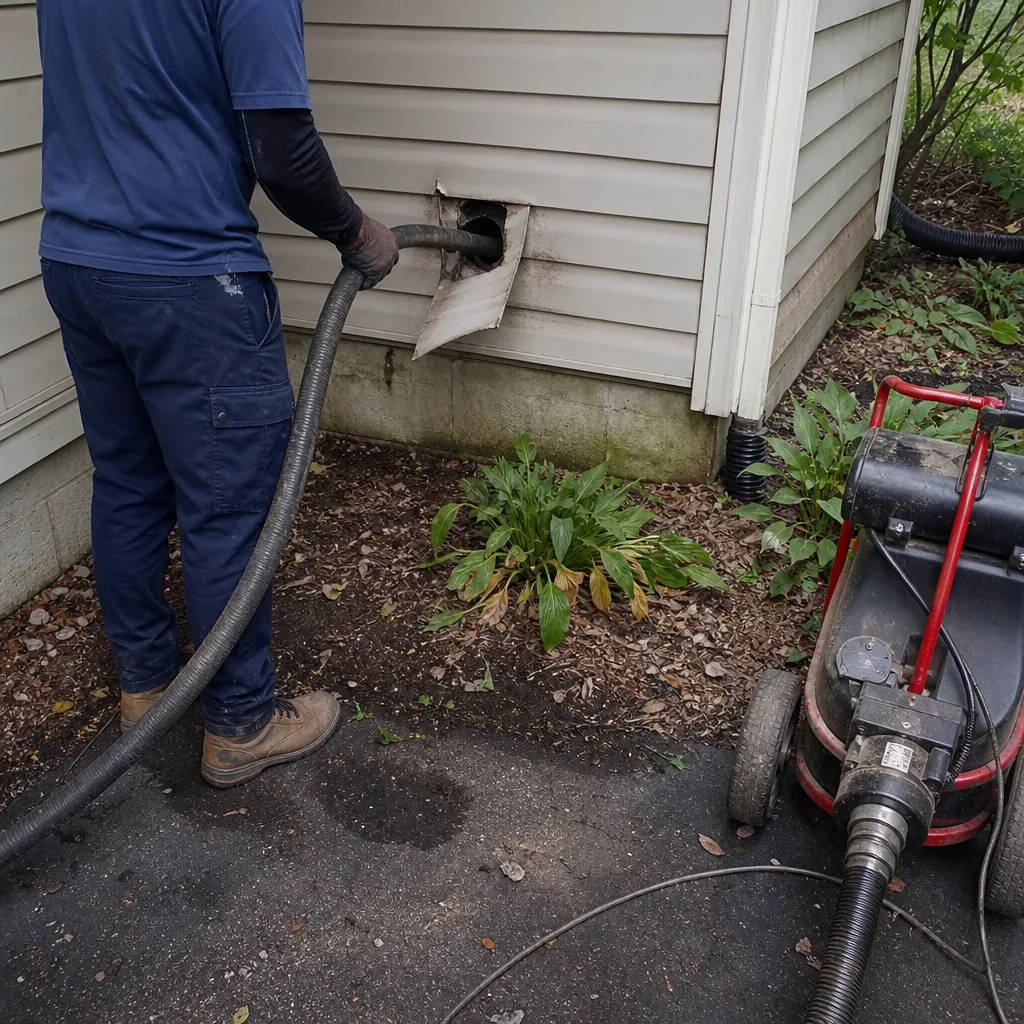
See the difference
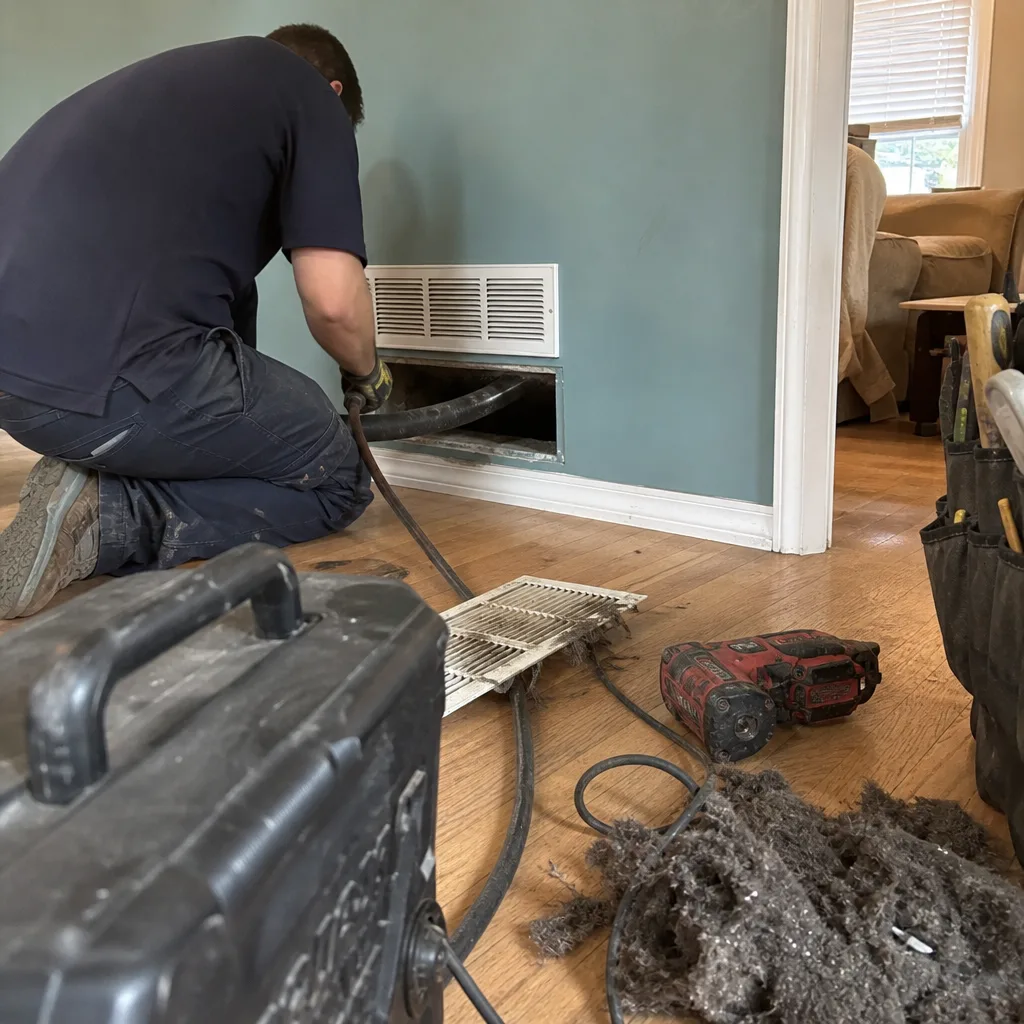 Before
 After
 Before
 After
 Before
 After
When to Call a Professional
Call when inspection turns up something a homeowner can’t fix: a disconnected plenum connection, a crushed or kinked flex run, visible debris inside the duct system, or a musty odor that comes back after filter changes. Call if your household has pets, allergy or asthma sufferers, or a duct system that’s never been cleaned and you’re now spending more on energy while comfort drops. Call after a renovation, or if you’ve just moved in and don’t know the duct history. Don’t try to clean or repair duct interiors yourself; the equipment that does it properly is professional-grade and the access can be tight and awkward. Duct Cleaning Fishers offers free estimates in Fishers, so call (844) 320-6508. We answer 24/7. Fast dispatch from 7am to 7pm, Sunday through Friday.
Frequently Asked Questions
Every three to five years for most households, and sooner if you’ve had a renovation, a pet, a water intrusion, or a system that’s never been serviced. The homeowner inspection walk every four to six months is what tells you which side of that range you’re on. Call (844) 320-6508 for an exact quote; estimates are free.
MERV 8 to MERV 11 covers most Fishers homes through the spring tree pollen and fall ragweed peaks without overloading the blower. Higher ratings capture more but restrict airflow, so check whether your system can handle it before upgrading. Our technicians have up to 15 years of experience and can advise on filter choice during a visit.
The flex duct connections at the plenum, where runs meet the air handler box. Tape dries out and ties loosen over time, and stretched flex can pull away at the collar. That’s the first place to look when a room loses airflow.
Pricing depends on the size of the system and its condition, and it’s set per job by a written estimate agreed before work starts. We don’t quote per vent and there’s no teaser number that turns into a bigger invoice on site. Call (844) 320-6508 for an exact quote; estimates are free.
Usually because the equipment and containment are cheaper or missing. A vacuum-only job without air filtration during the work can redistribute dust through the house instead of capturing it. Ask what equipment is used and whether debris is contained on site before you compare prices.
Ask for before-and-after photos of your own ducts, not generic images. A provider that uses professional equipment and containment can show you the condition at the start and after cleaning. Our visits include both, and the written estimate sets the final price.
The Bottom Line
A Fishers duct maintenance routine works best as a checklist, not a memory exercise. Do the room-by-room inspection walk every four to six months. Match your filter to the seasonal pollen calendar rather than picking one MERV rating and forgetting it. Watch the plenum connections, because that’s where most newer Indiana construction fails first. Keep a simple log so the next service visit starts with real history. And know the difference between tasks that reset your cleaning interval, like a renovation or a repair, and tasks that only extend it, like consistent filter changes. If inspection turns up something you can’t fix, call (844) 320-6508 for a free estimate. We answer 24/7. Fast dispatch from 7am to 7pm, Sunday through Friday, to any home in Fishers.
Written by the team at Duct Cleaning Fishers.