
Last updated November 16, 2026
 Whole-home duct cleaning
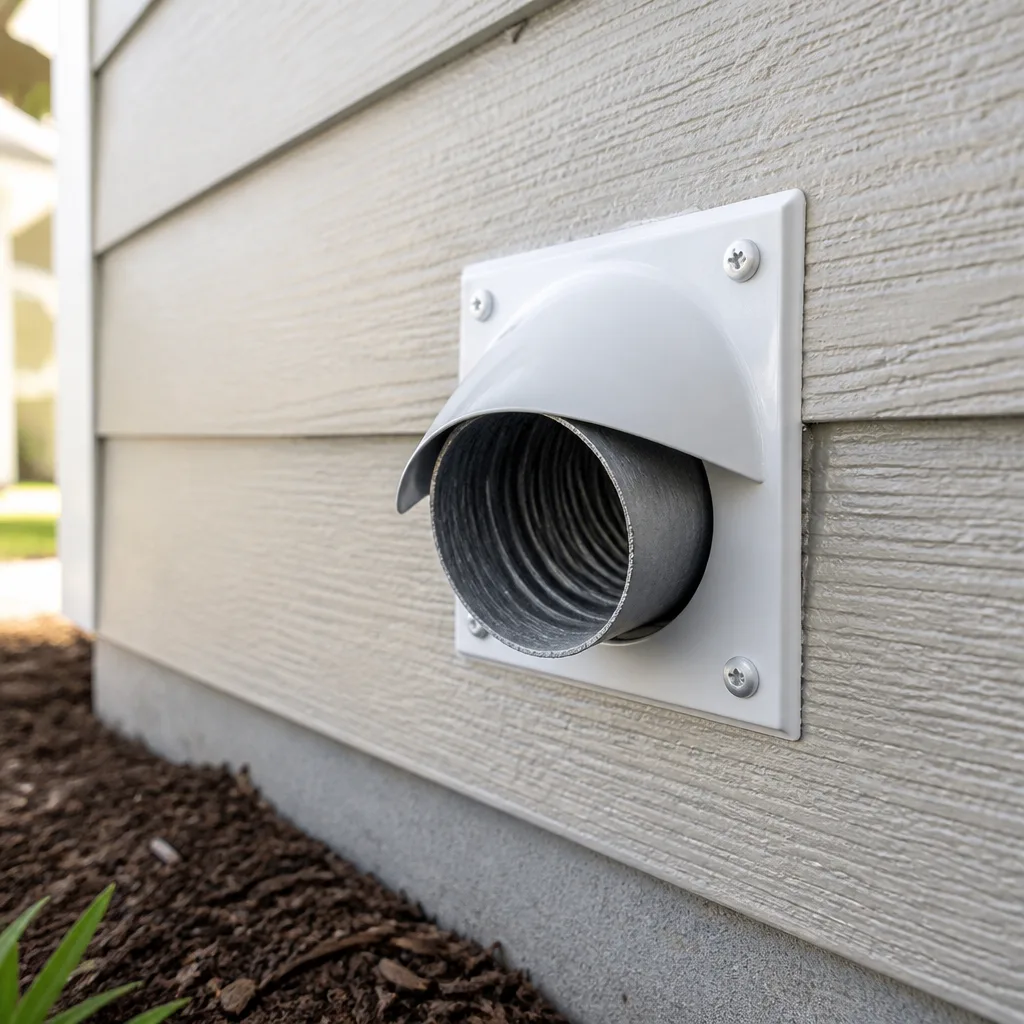 Dryer vent cleaning
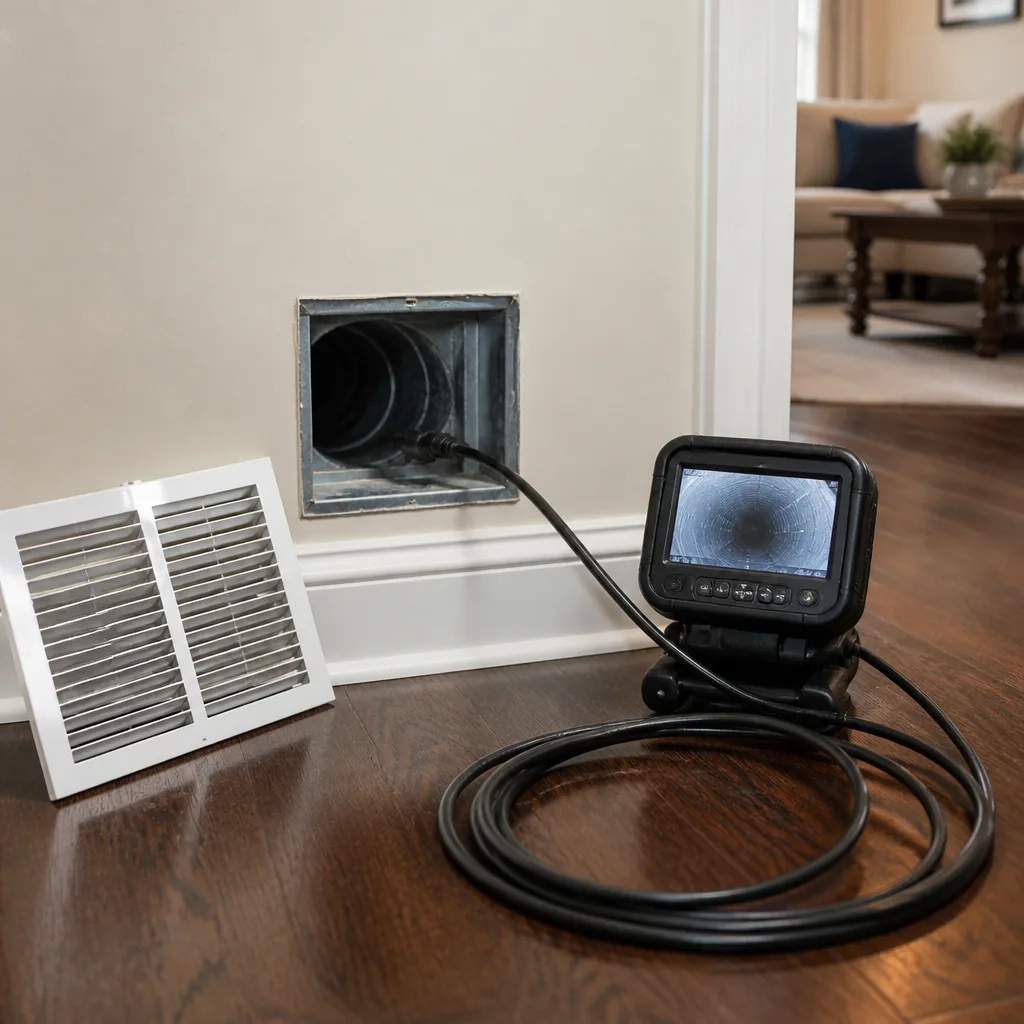 Camera inspection
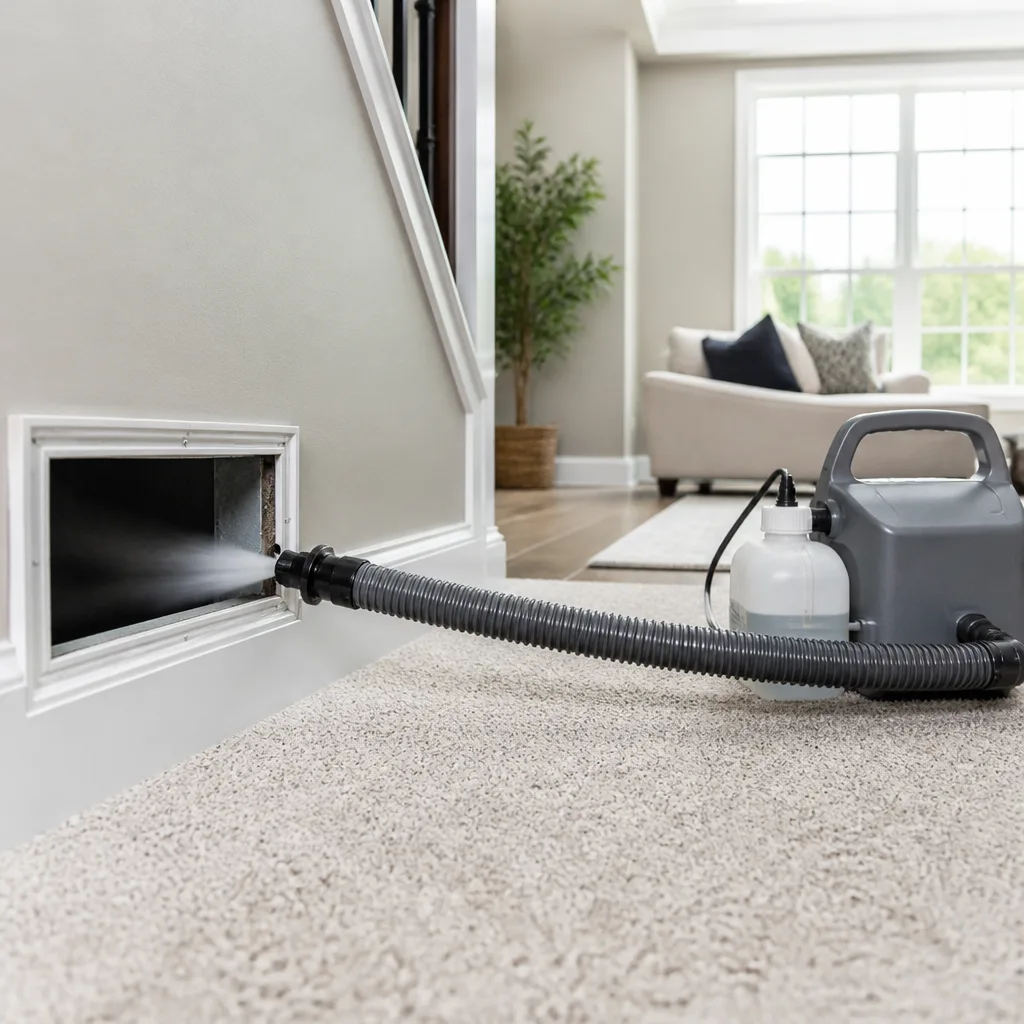 Sanitizing & deodorizing
Whole-system duct and dryer vent check with before-and-after photos - you see exactly what came out of your vents
That "$99 whole-house special" is a bait ad - the real number appears once they are in your hallway, or the "clean" is a shop-vac at the register. We photograph the inside of your ducts before and after instead.
Air Duct Cleaning Troubleshooting in Fishers: Common Problems and How to Fix Them
If one room in your house is always 4-6°F off from the thermostat setting, your heating and cooling equipment is probably fine. Your duct system is telling you something specific, and it’s often not “call for a cleaning.” That’s the counterintuitive truth about duct troubleshooting in Fishers: a lot of the symptoms homeowners blame on the furnace or AC are duct-side problems with specific, diagnosable causes, and many of them won’t go away with a vacuum no matter how thorough. This guide teaches you how to read the symptoms your ducts are already broadcasting, how to tell a dirt problem from a mechanical failure, and when cleaning is the right call versus when duct repair has to come first. We’ll walk through odors, airflow, temperature swings, and a simple inspection sequence you can run yourself before you spend a dime.
Quick Answer
Most duct complaints in Fishers trace to one of three causes: accumulated debris and biological growth (a cleaning fixes it), physical failure like collapsed flex duct or disconnected joints (only repair fixes it), or pressure imbalance from an undersized return or leaky attic runs (sealing and repair fix it). Airflow that’s weak in some rooms but strong in others points to mechanical problems, not dirt. Musty odors point to moisture and microbial growth that a proper cleaning with negative-air containment resolves. The fastest way to know which category you’re in is to run the inspection sequence in this guide, then get a written assessment before agreeing to any cleaning.
Styles & brands we work with
- Whole-home duct cleaning
- Dryer vent cleaning
- Camera inspection
- Sanitizing & deodorizing
Table of Contents
- Reading Your Duct Symptoms: What Your System Is Telling You
- Dirty Ducts vs. Broken Ducts: How to Tell the Difference
- What Odor Types Reveal About Duct Condition
- The DIY Inspection Sequence You Can Run Yourself
- Why Uneven Room Temperatures in Fishers Usually Trace to the Attic Boundary
- When Cleaning Solves It vs. When Repair Comes First
- What Professional Equipment Actually Changes the Outcome
- Dryer Vent Problems That Get Misdiagnosed as Duct Issues
Reading Your Duct Symptoms: What Your System Is Telling You
Duct problems don’t announce themselves. They show up as a slow drift in how your home feels: a bedroom that never quite warms up, a faint smell when the blower kicks on, dust settling on surfaces faster than it used to. In Fishers, where the swing between humid summers and cold winters puts real stress on duct systems, those small signals are worth taking seriously. The trick is learning to translate them.
Start by separating symptoms into two buckets: quality-of-air symptoms and quantity-of-air symptoms. They point to different root causes, and confusing the two is why so many homeowners buy a cleaning they didn’t need.
- Quality symptoms – dust on surfaces, musty or stale smells, visible debris at registers, allergy flare-ups when the system runs. These usually mean debris or growth somewhere in the system.
- Quantity symptoms – weak airflow at some registers, rooms that won’t heat or cool evenly, a blower that sounds strained, whistling at returns. These usually mean pressure or mechanical issues.
When both appear together, you often have a dirt problem layered on top of a mechanical one, and the order matters. Cleaning a duct system that has a disconnected joint just blows debris into a wall cavity. That’s why diagnosis has to come before service. When we assess a home in Fishers, the first question we ask isn’t “when was it last cleaned” but “what is the system doing that you don’t like.” The answer tells us where to look.
Write down what you notice over a week: which rooms, which times of day, whether it worsens when the system first starts or after it’s been running a while. That log is more useful than any single observation, and it’s the kind of pattern that a trained eye can read against equipment and duct layout.
Dirty Ducts vs. Broken Ducts: How to Tell the Difference
Here’s the point competitors skip: cleaning doesn’t fix mechanical failures. If a section of flex duct has collapsed, if a joint has separated in the attic, or if a return is undersized for the blower, the system is losing air or choking regardless of how clean the inside of the ducts is. Vacuuming a collapsed run is wasted money. So before you book any service, you need to know which kind of problem you have.
Collapsed flex duct is common in homes where the duct runs through a hot attic and the outer jacket has been crushed, kinked, or pinched against a joist. Disconnected joints happen where tape or mastic has failed at a boot or a trunk takeoff. Undersized returns are a design issue, usually in homes where a room was added or the equipment was upsized without touching the duct layout.
A dirty duct problem looks like this:
- Even airflow at most registers, but a noticeable film of dust and debris on the register grilles and nearby surfaces.
- Smells that get stronger when the system runs longer.
- Visible debris inside the duct when you peek past a register with a flashlight.
- No whistling, no hot or cold rooms that are dramatically off.
A broken duct problem looks like this:
- One or two rooms consistently 4-6°F off while others are fine.
- Weak airflow at the registers farthest from the equipment.
- Whistling or rushing noise at returns, suggesting a pressure squeeze.
- Debris or attic insulation visible near a joint or boot.
That register-to-register comparison is the single most useful test you can run. If airflow is roughly even everywhere and the house feels dusty or smells, you’re looking at a cleaning job. If airflow is uneven, you’re looking at a duct repair job. Our air duct cleaning visits start with a diagnosis, because a cleaning is only the right service when the problem is actually dirt.
What Odor Types Reveal About Duct Condition
Not all duct smells mean the same thing. In our experience, odor is one of the most reliable diagnostic signals a homeowner can give us, because the character of the smell points straight at the cause. Here’s how to read the three most common types.
Musty or damp smells
Musty odor points to moisture and microbial growth somewhere in the system. In Fishers, the culprit is usually a combination of high summer humidity working its way into return air and condensation on cold surfaces inside the duct or on the evaporator coil. A proper cleaning with HEPA filtration and negative-air containment removes the growth, but you also need to find the moisture source, because growth returns if the moisture does. This is one reason our technicians train on dryer vent cleaning and whole-home IAQ equipment – understanding airflow and moisture together is how you actually solve it.
Burnt or hot smells
A burnt smell is not a duct problem. It’s usually an electrical or motor issue at the air handler or a component overheating. Turn the system off and have it looked at by a qualified HVAC professional before running it again. Do not treat a burnt smell as a cleaning issue, and do not keep running the blower. Dirt in the ducts doesn’t smell burnt.
Chemical or synthetic smells
A sharp, chemical, or plastic smell often points to off-gassing from building materials, sealants, or a component inside the air handler. Some cleaning chemicals used by budget operators leave a lingering scent, which is one reason we avoid harsh additives and rely on mechanical removal plus HEPA filtration. If a chemical smell appeared right after someone worked on your system, that’s the place to start asking questions.
Match the smell to the category before you call anyone. It changes the conversation from “can you clean my ducts” to “here’s what my system is doing, what do you think is causing it,” which is a much better position for a homeowner to be in. If you can’t pin the smell down, that itself is useful – a professional assessment can distinguish between growth, off-gassing, and a failing component.
The DIY Inspection Sequence You Can Run Yourself
You don’t need tools to do a meaningful duct inspection. You need a flashlight, a piece of tissue or thin paper, and about twenty minutes. Run these steps in order. Each one narrows the diagnosis.
- Register airflow test. Hold a single square of tissue or thin paper at each supply register while the system runs. Note how far it flutters. If most registers move it firmly and one or two barely move it, you have an airflow imbalance, not a general dirt problem. Rank the registers from strongest to weakest; the weakest ones are where to investigate mechanical issues.
- Visual liner check at accessible joints. Where ducts are visible (basement, attic, garage, crawl), look at the joints and connections. You’re looking for separated tape, pulled-apart flex sections, crushed or kinked duct runs, and any sign of attic insulation or debris sitting near a boot. A separated joint is a repair, full stop, no matter how clean the inside is.
- Filter and return inspection. Check your filter – is it loaded, collapsed, or the wrong size for the slot? Then look at the return grille for dust buildup and listen for whistling when the system runs. A whistling return is a pressure signal that the return is undersized or restricted.
- Blower pressure comparison. This is the one step that gets close to professional territory. With the system running, notice whether the blower sounds like it’s working harder than it should – a strained, higher-pitched sound suggests a restriction downstream. You can’t measure static pressure without a manometer, but you can note the change in sound and describe it to a technician, which saves diagnostic time.
- Interior humidity check. On a humid Fishers summer day, note the indoor humidity. Consistently high indoor humidity alongside musty smells points to moisture entering the system, which a cleaning alone won’t fix.
- Register-to-room temperature check. A cheap thermometer held at the register versus at room center tells you whether the system is delivering air at the right temperature or just not delivering enough of it.
Jot down what you find. That log is exactly what a technician needs to move quickly from diagnosis to the right fix, and it keeps the conversation focused on cause instead of service upsells. The point of this sequence isn’t to fix anything yourself – it’s to know what kind of problem you have before you spend money.
Why Uneven Room Temperatures in Fishers Usually Trace to the Attic Boundary
Uneven room temperatures are the number one complaint we hear, and in Fishers they almost always trace to the attic boundary rather than equipment capacity. Here’s why. Much of the ductwork in Fishers homes runs through the attic, and the attic is the hottest, driest, and most temperature-volatile part of the house in summer and the coldest in winter. A duct run through that space loses heat to the attic in winter and gains it in summer, so the room at the end of that run gets air that’s a different temperature than the air the equipment actually produced.
Add in duct leakage. A small gap at a boot or a joint in an attic run can lose a meaningful portion of the delivered air before it ever reaches the room, and worse, it can pull attic air – hot, dusty, sometimes insulated with fiberglass – into the supply stream. That’s why the room at the end of a leaky attic run won’t reach temperature no matter how good the equipment is.
The tell is the pattern: if the uneven room is the one farthest from the equipment or at the end of an attic run, it’s almost certainly a duct boundary issue, not a capacity issue. If the equipment were undersized, every room would struggle, not just one or two. And if the uneven room sits directly above the equipment with a short, well-sealed run, you’d look elsewhere – at register placement, return balance, or whether the door to that room is being closed off from return air.
The fix is duct sealing and repair at the leaky joints, not a bigger system and not a cleaning. We address this every week with our air duct repair service, because cleaning a leaky attic duct system doesn’t change the leakage. It changes the cleanliness of the air that leaks out of it. That’s a distinction worth understanding before you authorize any work. Cold-climate sealing details and how well the attic boundary is sealed make a real difference to how a duct system performs across a Fishers heating and cooling season.
When Cleaning Solves It vs. When Repair Comes First
This is the decision that separates a good outcome from a wasted invoice. Cleaning solves the problem when the ducts are dirty but intact. Repair has to come first when the ducts are failing, because cleaning failing ducts makes the failure worse by dislodging debris that then escapes through the gaps. Here’s the decision tree we use.
Cleaning is the right first step when:
- Airflow at registers is roughly even and strong.
- The house feels dusty or smells musty, but rooms reach temperature.
- The system has never been professionally cleaned and there’s visible debris.
- No whistling, no hot or cold rooms that are dramatically off.
- The filter is loaded and registers are dirty but joints look intact.
Repair must come first when:
- One or more rooms are 4-6°F off from the thermostat while others are fine.
- You can see separated joints, collapsed flex duct, or disconnected boots.
- The return whistles or the blower sounds strained.
- Attic insulation or debris is visible near a duct connection.
When both apply, which is common, the sequence is repair, then clean. Sealing the system first means the cleaning removes debris without redistributing it into the walls, and it means the air you deliver afterward actually reaches the rooms. This is why we offer air duct repair as a core service and not an add-on – the ducts in many Fishers homes have never been evaluated for mechanical integrity, and cleaning them without that evaluation is guesswork.
If you’re unsure which category you’re in, the honest answer is: get an assessment. A written diagnosis costs you fifteen minutes and can save you from paying for a cleaning that won’t solve a thing. Our team offers free estimates in Fishers – call (844) 320-6508 to book one after you’ve run the inspection sequence above.
What Professional Equipment Actually Changes the Outcome
Equipment matters more in duct work than in almost any home service, because the failure mode of cheap equipment is invisible. A consumer-grade vacuum dragged into a crawl space pulls some debris out of the ducts but then stirs the rest into the air – and you breathe it. That’s why we run a specific combination of professional-grade gear, and it’s why it’s worth knowing what to look for before you hire anyone.
- Rotobrush brush systems and Nikro HEPA vacuums are the industry-standard combination for residential duct cleaning. The brush system agitates debris off the duct walls, and the HEPA vacuum captures it at the source with filtration fine enough to trap particles that a shop vac would blow right past. Consumer equipment can’t move the volume of air or hold the filter spec these systems do.
- Abatement Technologies negative-air filtration is deployed on-site during the job to contain dislodged debris. This is the step budget cleaners skip: without containment, debris dislodged from the ducts ends up on your furniture, not in the vacuum. Containment first, cleaning second.
- Training on Honeywell and Aprilaire IAQ systems means we understand how duct condition interacts with whole-home air quality equipment. If you run a humidifier, a whole-home filter, or a ventilation controller, the ducts are part of that system, and cleaning or repairing them without understanding the IAQ side is incomplete work.
When you’re evaluating any duct cleaning quote in Fishers, ask two questions: what containment method will be used during the job, and what filtration spec the vacuum holds. If the answer is vague, you’re likely looking at a shop vac and a promise. The equipment is the proof, not the brochure. A company that can’t tell you its filtration spec is telling you something.
Want to see the full standard we work to? Read more about how duct cleaning in Fishers should actually be done, including containment and before-and-after photos of the ducts themselves.
Dryer Vent Problems That Get Misdiagnosed as Duct Issues
Dryer vent problems get misdiagnosed as duct problems more often than you’d think, because they share the same symptom: lint and dust showing up where it shouldn’t. A dryer vent that’s restricted or disconnected doesn’t just slow drying times – it’s a documented residential fire risk, because lint is highly combustible and a blocked vent traps heat. Federal fire statistics make this one of the most common causes of home clothes-dryer fires. That’s not a maintenance checkbox; it’s a safety issue.
The tell is where the dust is. Lint around the dryer, on top of the machine, or in the laundry room points to the dryer vent, not the HVAC ducts. Drying times that have crept up, clothes that come out hotter than they should be, or a dryer that shuts off early on its own all point to a restricted vent. A disconnected vent behind the dryer is common and easy to miss – the machine runs fine, the heat just has nowhere useful to go.
A separate vent cleaning covers the full run from the dryer to the exterior termination, including the lint trap housing and the flexible transition. When we clean a dryer vent, we confirm the run is intact and the termination is open, because a cleaning of a disconnected vent does nothing for safety. Homes in Fishers with long vent runs, which are common in newer construction, are worth checking annually, more often if the household does a lot of laundry.
Don’t confuse a dryer vent issue with an HVAC duct issue, and don’t assume one service covers the other. They’re separate systems with separate failure modes. If you’re unsure which you have, the location of the dust and lint will tell you, and a written assessment confirms it. Dryer vent cleaning is part of our core service scope for this reason.
Common Mistakes to Avoid
- Booking a cleaning before running a diagnosis. If your duct system has a separated joint or collapsed flex run, a cleaning redistributes debris into the wall cavity instead of removing it. Run the inspection sequence first.
- Treating uneven room temperatures as an equipment problem. A single room that’s 4-6°F off from the thermostat is usually a duct boundary or leakage issue in the attic, not a furnace that’s too small. Upsizing equipment to fix a duct problem is expensive and doesn’t work.
- Ignoring musty smells because the ducts look clean. Musty odor points to moisture and growth somewhere in the system, often at the coil or in a return. A visual check of the duct interior won’t find it. If it smells, it’s worth investigating.
- Hiring the cheapest quote without asking about containment. A budget cleaner who skips negative-air filtration leaves dislodged debris in your home. Ask specifically how debris is contained during the job before you book.
- Assuming cleaning fixes dryer vent risk. A dryer vent that’s disconnected or restricted is a fire risk, and a cleaning of a disconnected vent does nothing for safety. Have the full vent run inspected, not just the visible portion.
- Letting a builder-basic filter squeeze the system. Loading a system with a filter rated for finer filtration than the return was designed for can choke airflow. Match filter spec to the slot and check it more often than the label suggests.
- Running the system with a burnt smell to “see if it clears.” A burnt smell is an electrical or component signal, not a duct signal. Turn the system off and have it evaluated.
See the difference
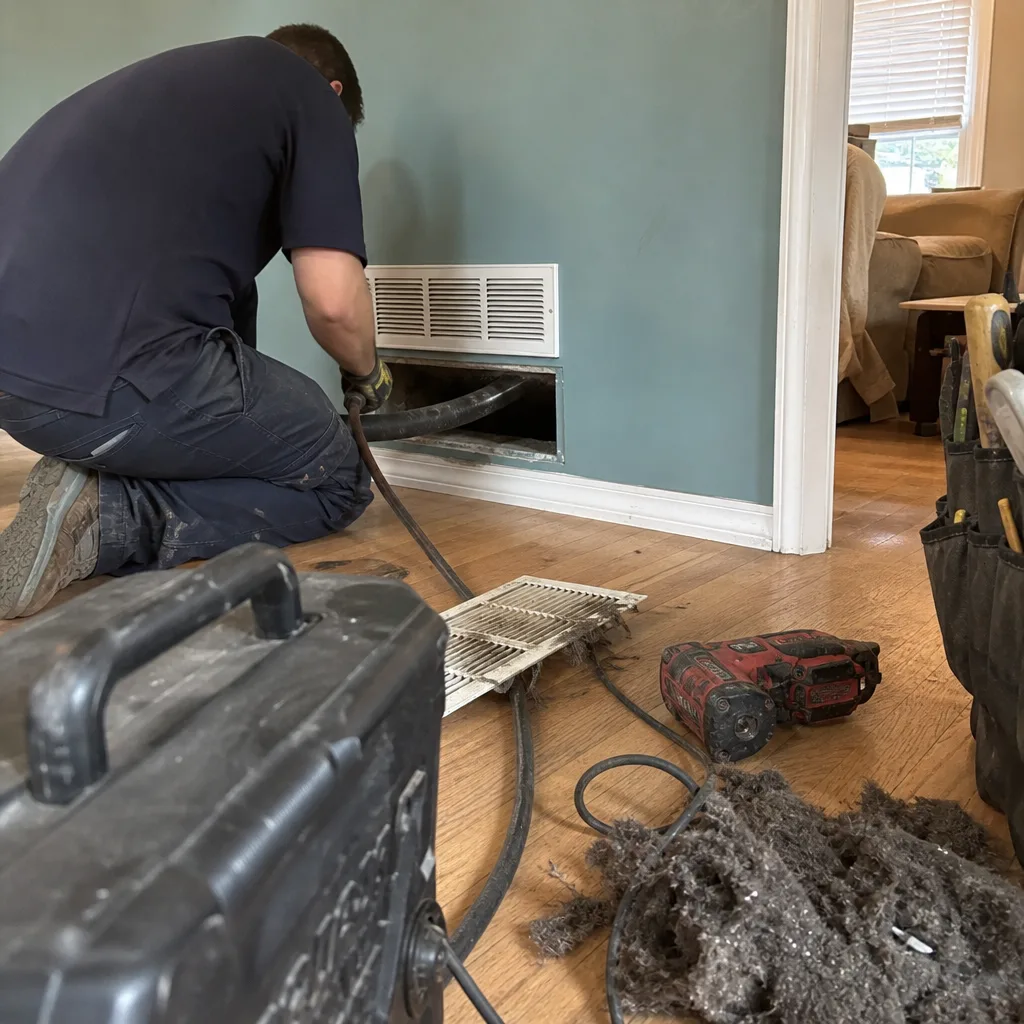 Before
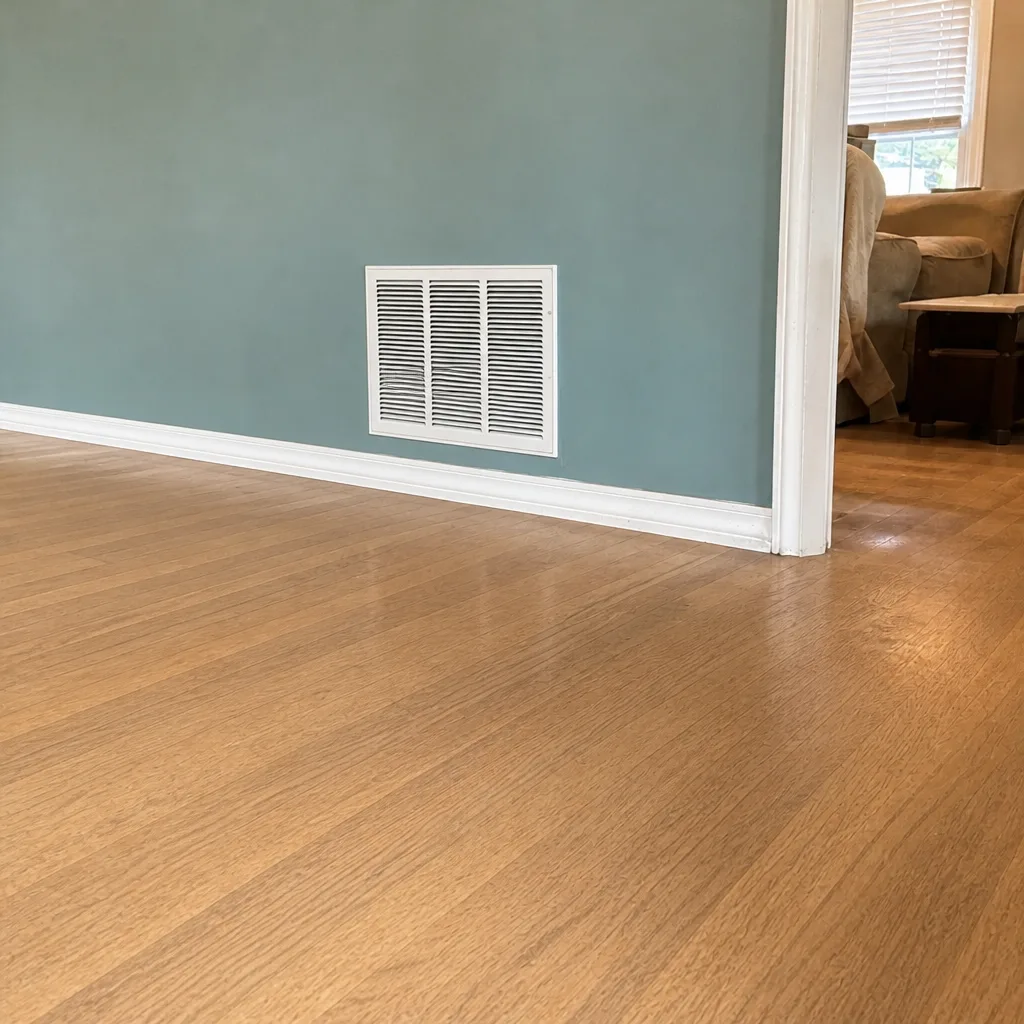 After
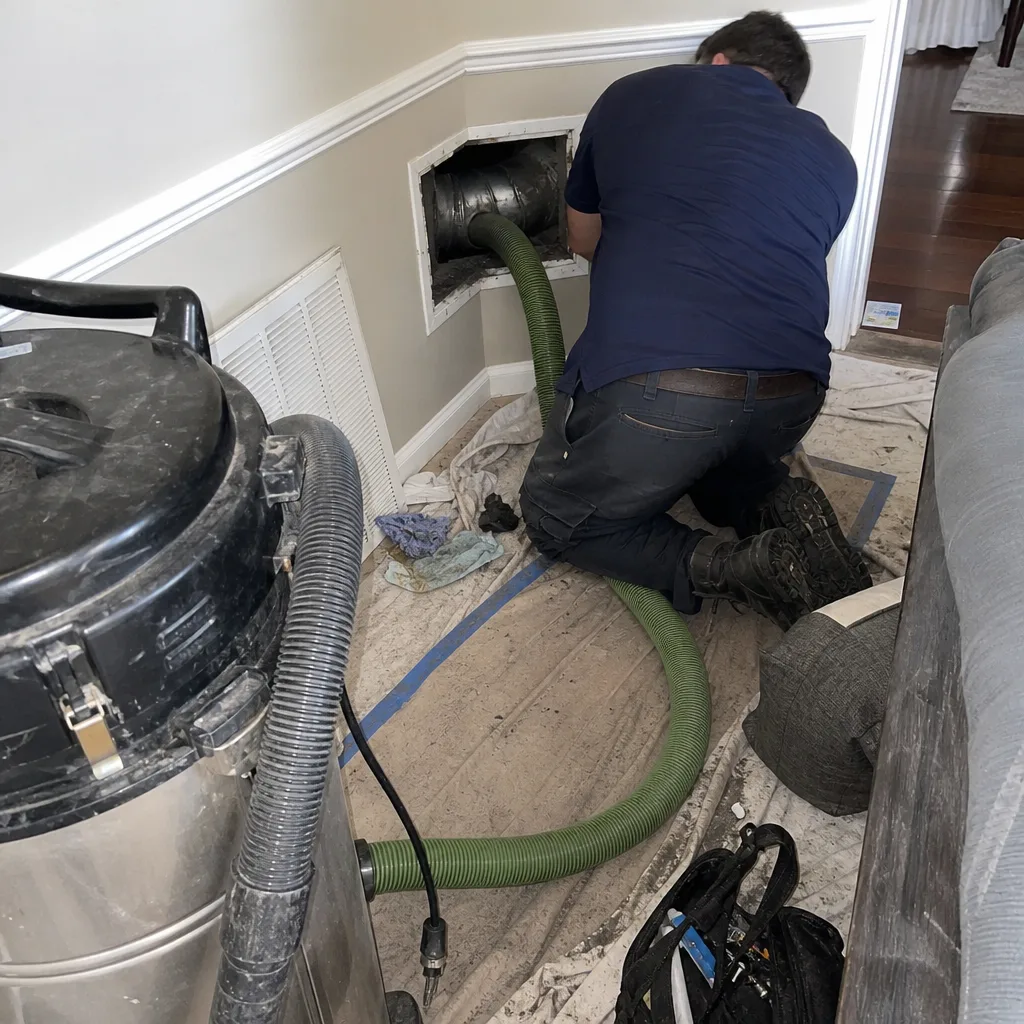 Before
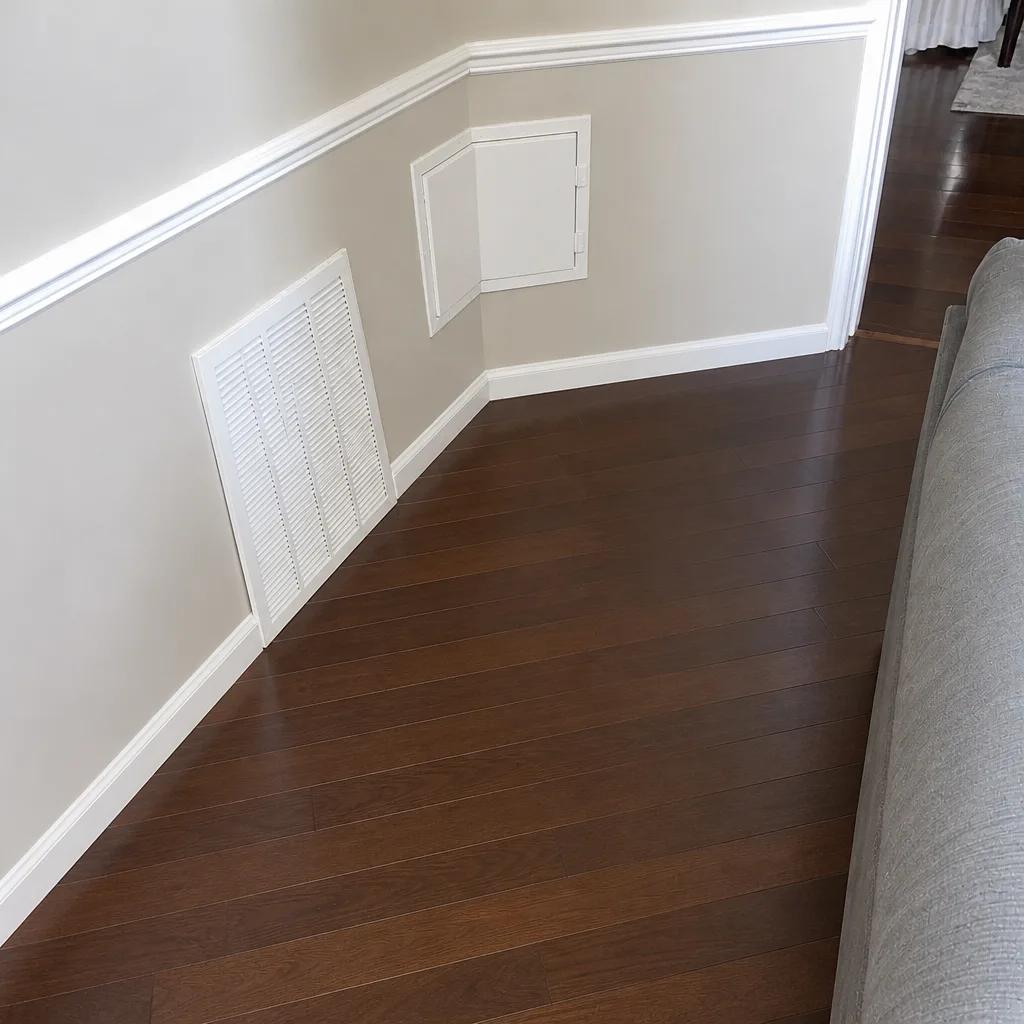 After
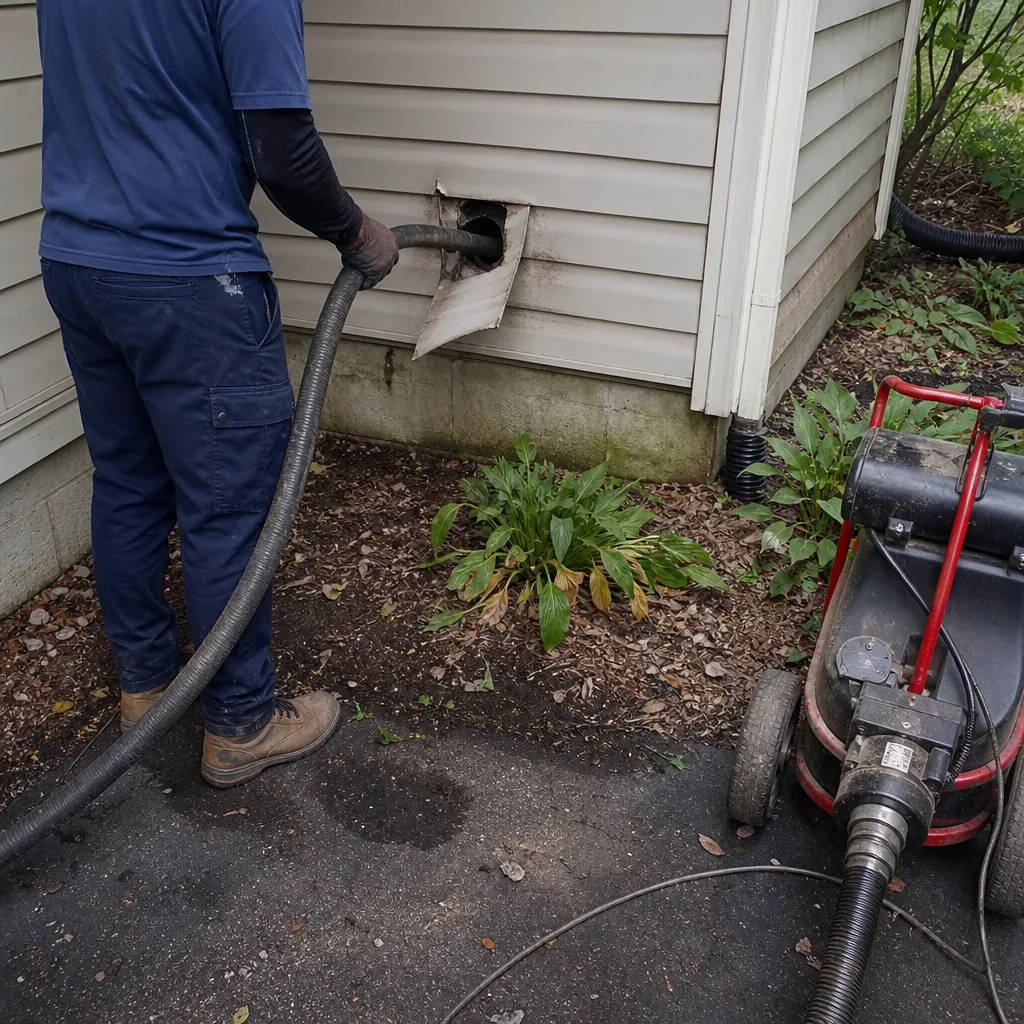 Before
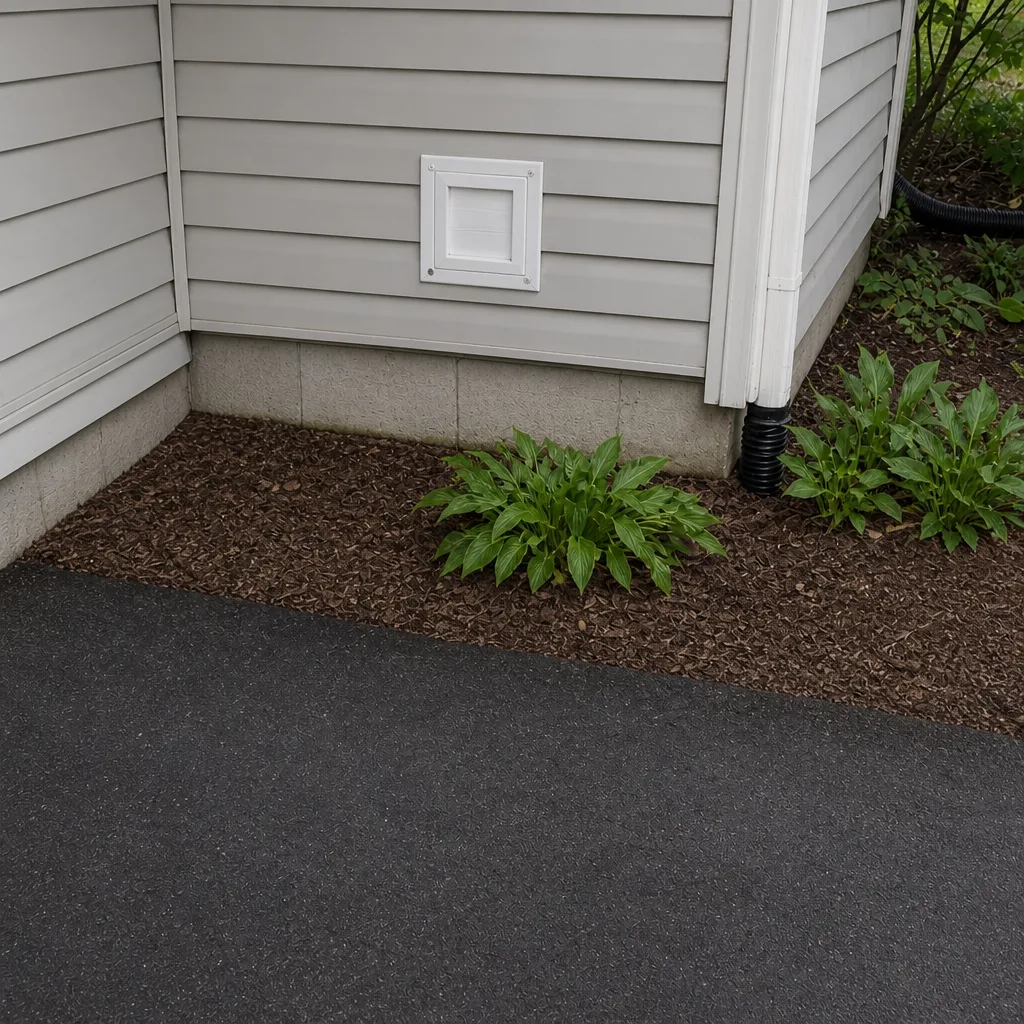 After
When to Call a Professional
Call a professional when you’ve run the inspection sequence and the cause isn’t clear, when airflow is genuinely uneven between registers, when you can see separated joints or collapsed duct runs, or when musty odor persists after a filter change. Call when the dryer vent run is long and you’re not sure the transition behind the machine is connected. Call when the house feels dusty and the system has never been serviced, so you can get a written diagnosis before committing to anything. And call before you authorize any cleaning quote that can’t tell you its filtration spec and containment method. Duct Cleaning Fishers offers free estimates in Fishers – call (844) 320-6508. We answer 24/7, with fast dispatch from 7am to 7pm, Sunday through Friday.
Frequently Asked Questions
That pattern almost always traces to duct leakage or a mechanical issue at the attic boundary, not equipment capacity. The room is at the end of a long duct run through the hottest or coldest part of the house, and a small leak at a boot or joint loses the air before it arrives. If your equipment were undersized, every room would struggle, not just one. Start by comparing register airflow between the cool room and the rest of the house. Call (844) 320-6508 for a written assessment – estimates are free.
Only if the weak airflow is caused by debris buildup, which is less common than homeowners expect. Weak airflow in some rooms but not others usually points to collapsed flex duct, a disconnected joint, or an undersized return – and cleaning won’t fix any of those. Cleaning removes debris; repair fixes airflow. Get a diagnosis first, then decide. We’ll tell you honestly which problem you have before you spend money.
A musty smell points to moisture and microbial growth somewhere in the system, often at the evaporator coil or in a return duct where condensation collects. In Fishers summers, high outdoor humidity working into return air is a common trigger. A proper cleaning with HEPA filtration and negative-air containment removes the growth, but you also have to address the moisture source, or it returns. If the smell showed up after a humid stretch, that’s a strong clue. Call (844) 320-6508 to book an assessment.
Professional duct cleaning in Fishers is priced per system based on the number of runs, accessibility, and condition, and the written estimate sets the final price before any work starts. Cheap quotes usually reflect cheap equipment: a shop vac instead of a HEPA-rated system, and no negative-air containment during the job, which means dislodged debris ends up in your home. We agree one flat price per system before work begins, and we take before-and-after photos of your ducts so you can see what changed. Call (844) 320-6508 for an exact quote – estimates are free.
Ask for before-and-after photos of your own duct interior, taken during the job. That’s the honest verification standard: your ducts, your photos, not stock images. We photograph the runs before cleaning and after, so you can see the difference between a dirty duct and a cleared one, and we show the containment setup during the job. A company that can’t produce photos of your system is asking you to take the work on faith. Call (844) 320-6508 to book a visit with photos included.
Most homes don’t need it on a fixed schedule – it should be driven by condition, not a calendar. Households with pets, allergy sufferers, a recent renovation, or a system that’s never been serviced are the ones that benefit most, and after that it’s a matter of watching for the symptoms in this guide. Uneven airflow, musty odors, or visible register debris are the real triggers. If you’re unsure, an assessment will tell you whether it’s worth doing now or later. Call (844) 320-6508 – estimates are free.
The Bottom Line
Most duct problems in Fishers fall into three categories: dirt, mechanical failure, and pressure imbalance. Dirt is fixed by cleaning with professional-grade equipment and containment. Mechanical failure – collapsed flex, disconnected joints, undersized returns – is fixed by repair, and cleaning it beforehand makes it worse. Pressure imbalance at the attic boundary explains most uneven room temperatures, and the fix is sealing, not a bigger system. Run the inspection sequence, note which category your symptoms fall into, and get a written diagnosis before you spend money. The best outcome is knowing exactly what’s wrong before anyone quotes you for work. Call (844) 320-6508. We answer 24/7. Fast dispatch from 7am to 7pm, Sunday through Friday.
Written by the team at Duct Cleaning Fishers.