
Last updated November 16, 2026
 Whole-home duct cleaning
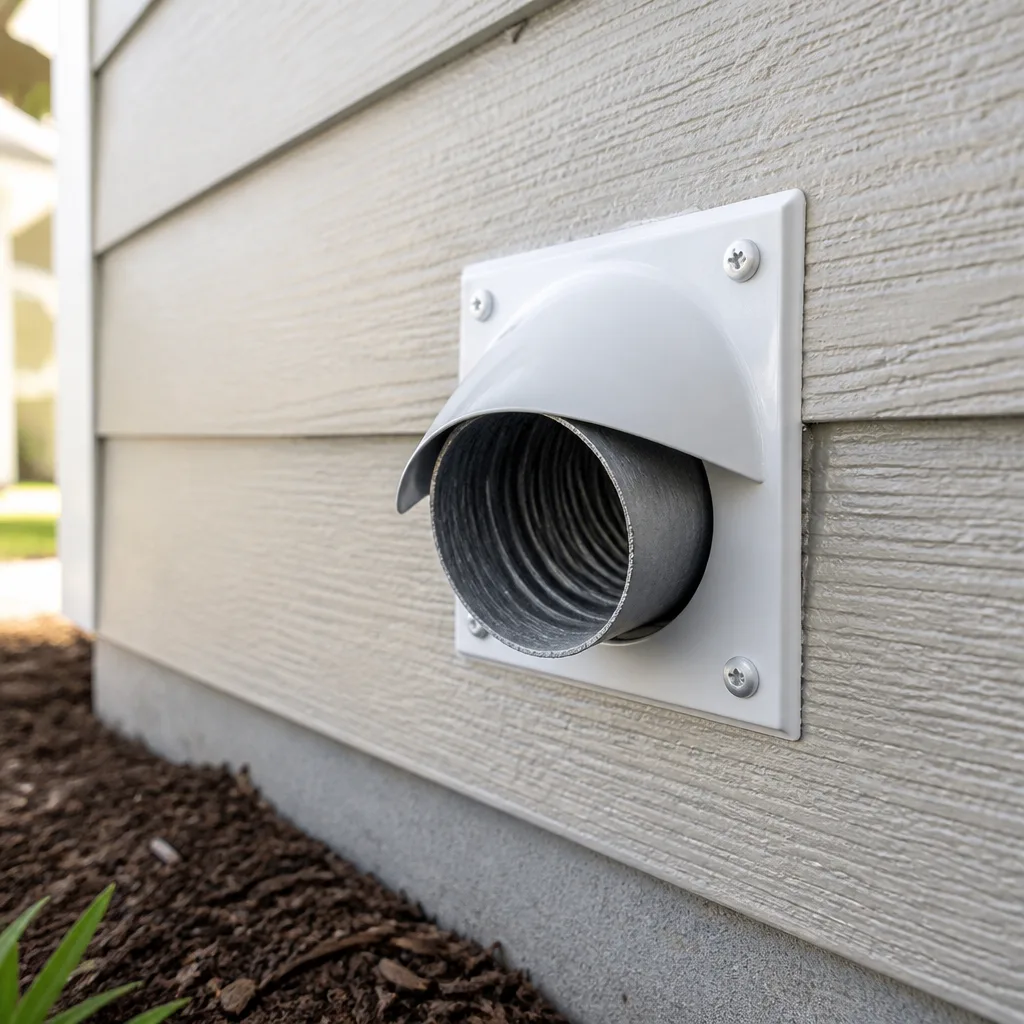 Dryer vent cleaning
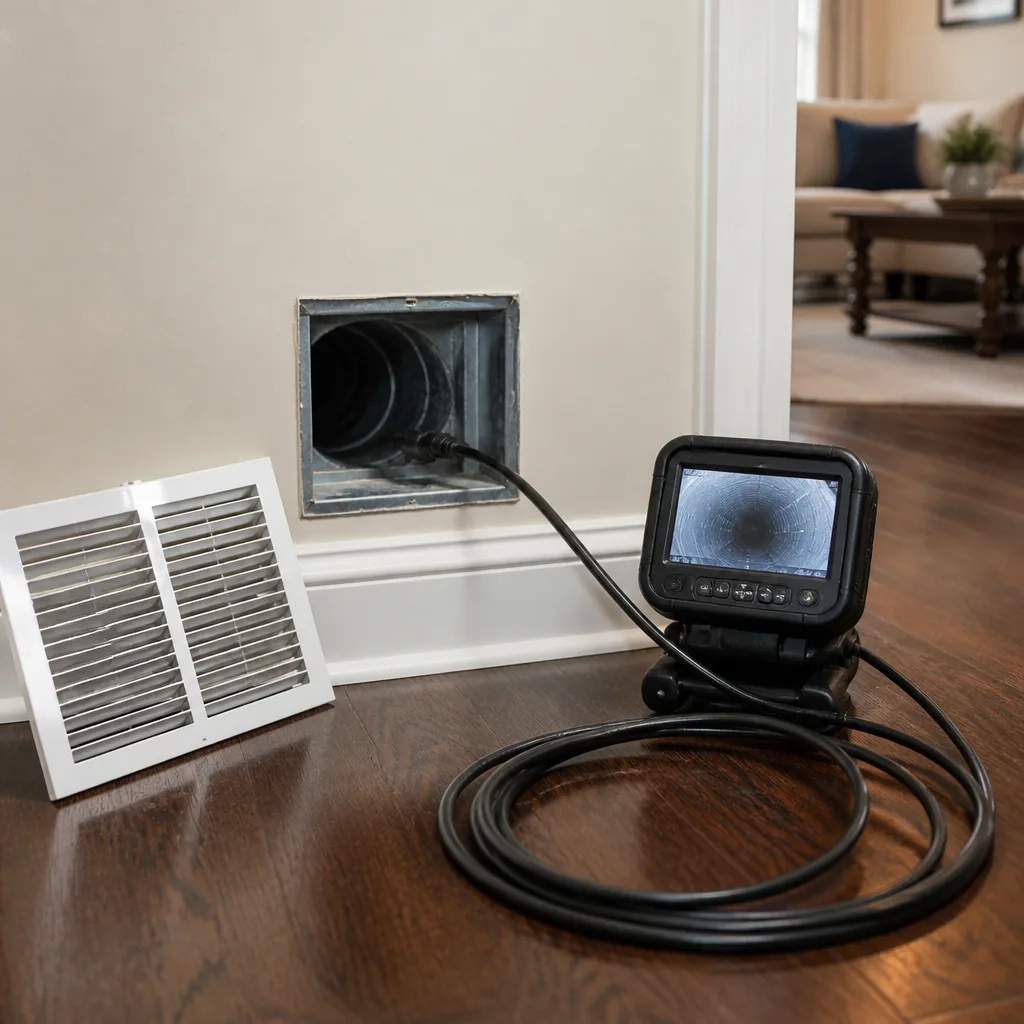 Camera inspection
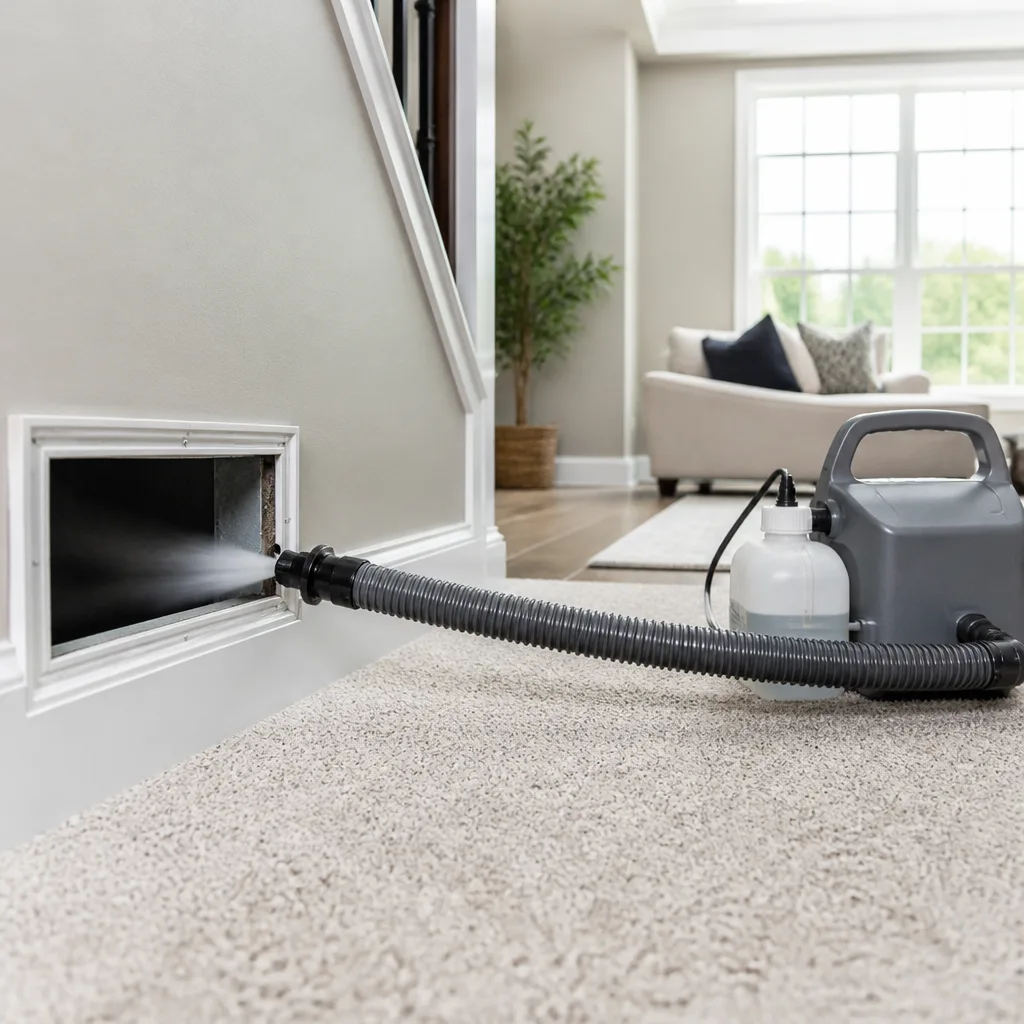 Sanitizing & deodorizing
Whole-system duct and dryer vent check with before-and-after photos - you see exactly what came out of your vents
That "$99 whole-house special" is a bait ad - the real number appears once they are in your hallway, or the "clean" is a shop-vac at the register. We photograph the inside of your ducts before and after instead.
The Complete Guide to Air Duct Cleaning in Fishers
Most homeowners in Fishers book a duct cleaning once, watch the truck pull away, and assume the job is done for good. Here’s the part that surprises them: a typical house built in a Fishers subdivision after 2000 has flex duct runs with at least two low-sag points where debris settles first, and the cleaning only lasts if those points get found. A crew that vacuums the visible registers and leaves doesn’t touch them. What follows is a ground-level guide to how duct systems in Fishers actually behave, what accumulates in them, what equipment matters, and how to tell whether a cleaning was done right or just performed.
Quick Answer
Air duct cleaning in Fishers means removing accumulated debris from the supply and return pathways using negative-air equipment and mechanical agitation, not just vacuuming the vents you can see. The job is worth doing when you notice dusty rooms, uneven airflow, musty odors, or a system that’s never been serviced. Getting it right depends on three things: source removal rather than surface cleaning, containment during the work, and a way to verify the result afterward.
Styles & brands we work with
- Whole-home duct cleaning
- Dryer vent cleaning
- Camera inspection
- Sanitizing & deodorizing
Table of Contents
- Why duct systems in Fishers behave the way they do
- What actually accumulates inside Indiana ducts
- How Fishers subdivision duct layouts trap debris
- Duct materials and what each one needs
- Equipment: truck-mounted negative air vs. portable units
- Source removal vs. surface cleaning
- How to verify the cleaning was done correctly
- When cleaning isn’t enough: duct repair
- Dryer vent cleaning as a separate fire-safety job
- Common mistakes to avoid
- When to call a professional
Why Duct Systems in Fishers Behave the Way They Do
A duct system isn’t a passive tube. It’s a pressure network, and everything that happens inside it follows pressure and airflow. In Fishers, that network gets worked hard. Indiana summers mean the air conditioner runs long cycles, which keeps a steady volume of air moving through the same pathways for months. Every cycle carries dust, pollen, and fine particles past the same bends, the same transitions, and the same register boots. Where air slows down, particles drop out.
That’s the mechanism behind predictable debris patterns. Debris doesn’t accumulate randomly. It accumulates where velocity drops.
Three physical forces drive the pattern in Fishers homes:
- Velocity loss at fittings. Every 90-degree turn, every reducer, every boot loses air speed. Slower air sheds its load. Those fittings are the first places debris builds.
- Low-sag points in flex runs. Flexible duct that sags between hangers creates a dip. Air slows in the dip, and debris collects at the bottom. A run with two sags has two collection points that never show up from the register.
- Return-side pressure. The return ducts pull air back to the air handler. If return pathways are undersized or partially blocked, the system compensates with higher static pressure, which increases the load on the blower and pulls more dust through the cabinet.
Builders in the area also install a lot of flex duct, particularly in attic and crawl runs, because it’s fast and cheap. Flex is more forgiving of imperfect framing, but it’s also more prone to sagging than rigid metal. In our experience, that combination is why so many Fishers homeowners describe the same complaint: dusty film on furniture in rooms that get used the least, or rooms that feel starved for air while others get plenty.
None of this is a crisis. It’s a maintenance pattern, and it has a solution. But the pattern is only fixable if the cleaning addresses it directly. A cleaning that skips the low-sag points does almost nothing for the problem that prompted the call in the first place.
What Actually Accumulates Inside Indiana Ducts
Air duct debris in central Indiana has a composition that reflects where it came from: outdoor air drawn in through the return, particles shed indoors, and material from the building itself. It’s not a single substance, and it doesn’t smell or behave like a single substance.
Here’s what shows up most often:
- Pollen and outdoor particulate. Indiana has a pronounced spring pollen season and a late-summer weed season. Air pulled through the return carries that load indoors, where it settles in the ductwork and on the coil. In a drier climate, much of it stays airborne longer. In a humid climate it gets heavier, sticks to surfaces, and stays put.
- Household dust and fibers. Skin cells, textile fibers, and pet dander make up a substantial share of what’s in a residential duct. It binds with other particles and forms a loose mat on the duct floor.
- Construction and renovation debris. Drywall dust, sawdust, and framing debris from a prior remodel often remain in the ductwork years later. Filters catch some of it, but not all.
- Clay and mineral dust. This is where central Indiana is distinctive. The region’s heavy clay soils produce a fine, persistent dust. Upholstery, furniture, and carpeting contribute a similar fine mineral load. When it enters the return air stream, it settles in the duct and dries. Dry clay dust doesn’t come back out with a normal vacuum pass; it needs mechanical agitation.
- Moisture-driven buildup. High summer humidity means the duct interior isn’t pristine dry. Where warm, humid air meets cool metal, condensation can form. Debris that gets damp and dries out tends to adhere to the duct wall, which is why some duct interiors show a film rather than loose debris.
This is why a plain shop vac and a hose does very little. It moves loose material around. It doesn’t dislodge material bound to the walls or sitting in a low-sag point, and it doesn’t contain what it does disturb.
How Fishers Subdivision Duct Layouts Trap Debris
Fishers neighborhoods have a shared set of building conventions. Two-story homes tend to route the air handler in the basement or garage and run flex trunks up through the center of the house, with long horizontal runs extending to perimeter rooms. Ranch and two-story plans with attic air handlers push supply trunks up and out, which means more of the run is horizontal and flex. Those runs are more exposed to heat gain and more likely to sag.
The effect shows up differently by neighborhood and by build type:
- Two-story center-hall layouts in areas like Saxony often have both trunks running close to the center before branching. That’s convenient for a short trunk run, but it means the horizontal branches to the far bedrooms tend to be longer and more flexible. Those long branches are where sag and debris buildup appear.
- Larger floor plans with extended returns, common in Thorpe Creek-style subdivisions, use a single large return or multiple returns routed back through the same cabinet. When one return path is longer, it becomes the weak link, and higher static pressure pushes debris through the entire network.
- Garage-mounted air handlers put the return cabinet in a space that also holds vehicles, lawn equipment, and stored boxes. That’s not a problem by itself, but it means the return filter is doing more work, and when filtration slips, more debris reaches the supply side.
- Basement air handlers in intermediate floor plans tend to run shorter trunks but have vertical risers. Risers are high-velocity and self-cleaning, but the transitions at the top and bottom are collection points.
None of these layouts is defective. They’re just standard residential construction, and they all have predictable pressure and velocity patterns. A technician who knows the pattern can find the collection points in a few minutes with airflow readings and a scope. A technician who doesn’t will spend the whole visit at the register looking at a vent cover.
If you suspect your layout is working against you, a professional air duct cleaning job that starts with a static pressure reading and a walkthrough of the layout is the right starting point.
Duct Materials and What Each One Needs
Not all ductwork responds to the same cleaning method. The material dictates the tool and the pressure.
- Rigid metal duct is the most forgiving. It can take a rotary brush and higher vacuum pull without damage. It’s also the easiest to inspect because the runs are straight and rigid.
- Flexible duct requires a gentler approach. The inner liner can be torn or collapsed by an aggressive brush or excessive pull, which turns a cleaning into a repair. Flex also has more surface area per foot because of the ribbing, so debris adheres more readily in the grooves. A brush system like Rotobrush is designed for this: it agitates and vacuums in a single pass while limiting the pressure applied to the liner.
- Ductboard, common in some attic and crawl systems, has a fibrous interior surface. It holds dust more firmly than metal and can shed fibers if scrubbed aggressively. It needs containment and controlled agitation rather than a hard brush.
- Sheet metal with mastic or insulation wrap can hide seams from view. Where the wrap has failed or the mastic has cracked, the duct is leaking, and cleaning it doesn’t fix the leak. That’s a repair issue, not a cleaning one.
The practical takeaway is this: the right equipment depends on what the duct is made of. If a quote is the same whether you have rigid metal or a house full of flex, the method probably isn’t being tailored.
Equipment: Truck-Mounted Negative Air vs. Portable Units
Most duct cleaning claims sound the same. The equipment behind them doesn’t. Two setups dominate residential work, and the difference matters for different home sizes and duct materials.
Truck-mounted negative air
A truck-mounted system uses a large blower driven by the vehicle engine to pull a strong, continuous negative pressure on the duct system. It’s faster on larger homes and long runs, and it handles the high-volume pull needed when the duct runs are extensive. The limitation is access. The vehicle has to be close enough to the house, and long runs with multiple trunks may need the truck to be supplemented by portable units in the interior.
Portable negative air and HEPA units
Portable systems trade raw volume for control. A HEPA vacuum unit like a Nikro can be brought directly to the duct and worked tighter with the agitation tool. For flex and ductboard, where aggressive pull risks liner damage, the controlled approach is safer and often more thorough. Portable HEPA also matters in tight crawl spaces and crowded attics where a truck line isn’t practical.
Containment equipment that isn’t optional
This is the piece the cheapest bid usually leaves out. When debris is dislodged, it has to go somewhere. Without negative-air filtration at the work site, some of it ends up on your floors, furniture, and interior air. Abatement Technologies negative-air filtration is built to capture dislodged material at the source rather than let it redistribute through the house. If a quote doesn’t mention containment, the job is going to make a mess before it makes progress.
Equipment is the single most reliable clue to what kind of job you’re getting. Professional-grade equipment is not the same as a generalist’s shop vac with a hose taped to the register.
Source Removal vs. Surface Cleaning: What You’re Actually Paying For
The most important distinction in this trade is the one most homeowners never hear: source removal is not the same as surface cleaning. You may be paying for one while assuming you bought the other.
Here’s how they differ.
Surface cleaning
Surface cleaning means vacuuming what’s reachable: the register openings, the first few feet of the trunk, and whatever’s visible. It looks clean from the register. It doesn’t address the collection points in the middle of a run, in the sags, or at the far ends. On a system with a debris pattern like the one described above, surface cleaning removes maybe a small fraction of what’s actually there.
Source removal
Source removal means using mechanical agitation, like a rotary brush system, to break the bond between debris and duct wall, and then pulling the material out through a HEPA-filtered vacuum while the whole system is under negative pressure. The brush removes it, the vacuum captures it. The material is gone from the system, not just shifted. Source removal takes longer, needs more equipment, and costs more. It’s also the only method that actually solves the problem.
Two clues tell you which you’re getting. First, ask the technician what the plan is for the low-sag points in flex runs, or for ductboard in the attic. If the answer is “we’ll vacuum it out,” that’s surface cleaning. A real source-removal plan addresses the specific fittings and runs in your home. Second, ask where the debris will go during the work. If there’s no containment equipment at the truck or in the house, it’s going into your air.
Source removal is the standard we hold ourselves to. It’s also the standard any professional duct cleaning in Fishers should hold itself to.
How to Verify the Cleaning Was Done Correctly
The worst outcome in duct cleaning isn’t a bad job. It’s a job you can’t verify. Walking through four numbered checks before, during, and after the work makes the result measurable.
- Record static pressure before and after. Static pressure measures the resistance the blower is pushing against. A system with debris buildup in the returns and dirty coils reads high. After a proper source-removal cleaning and a filter change, that number should drop closer to what the manufacturer’s spec calls for. Ask the technician to write the readings down. Numbers you can hold in your hand are more useful than a verbal report.
- Inspect a serviceable duct section yourself. Open a register, look inside with a flashlight, and ask the technician to show you a section of trunk before and after. Look for loose dust, and look for the absence of it. Not “clean enough to pass a quick glance,” but visibly free of debris on the duct floor.
- Take before-and-after photos of your own ducts. Professional crews should be comfortable photographing their work. Before-and-after images of your ductwork, not generic images from a file, tell you what actually happened in your home.
- Check airflow at every register. A balancing issue that was there before the cleaning should be visibly improved after it. If a bedroom that was always weak is still weak, something is still restricting the run, and that’s a sign to look at repair rather than another cleaning.
If a technician is unwilling to record static pressure, show you a duct section, or produce before-and-after photos of your own system, that’s the answer to whether the cleaning was done right.
When Cleaning Isn’t Enough: Duct Repair
Some duct problems aren’t cleaning problems. They’re structural, and no amount of vacuuming addresses them. This is where we draw a line that a lot of duct cleaning companies won’t: air duct cleaning fixes the debris; air duct repair fixes the pathways themselves.
Typical repair issues we see in Fishers homes:
- Disconnected flex runs at the trunk. Flex duct that has slipped off, torn, or been pulled out of its boot. This is common in attics, and it means conditioned air is being dumped into the attic rather than delivered to a room. Cleaning it doesn’t fix it; reconnecting and sealing it does.
- Cracked or separated trunk seams. Metal trunk that has separated at a fitting or a mastic joint that has failed. The leak pulls attic air, garage air, or crawl air into the supply and distributes it through the house.
- Improperly supported flex runs. Long flex runs with too few hangers sag, and the sag gets worse over time. Re-hanging with proper spacing reduces the sag points and improves airflow to the far end.
- Undersized or blocked returns. A return that’s been narrowed by a remodeling wall or blocked by stored material limits what the entire system can pull. Fixing that is a repair, not a cleaning.
- Crushed flex runs behind drywall or in joist cavities. Where framing work has compressed a flex run, the airflow restriction is physical, and it’s permanent until the run is rerouted or replaced.
If your ducts have never been serviced, or if you’ve had remodeling work done and started noticing uneven airflow afterward, this is worth asking about. Cleaning a duct system with a disconnected run wastes most of the effort; repair first, cleaning second, is often the correct order. That’s where air duct repair earns its place as a service, not just a cleaning add-on.
We also work alongside whole-home air quality equipment. Being familiar with Honeywell and Aprilaire systems matters because duct condition directly affects how those systems perform. A whole-home filter, a humidifier, or a UV system is only as useful as the ductwork delivering air to it. When the ducts are compromised, the IAQ equipment is fighting the problem rather than solving it.
Dryer Vent Cleaning as a Separate Fire-Safety Job
Dryer vent cleaning gets grouped under duct cleaning because both involve moving air through a duct, but it’s a different job with a different risk profile. A clogged dryer vent is a residential fire risk, and the buildup that causes it is lint, not dust. Federal fire statistics have tracked dryer vent fires as a leading cause of residential fire incidents for years, and the mechanism is simple: lint builds up in the vent, restricts airflow, the dryer overheats, and ignition follows.
The airflow restriction is gradual, which is why it’s easy to miss. Signs that a dryer vent cleaning is due:
- Clothes take longer than one cycle to dry, and it’s getting worse.
- The dryer gets hot to the touch on the body, not just the door.
- Lint accumulates around the vent hood on the exterior, or the flapper doesn’t open fully.
- There’s a musty or burning smell near the dryer during or after a cycle.
For a Fishers homeowner with a dryer on an interior wall or a long vent run, the buildup happens faster than for a dryer vented on a short exterior run. A long run is a slower pathway, more surface area for lint to adhere to, and more turns where lint collects. Cleaning it out is a direct fire-safety measure, not an air quality nicety.
This is also a job most HVAC generalists leave off the menu entirely. We treat it as core scope, and it’s the one part of the service calendar where the safety case is unambiguous.
Common Mistakes to Avoid
- Booking the lowest bid without asking about containment. A quote that’s dramatically lower than the others often reflects missing negative-air filtration at the work site. That means the debris is going into your house air rather than into a HEPA filter.
- Assuming a truck in the driveway means source removal. Truck-mounted vacuums are a tool, not a guarantee. The method matters more than the vehicle. Ask what the plan is for low-sag points and for the far end of each run.
- Skipping the static pressure readings. A cleaning with no before-and-after airflow numbers is a cleaning you cannot verify. Numbers are the cheapest assurance you’ll get.
- Cleaning a system with a disconnected run or a cracked trunk. Cleaning a compromised duct system is wasted effort. Find the repair issues first, seal them, then clean.
- Confusing a dusty register for dirty ducts. A dusty register cover can mean dust is being distributed from the duct, or it can mean dust is collecting on the cover from the room. A quick look inside the duct, not just at the cover, tells you which.
- Treating dryer vent cleaning as optional. It’s a fire-safety job, not a nice-to-have. If a dryer vent that adjoins a duct run hasn’t been cleaned in years, book it separately from the ducts.
- Hiring a generalist with a shop vac. A duct cleaning is not a cleaning with a vacuum. It’s a cleaning with equipment sized and configured for the duct material and the home.
When to Call a Professional
You don’t need to call anyone until the signs are clear. Cleaning a duct system that has no problem is a waste of money. Call a professional when you’re noticing one or more of the following:
- Dust settles on surfaces within a day or two of cleaning, especially in rooms that are used but not frequently aired.
- Airflow is uneven between rooms, and it’s gotten worse over time rather than staying stable.
- A musty or stale smell comes out of the registers when the system starts up.
- The system has never been serviced, or it’s been more than several years since it was.
- You’ve had remodeling work done and started noticing airflow or dust problems after it.
- The dryer is taking longer than it used to, or the dryer vent hood isn’t opening fully.
Estimates from Duct Cleaning Fishers are free, priced per system rather than per vent, and set before the work begins. Give us a call and we’ll come out and write it up. Call (844) 320-6508 for a free estimate in Fishers.
See the difference
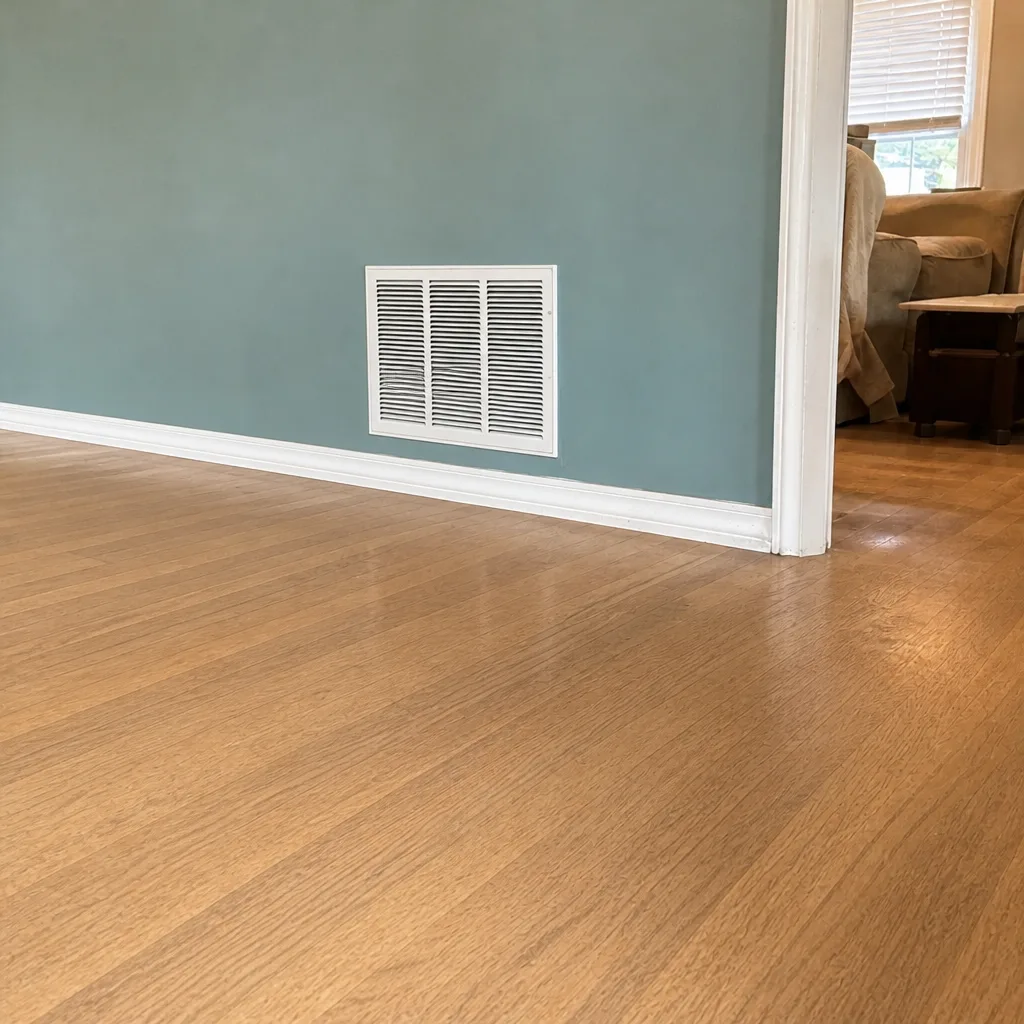
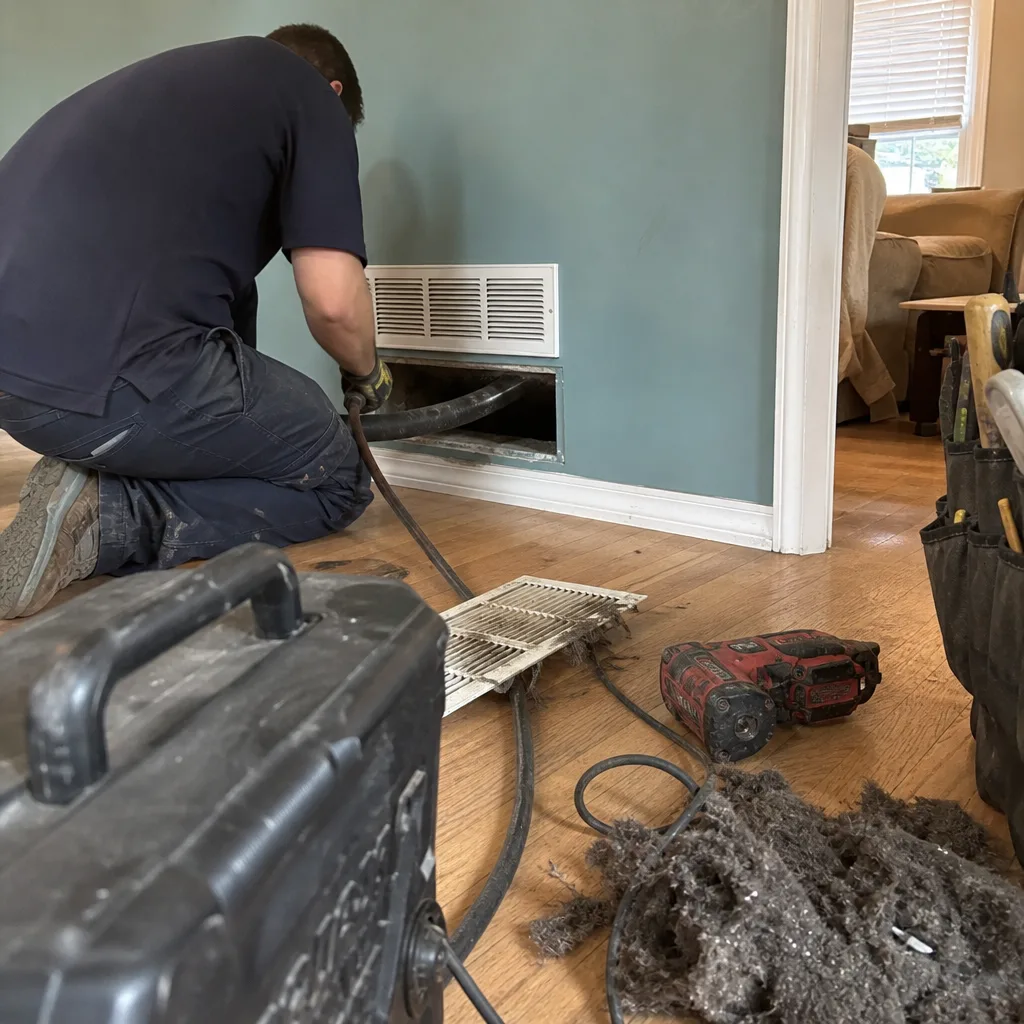 Before
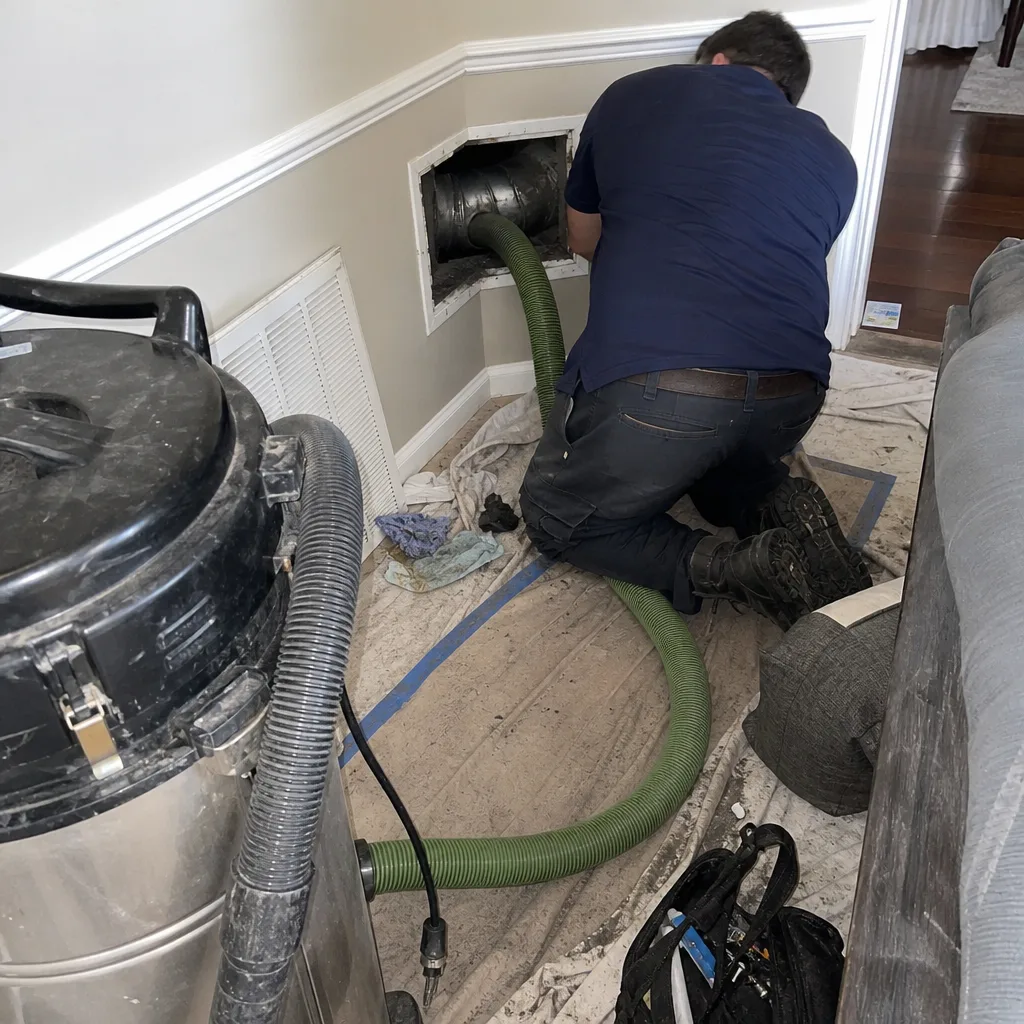
 After
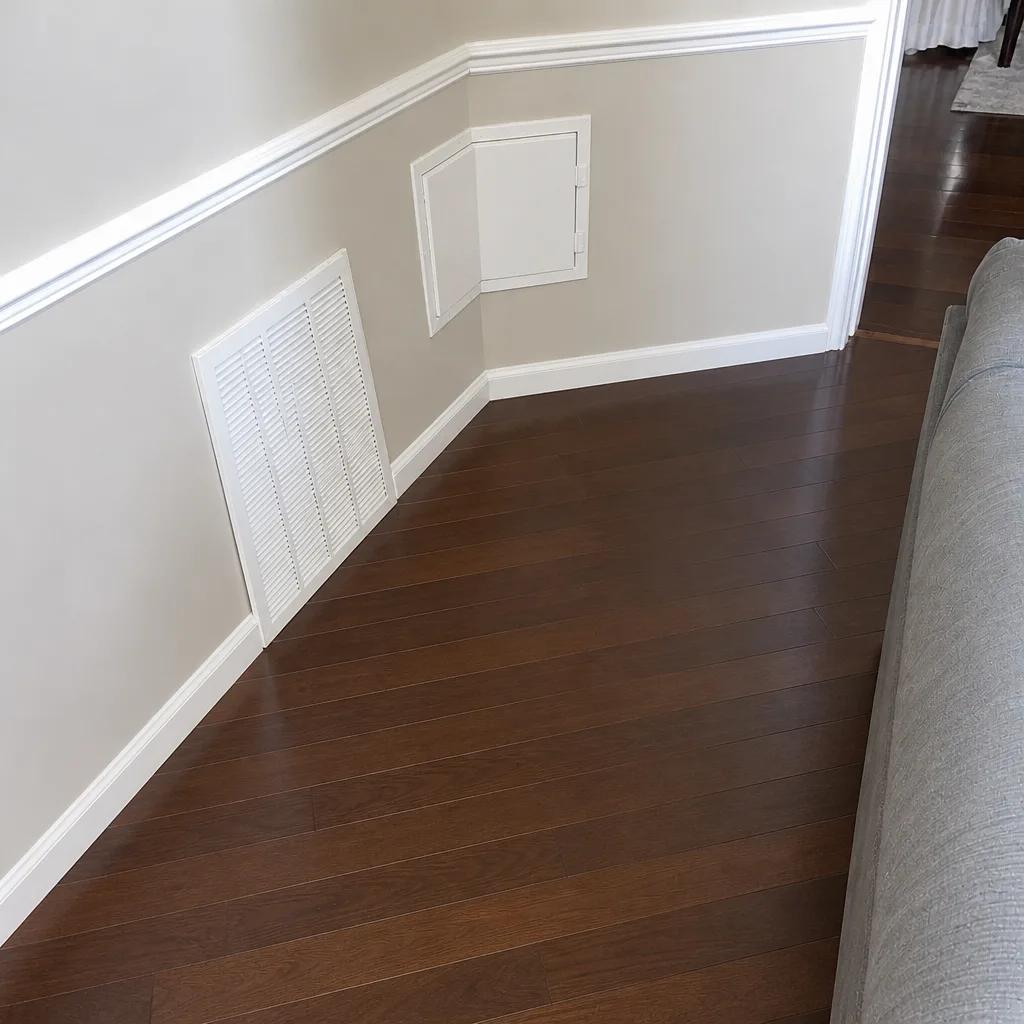
 Before
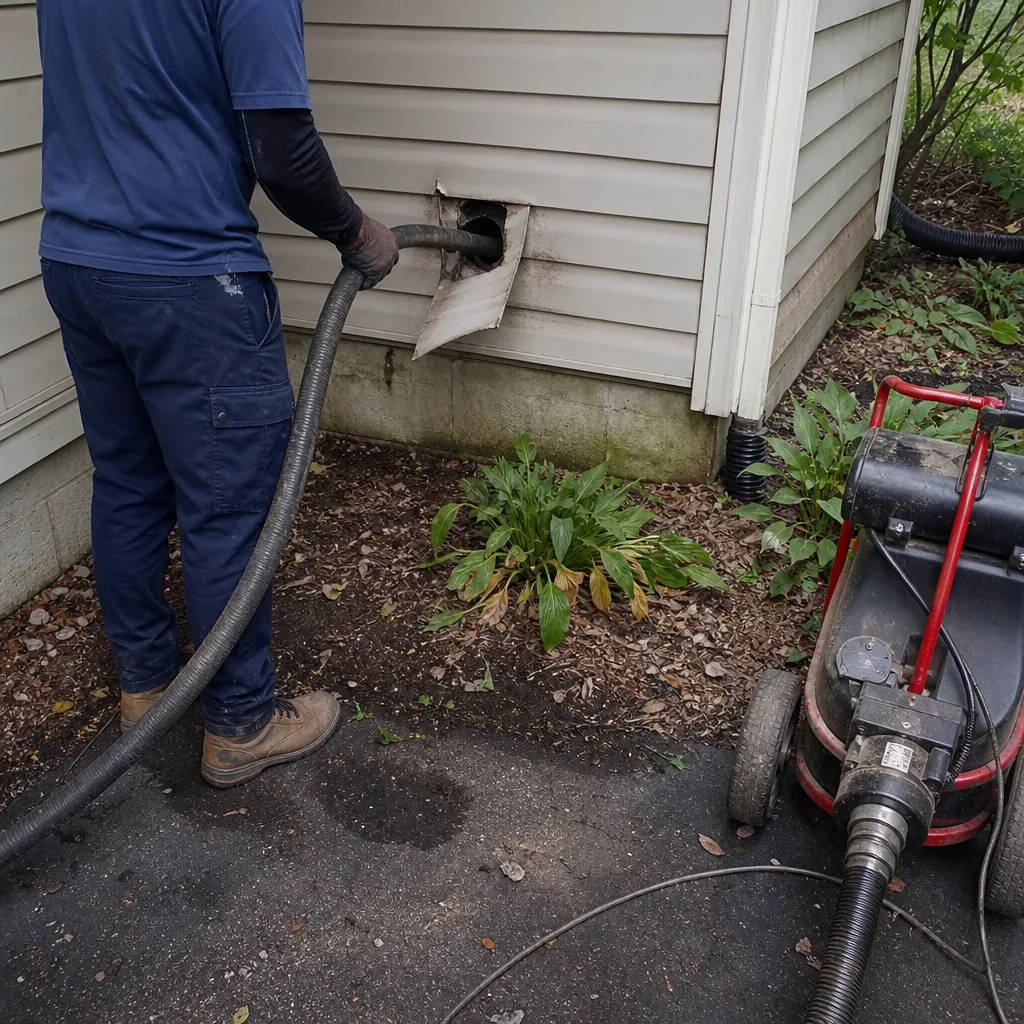
 After
 Before
 After
Frequently Asked Questions
Air duct cleaning in Fishers is priced per system, not per vent, and the estimate is set by the written estimate before any work begins. Typical whole-system pricing depends on system size, number of trunks and returns, duct material, and whether repair work is needed. Call (844) 320-6508 for a free estimate – estimates are free.
Cheap quotes usually cut method, not effort. They skip containment equipment like negative-air filtration, run a shop vac and a hose instead of a brush-and-vacuum system, and don’t record static pressure or show you the duct afterward. A source-removal job with containment is not the same service as a surface pass at the registers, and the price should reflect that difference. Call (844) 320-6508 for an honest per-system estimate.
The simplest verification is before-and-after static pressure readings plus before-and-after photos of your own ductwork. Ask the technician to write down the pressure reading before and after the work and to show you a serviceable section of trunk. If a company won’t do that, that’s your answer. Call (844) 320-6508 for an estimate that includes a written report.
For most Fishers homes, ducts don’t need annual cleaning. A general starting point is every few years, adjusted up or down based on pets, allergies, recent remodeling, and whether the ducts have ever been serviced. Homes with an air handler in a dusty or garage space, or with flex runs that sag, tend to need it sooner. Call (844) 320-6508 and we’ll give you a realistic interval based on your system.
It helps by removing the debris that the system recycles through the rooms. It doesn’t replace filtration or whole-home air quality equipment, and it doesn’t correct a home that has a disconnected duct leaking attic air. The biggest impact comes when a proper source-removal cleaning is paired with the right filter and, when needed, duct repair. Call (844) 320-6508 for a free estimate and a walk-through of the system.
No, dryer vent cleaning is a separate service with its own scope. It’s worth booking because a clogged dryer vent is a fire risk, and it’s usually the single highest-priority item on the list for Fishers homes with long or interior vent runs. Call (844) 320-6508 to book the ducts and the dryer vent in the same visit.
The Bottom Line
Duct cleaning is one of the few home services where the outcome depends almost entirely on what the technician actually does, not on the price. The collection points in a Fishers home are predictable – low-sag runs in flex, the transitions at trunk deliveries, the return pathways – and a proper source-removal cleaning finds and addresses them. A surface pass doesn’t. Verify the job with static pressure readings and your own before-and-after photos, ask about containment before you book, and treat duct repair and dryer vent cleaning as part of the same picture. If you’re ready to get an honest estimate, Duct Cleaning Fishers writes the price per system before work starts.
Call (844) 320-6508 for a free estimate. We answer 24/7. Fast dispatch from 7am to 7pm, Sunday through Friday.
Written by the team at Duct Cleaning Fishers.