
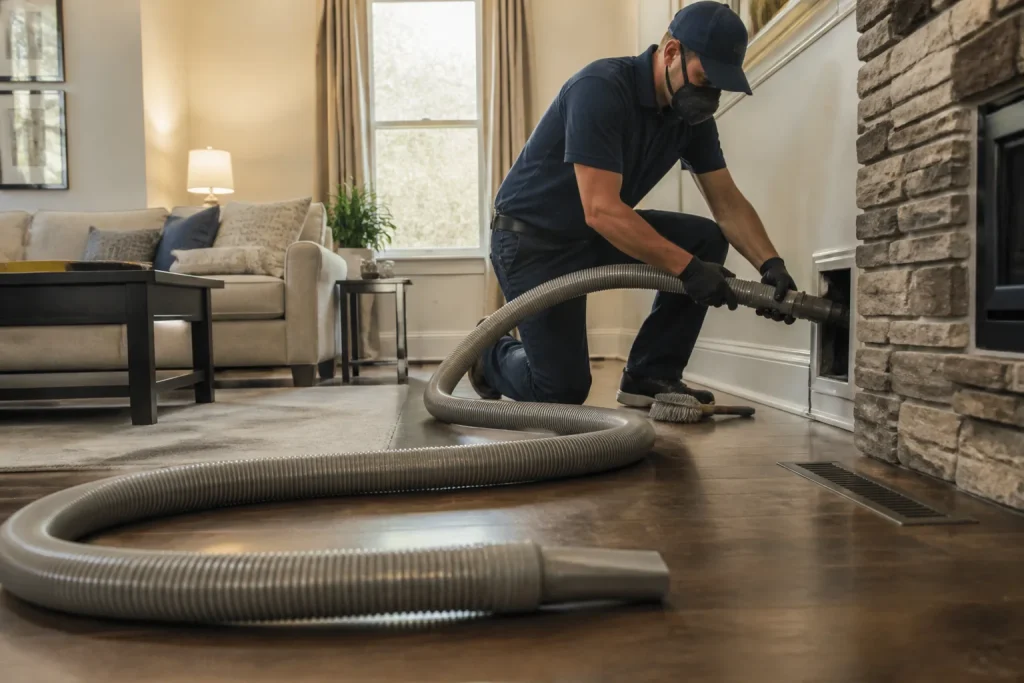
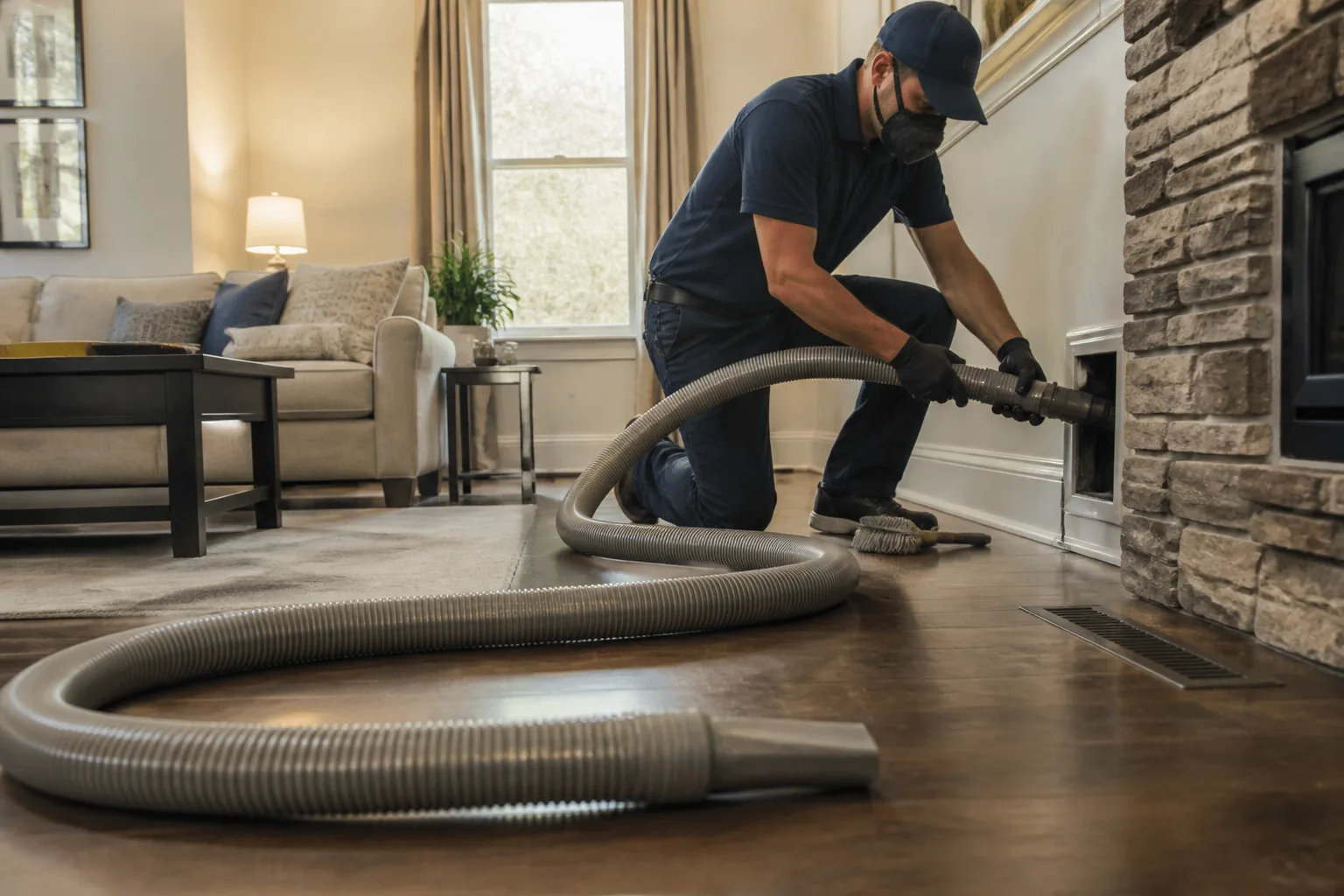
Emergency Air Duct Cleaning Near Me: What Fishers Homeowners Should Do First
If you smell sewage in your supply air or see mold inside a vent, shut off your HVAC system before you call anyone. That single step is the mistake we see most often: a furnace running while contaminated air circulates pushes the problem into every room in the house before help arrives. This guide walks Fishers homeowners through the first 30 minutes, sorted by what actually happened, so the cleanup stays contained instead of spreading. If you would rather not sort it out alone, call (844) 320-6508 and we will talk you through the shutdown.
First, Decide Whether This Is a Real Duct Emergency
A true emergency means contamination is actively moving through your home or the source is still present. Most “emergency” calls in Fishers turn out to be urgent but schedulable, and that distinction matters: it changes how a job is approached and how much it costs.
Genuine emergencies, the ones worth same-day attention:
- Smoke or char odor from a recent fire that returns every time the fan runs
- Sewage odor coming out of supply registers, not just a drain
- Visible mold growth inside a supply run or on the air handler cabinet, especially after a leak
- Water sitting in ductwork or the air handler after a storm or pipe failure
- Vermin dropping or nesting material visible through a register
Urgent but schedulable:
- General dust buildup and dusty rooms
- Uneven airflow or weak registers in some rooms
- Musty smell that appears only occasionally
- Rising energy bills with no other obvious cause
If your situation is on the second list, you do not need to shut anything down. You need a proper whole-system cleaning on a normal schedule. That is the everyday work described on our air duct cleaning page, and it is what most Fishers homes actually need.
The First 30 Minutes: A Protocol for Each Scenario
1. Smoke and fire residue
Shut off the HVAC at the thermostat and the breaker. Keep windows closed if outdoor air is smoky, open them if it is clear. Do not run fans or a portable air cleaner that recirculates into the same rooms; an air cleaner with a HEPA filter is fine if it vents to the room. Note where the smell is strongest, ceiling registers first, and photograph any soot visible at the grilles.
2. Sewage odor in supply air
Turn the system off completely. Sewage gas in ducts signals a backup that has reached the system, and circulating it moves bacteria through every room. Open windows, keep people and pets out of the affected rooms, and do not run bathroom exhaust fans that might pull more air through the ducts. Photograph the registers and note the odor path before you call.
3. Water intrusion into the air handler or ductwork
Kill power to the air handler at the breaker. Standing water plus a running fan is how mold establishes itself in a duct system within a short window. Soak up what you can reach, photograph the water line and any soaked insulation, and leave the system off until it has been assessed.
4. Vermin infiltration
System off, gloves on, and no shop vac play. Droppings and nesting material can carry pathogens, and vacuuming them with a consumer unit sends fine particles into the room. Photograph the evidence through the register, close the room off, and leave removal to a crew with HEPA equipment and containment.
In every case, the same three rules apply: stop the air handler, stop recirculation, document before you touch.
Why Running the HVAC Makes It Worse
Your duct system is a closed loop. Whatever is inside it, dust, soot, mold spores, bacteria, gets carried to every register within a few cycles. A furnace or air handler does not filter the problem away; standard filters catch a fraction of fine particles and nothing that is already growing on duct surfaces.
So when a Fishers homeowner keeps the fan running to “air the place out,” they are doing the opposite. The contamination layer gets disturbed, redistributed, and deposited on surfaces that were previously clean. That is why a proper response starts with containment, not cleaning: our technicians deploy Abatement Technologies negative-air filtration on-site so dislodged debris is captured rather than pushed into living space. If you are waiting for a crew, the cheapest thing you can do is keep the system off.
Basic comfort without recirculating the problem: crack a window on a mild day, use a portable air cleaner with a HEPA filter in the room you occupy, and dress for the temperature. In colder weather, a space heater in one room beats running a contaminated system through the whole house.
What to Document Before Anyone Arrives
Insurance claims for water intrusion and fire residue are common in Fishers neighborhoods that sit near the White River and the low-lying areas around Geist, and the claim goes smoother with evidence captured early. Before the crew arrives:
- Photograph the source: the water line, the soot, the register with visible growth. Wide shot first, then close-up.
- Map the odor. Write down which rooms smell strongest and at what time of day.
- Note the HVAC run history: how long the system ran after the event, and whether it was on when you noticed the problem.
- Photograph the thermostat and any error codes.
- Keep any receipts related to the event (dehumidifier rental, emergency plumbing).
Bring that file out when you call. It helps the estimator understand the scope and helps your insurer process the claim without a back-and-forth.
How to Tell an Emergency-Ready Company from a Repackaged Appointment
Plenty of companies will move you up the schedule and call it emergency service. The ones equipped for real remediation sound different. Ask these questions:
- Do you set up containment? A real answer names negative-air filtration or barriers, not “we’re careful.”
- What equipment do you run? Rotobrush brush systems and Nikro HEPA vacuums are industry standard; a shop vac is not.
- Do you test after cleaning? Verification, whether visual or with an air quality meter, separates remediation from a surface pass.
- Can you repair compromised ductwork? Cleaning does not fix a crushed run or a disconnected joint. If the company does not offer air duct repair, the contamination source may remain.
- Are you trained on IAQ systems? Our technicians are trained on Honeywell and Aprilaire equipment, so we can speak to how duct condition relates to the whole-home air quality setup.
Our technicians have up to experience, and the questions above are the same ones we would ask if we were hiring.
Related Services in Fishers
Once the emergency is resolved, the follow-up usually falls into one of our three scopes: a full cleaning, a repair for damaged runs, or dryer vent cleaning if the lint load turns out to be a separate fire risk. All three are scheduled through our Fishers service desk.
One small mercy worth mentioning: if your ducts could talk, the things they would admit to would make you cancel dinner plans. Containment is the polite way of not hearing about it.
What happens when you call
- 1
A real person answersNo phone trees – you reach a local pro.
- 2
You get an upfront price rangeHonest numbers before anyone is dispatched.
- 3
A background-checked tech heads outLicensed & insured, dispatched right away.
- 4
You approve before work beginsNothing starts until you say go.
When to Call a Pro
Call us the same day for any of the four scenarios above: smoke residue, sewage odor, water intrusion, or vermin. We answer 24/7. Fast dispatch from 7am to 7pm, Sunday through Friday, closed Saturday. If your situation is dusty rooms or uneven airflow, book a standard cleaning, which we will schedule in the next opening. Either way, the estimate is free and the price is set per job in writing before any work starts.
The Bottom Line
Shut the system off first, contain second, document third, then call. That order is what keeps a duct emergency in Fishers from turning into a house-wide problem, and it is the same sequence our technicians follow when they arrive. The difference is equipment: professional-grade machines, containment filtration, and a repair capability most cleaners do not carry (we repair what others only clean).
If you’re in Fishers and need help, Duct Cleaning Fishers offers free estimates. Call (844) 320-6508. We answer 24/7, and fast dispatch runs from 7am to 7pm, Sunday through Friday.
Frequently Asked Questions
Yes, turn it off completely at the thermostat and the breaker. Sewage gas and bacteria in supply air will spread to every room if the fan keeps running. Shut it down, open windows if outdoor air is clean, and call a specialist before restarting.
Same-day response is usually possible for confirmed contamination events like fire residue, water intrusion, or vermin. We answer 24/7 and dispatch from 7am to 7pm, Sunday through Friday, closed Saturday. Call (844) 320-6508 and we will confirm timing for your address.
It depends on the cause. Water intrusion from a burst pipe or a fire loss is often covered; long-term neglect usually is not. Photograph the source, map the odor, and keep your receipts. Your insurer decides, and the documentation you gather before the crew arrives is what supports the claim.
No. Running the system recirculates whatever is in the ducts into every room and deposits it on surfaces that were clean. Keep the system off, use a HEPA air cleaner in the room you occupy, and wait for containment-equipped cleaning to remove the source.
Written by the team at Duct Cleaning Fishers.
Need Air Duct Cleaning Help?
Call Duct Cleaning Fishers - licensed & insured, here with fast help in Fishers.
(844) 320-6508